



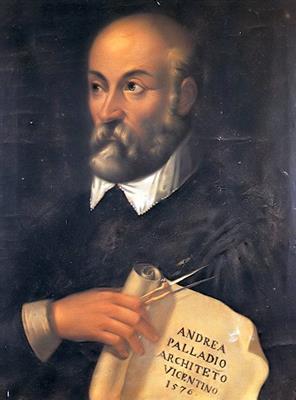
About Andrea Palladio
Italian · 1508–1580
Vicentine architect whose 1570[1] treatise shaped building from Venice to Virginia, making Palladian a global style.
Museums2
Countries2
Largest reported holdingNationalmuseum, Stockholm · 1 recorded work
Loading map…
Where to see Andrea Palladio
Collection holdings are reported here; current display varies. Check with each museum before visiting.
-
1 recorded work
Nationalmuseum
Stockholm, Sweden
-
1 recorded work
Metropolitan Museum of Art
New York City, United States


Frequently Asked Questions
Who was Andrea Palladio?
Andrea Palladio, born Andrea di Pietro in Vicenza in 1508[1], was the son of a Vicentine miller. He initially worked as a stonemason before Gian Giorgio Trissino recognised his talent and educated him in classical theory. Trissino also gave him the name Palladio.What is Andrea Palladio known for?
Andrea Palladio is known for reshaping the built world of Northern Europe during the Renaissance. He is also known for his book I quattro libri dell'architettura (1570[1]), which codified his systematic grasp of antiquity's proportional logic, and for his designs of villas and churches.What was Andrea Palladio's art style?
The Palladian style of architecture was a popular variant on the revival of classicism found across Europe in the 18th century. The style references the buildings of Andrea Palladio, whose fame rests on his classical palaces, villas, and churches found across the Veneto, as well as his publication of I quattro libri dell’architettura.
Sources
Where to See guide aggregates verified holdings of Andrea Palladio's works across the following collections.
- [1] wikipedia Wikipedia: Andrea Palladio Used for: biography.
- [2] book Elizabeth Gilmore Holt; Project Muse, A Documentary History of Art, Volume 2 _ Michelangelo and the Mannerists, The Baroque and the Eighteenth Century Used for: biography, stylistic analysis.
- [3] book Elizabeth Gilmore Holt; Project Muse, A Documentary History of Art, Volume 2 _ Michelangelo and the Mannerists, The Baroque and the Eighteenth Century Used for: biography, stylistic analysis.
- [4] book Elizabeth Gilmore Holt; Project Muse, A Documentary History of Art, Volume 2 _ Michelangelo and the Mannerists, The Baroque and the Eighteenth Century Used for: biography, stylistic analysis.
Editorial overseen by Solis Prints. Sources verified 2026-09-30. Click a source for details, or hover over [N] in the page above to preview.
Editorial standardsMethodologyCorrectionsAI disclosureAbout the editorial team