



About Antonio del Pollaiolo
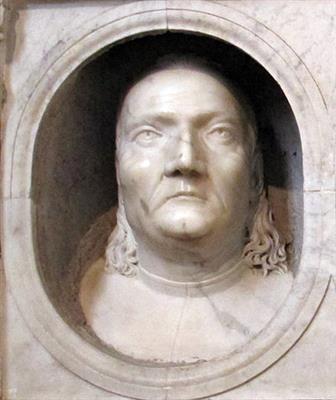
Museums12
Countries6
Largest reported holdingMetropolitan Museum of Art, New York City · 2 recorded works
Loading map…
Where to see Antonio del Pollaiolo
Collection holdings are reported here; current display varies. Check with each museum before visiting.
-
2 recorded works
Metropolitan Museum of Art
New York City, United States
-
2 recorded works
Bargello National Museum
Florence, Italy


-
1 recorded work
Museum of Fine Arts of Rennes
Rennes, France
-
1 recorded work
Louvre
Paris, France
-
1 recorded work
Museum Boijmans Van Beuningen
Rotterdam, Netherlands
-
1 recorded work
Gemäldegalerie Berlin
Berlin, Germany
-
1 recorded work
National Gallery
London, United Kingdom
-
1 recorded work
The Nelson-Atkins Museum of Art
Kansas City, United States
-
1 recorded work
National Gallery of Art
Washington D.C., United States
-
1 recorded work
Bode Museum
Berlin, Germany


View all 12 museums
-
1 recorded work
Cincinnati Art Museum
Cincinnati, United States
-
1 recorded work
Yale University Art Gallery
New Haven, United States


Frequently Asked Questions
What should I know about Antonio del Pollaiolo's prints?
Antonio del Pollaiolo (1431/32-1498[1]) was an Italian[1] Renaissance painter, sculptor, engraver, and goldsmith. Although primarily a painter and sculptor, he is credited with one highly important print: the 1480s engraving, *Battle of the Nude Men*. This large print (42.4 x 60.9 cm) demonstrates Pollaiolo's skill in depicting the human figure in motion. It shows a battle between ten nude men, some wielding weapons. The composition is dynamic, with figures intertwined in combat. The background is minimal, which concentrates attention on the figures. Giorgio Vasari, in his *Lives of the Artists*, praised Pollaiolo's understanding of anatomy, saying he was the first to dissect bodies to study muscles. This knowledge is evident in the print's detailed and accurate representation of the human form. *Battle of the Nude Men* had considerable influence on later artists. It was widely copied and distributed; it helped to establish the importance of anatomical accuracy in art. The print exists in several versions, with variations in the background and details, suggesting multiple states or editions. The engraving is a significant example of early Italian printmaking, demonstrating the artistic possibilities of the medium.Why are Antonio del Pollaiolo's works important today?
Antonio del Pollaiolo (circa 1431-1498[1]) was an Italian[1] Renaissance painter, sculptor, engraver and goldsmith. He was preoccupied with anatomical accuracy and the depiction of movement. These interests mark his place in art history. Pollaiolo's importance lies in his innovative approach to representing the human form. He moved beyond static poses. He instead explored dynamic compositions; this is seen in his sculpture "Hercules and Antaeus" (circa 1475). The bronze shows the figures locked in combat, with a clear emphasis on musculature and strain. This attention to anatomy influenced later artists. His engraving, "Battle of the Nudes" (circa 1470s), demonstrates his mastery of line and form. It is a complex composition with figures in various poses. The print allowed for the wider dissemination of Pollaiolo's ideas about the human body. It also influenced printmaking. Pollaiolo's workshop was a centre for artistic innovation. His brother Piero assisted him on many commissions. Their collaborative work helped spread Antonio's style and techniques. His work is a significant contribution to the development of Renaissance art.What techniques or materials did Antonio del Pollaiolo use?
Antonio del Pollaiolo, active during the Florentine Renaissance (c. 1432-1498[1]), was a versatile artist. He worked as a painter, sculptor, goldsmith, and engraver. Pollaiuolo, along with his brother Piero, received commissions from the city of Florence, its cathedral, and prominent families such as the Medici. As a sculptor, Antonio primarily worked with bronze. His sculptures often featured animated figures intended to be viewed from multiple angles. In painting, Pollaiuolo is known for works like the *Martyrdom of St Sebastian*. Some scholars believe his brother Piero assisted with this work. Pollaiuolo translated his sculptural interests into painting, rendering figures with dynamic poses reminiscent of small bronzes. He also dissected human bodies to better understand musculature and anatomy, informing his artistic representations. Besides painting and sculpture, Pollaiuolo produced engravings, including *Battle of the Nudes*, where he further explored the human form.Who did Antonio del Pollaiolo influence?
Antonio del Pollaiolo (circa 1431-1498[1]) was an influential Florentine artist of the Early Renaissance. As a sculptor, painter, and metalworker, his impact can be seen in the work of several artists. Sandro Botticelli, also working in Florence, shows Pollaiolo's influence. Botticelli's interest in dynamic lines and the human form echoes Pollaiolo's style. Later artists, such as Leonardo da Vinci and Michelangelo, studied Pollaiolo's anatomical studies. Pollaiolo's emphasis on anatomical accuracy and expressive figures helped shape the High Renaissance. His brother, Piero del Pollaiolo (circa 1441-1496), worked in a similar style; they collaborated on paintings such as "The Martyrdom of Saint Sebastian" (1475). Some scholars suggest Andrea Mantegna was also influenced by Pollaiolo's engraving "Battle of the Nudes". Pollaiolo's innovative approach to representing movement and anatomy had a significant impact on the development of Renaissance art in Italy.Who influenced Antonio del Pollaiolo?
Antonio del Pollaiolo (circa 1431-1498[1]) was an Italian[1] painter, sculptor, engraver, and goldsmith of the Early Renaissance. He worked primarily in Florence. Pollaiolo's artistic formation is usually associated with the workshop of Bartoluccio Ghiberti, where he supposedly trained alongside Donatello. However, art historians have found little documentary evidence to support this claim. It is more certain that Pollaiolo studied under Andrea del Castagno. Castagno's influence is visible in Pollaiolo's attention to anatomy and his use of colour. Some scholars also point to the influence of Donatello on Pollaiolo's sculptural work, particularly in his expressive figures and dynamic compositions. Pollaiolo's study of classical antiquity also played a role in his artistic development. He studied ancient sculptures and incorporated classical motifs into his own work. His interest in anatomy and movement, combined with his study of classical forms, helped him to create a distinctive style that had an impact on the development of Renaissance art.What is Antonio del Pollaiolo's most famous work?
Antonio del Pollaiolo, an artist of the early Italian[1] Renaissance, is best known for his painting *Martyrdom of Saint Sebastian*. The work, completed in 1475, is now held at the National Gallery, London. Pollaiolo received the commission for the altarpiece from the Pucci family. They requested it for their chapel of Saint Sebastian, located in the Church of San Sebastiano dei Minori in Florence. The painting depicts the saint tied to a tree, surrounded by archers. The archers draw their bows, preparing to execute him. The artist's brother, Piero, assisted him with the painting. The work demonstrates Pollaiolo's interest in classical antiquity and anatomy. He was fascinated by the human body in motion. Some scholars suggest Pollaiolo performed dissections himself to advance his understanding of musculature. The painting also shows an early use of atmospheric perspective. The background fades into the distance, creating a sense of depth. The National Gallery acquired the painting in 1894.What style or movement did Antonio del Pollaiolo belong to?
Antonio del Pollaiolo (circa 1431/1432-1498[1]) was an Italian[1] Renaissance artist. More specifically, he belonged to the Florentine Early Renaissance. He combined the training of a goldsmith with painting and sculpture. Pollaiolo's style is characterised by its attention to anatomical detail and dynamic figures. He studied anatomy through dissection, which allowed him to represent the human body in motion with great accuracy. This interest is evident in works such as "Hercules and Antaeus" (circa 1475), where the figures are locked in a fierce struggle. His understanding of musculature and movement influenced other artists in Florence. Pollaiolo's work also shows an interest in classical antiquity. This is seen in his use of mythological subjects and his emphasis on idealised forms. He and his brother, Piero, ran a workshop together. The workshop produced paintings, sculpture, metalwork, and engravings. Antonio often designed the compositions, while Piero assisted with the execution. This collaborative approach allowed them to produce a wide range of works and disseminate their style.What is Antonio del Pollaiolo known for?
Antonio del Pollaiolo is known for his anatomical precision in painting and sculpture. He is particularly recognised for his portrayal of animated figures designed to be viewed from different angles, especially in bronze sculpture.
Sources
Where to See guide aggregates verified holdings of Antonio del Pollaiolo's works across the following collections.
- [1] wikipedia Wikipedia: Antonio del Pollaiolo Used for: biography.
- [2] book Beard, Lee, 1973- author, Butler, Adam, author; Van Cleave, Claire, author; Fortenberry, Diane, author; Stirling, Susan, author, Beard, Lee, 1973- author, Butler, Adam, author; Van Cleave, Claire, author; Fortenberry, Diane, author; Stirling, Susan, author - The Art Book_ New Edition, Mini Format Used for: biography.
- [3] book Masterpieces of western art : a history of art in 900 individual studies from the Gothic to the present day Used for: biography.
- [4] book E. H. Gombrich, The Story of Art - 16th Edition Used for: biography.
Editorial overseen by Solis Prints. Sources verified 2026-09-30. Click a source for details, or hover over [N] in the page above to preview.
Editorial standardsMethodologyCorrectionsAI disclosureAbout the editorial team