



About Betye Saar
American · 1926–present
- Black Arts Movement
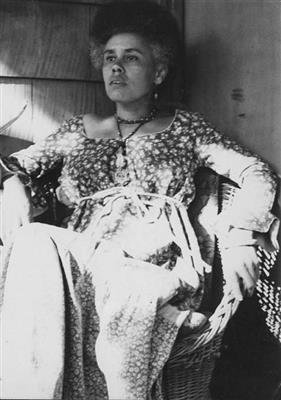
American[1] assemblage artist whose found-object boxes address racial identity and collective memory, rooted in the tradition of Joseph Cornell.
Museums4
Countries1
Largest reported holdingNational Gallery of Art, Washington D.C. · 3 recorded works
Loading map…
Where to see Betye Saar
Collection holdings are reported here; current display varies. Check with each museum before visiting.
-
3 recorded works
National Gallery of Art
Washington D.C., United States
-
2 recorded works
Museum of Modern Art
New York City, United States


-
2 recorded works
Metropolitan Museum of Art
New York City, United States
-
1 recorded work
Smithsonian American Art Museum
Washington D.C., United States


Frequently Asked Questions
Where can I see Betye Saar's work?
Betye Saar's art has been featured in many institutions. These include the Los Angeles County Museum of Art (LACMA) at 5905 Wilshire Boulevard, Los Angeles; the Metropolitan Museum of Art, Fifth Avenue at 82nd Street, New York; and the Museum of Modern Art, 11 West 53rd Street in New York. Other American[1] museums that have displayed her work are the Minneapolis Institute of Arts, 2400 Third Avenue South, Minneapolis; the Yale University Art Gallery, 1111 Chapel Street at York Street, New Haven, CT; and the Whitney Museum of American Art, 945 Madison Avenue, New York. Outside the United States, Saar's art has been exhibited at the Royal Ontario Museum, 100 Queens Park, Toronto.What should I know about Betye Saar's prints?
Betye Saar, born in 1926[1], is an American[1] assemblage artist. Her prints often incorporate themes related to her African-American heritage and feminist perspectives. Saar's artistic journey began with a childhood fascination for collecting found objects, a practice that evolved into her distinctive style of creating art from discarded materials. In 1967, an exhibition of Joseph Cornell's work, particularly his assemblage boxes, had a significant impact on Saar. Inspired by Cornell's "jewel-like" constructions, she began creating her own boxes and wooden frames, filling them with objects that, when combined, told a story. These assemblages often contain relics and vintage photographs, transforming the boxes into portable altars that pay homage to the values and memories of ancestors. Saar's work challenges racial stereotyping by presenting images of middle-class African Americans, reflecting her own experiences growing up before the Civil Rights era. In 1970, Saar co-organised the first Black women's art exhibition in the United States, held in her home city.Why are Betye Saar's works important today?
Betye Saar, born in 1926[1], is an American[1] assemblage artist whose work remains important. Her childhood in Los Angeles involved collecting discarded items, a practice that later informed her art. She was influenced by the Watts Towers, a construction built from cement and found objects over 33 years. In 1967, an exhibition of Joseph Cornell's box-filled artworks inspired Saar to create her own assemblages. These consisted of objects within boxes and wooden frames, telling stories through their arrangements. Saar's art addresses the mistreatment of Black people, particularly women. However, she also aims to create pieces that evoke joy. Saar co-organised the first Black women's art exhibition in the United States in 1970. Her early protest pieces, such as *The Liberation of Aunt Jemima* (1972), confronted stereotypes. Later, she created smaller assemblages using family mementos, exploring themes of time, memory, and loss. Saar also produces large installations with altar-like shrines, incorporating symbols from various religions, including Kongo cosmograms.What techniques or materials did Betye Saar use?
Betye Saar is best known for assemblage, incorporating found objects into her art. She combines items with personal and cultural significance, often addressing themes of race, gender, and spirituality. Saar's work frequently includes vintage photographs, news clippings, and other ephemera. These elements are arranged within boxes, suitcases, or on altars, creating layered narratives. Her use of materials such as beads, feathers, and shells adds symbolic weight to her pieces. In the 1960s, Saar began incorporating overtly racist imagery into her art. This was a conscious effort to confront and reclaim these images, transforming them into statements of resistance and empowerment. Her work *The Liberation of Aunt Jemima* (1972) is a well-known example of this practice; it reclaims a caricature of a Black woman, turning it into a symbol of strength. Saar's artistic practice also extends to printmaking, collage, and mixed-media constructions. Her willingness to experiment with different media has allowed her to explore a wide range of subjects and ideas throughout her career.Who did Betye Saar influence?
Betye Saar (born 1926[1]) is an American[1] assemblage artist. Her childhood hobby of collecting odds and ends became a skill for making art from found objects. Saar's art showed how Black people, and women, are often not treated well. However, many of her artworks also aim to make people smile. In 1970, Saar co-organised the first Black women’s art exhibition in the United States, in her home city. Her enchanting works became part of this exhibition. Saar was inspired by seeing an exhibition of Joseph Cornell's work in 1967. Cornell created boxes filled with various objects that Saar thought looked “jewel-like”. She began creating her own boxes and wooden frames with objects that together told a story. Saar was also influenced by the Watts Towers in Los Angeles, which took 33 years to build out of cement and found objects, such as shells and broken glass.Who influenced Betye Saar?
Betye Saar's art was shaped by a number of influences. As a child in Los Angeles, she collected discarded items, following the example of her mother. She made these bits and pieces, such as bottle caps and buttons, into dolls and puppets inspired by fairy tales. Saar also found inspiration in the Watts Towers; these structures were made over 33 years from cement and found objects like shells and broken glass. In 1967, Saar saw an exhibition by Joseph Cornell. Cornell's boxes filled with diverse objects struck Saar as 'jewel-like'. She began making her own boxes and wooden frames, arranging objects to tell stories. Saar travelled to countries in Africa and Central America, searching for objects and images to incorporate in her art. Saar married the artist Richard Saar while still a student. In 1970, Saar co-organised the first Black women's art exhibition in the United States, held in Los Angeles.What is Betye Saar's most famous work?
Betye Saar is an American[1] assemblage artist born in Los Angeles, California, in 1926[1]. Her art often incorporates found objects and explores themes related to Black identity and the experiences of women. Saar's early artistic development was influenced by Joseph Cornell's box constructions, which inspired her to create her own assemblages using found objects within boxes and wooden frames. These arrangements often tell a story through the symbolic combination of items. One notable piece is "Blackbird," in which Saar explores the changing meaning of the word "blackbird", which she connects to racist language. Another artwork is "Shield of Quality" (1974), a mixed-media assemblage. In 1970, Saar co-organised the first Black women's art exhibition in the United States, held in Los Angeles. Her enchanting works became part of that exhibition.What style or movement did Betye Saar belong to?
Betye Saar (born 1926[1]) is an American[1] assemblage artist. Assemblage is a type of three-dimensional construction using discarded objects and materials. The French artist Jean Dubuffet coined the term in the mid-1900s. Saar's childhood in Los Angeles, California, influenced her practice. She collected discarded items such as bottle caps, feathers, and buttons, fashioning them into dolls and puppets inspired by fairy tales. She was also influenced by the Watts Towers; construction of the Towers took 33 years, and they are made of cement and found objects like shells and broken glass. In 1967, Saar saw an exhibition by Joseph Cornell, known for his boxes filled with various objects. This inspired Saar to create her own boxes and wooden frames incorporating found objects to tell stories. Saar’s art often addresses the treatment of Black people, particularly women. In 1970, she co-organised the first Black women’s art exhibition in the United States, in Los Angeles. In 1972, she exhibited *The Liberation of Aunt Jemima*, a boxed collage, at Rainbow Sign, a Black cultural centre in San Francisco. The work featured a figurine of a Black woman holding both a broom and a rifle. Saar stated that she wanted to empower the Black woman by making her a revolutionary, rebelling against past enslavement.
Sources
Where to See guide aggregates verified holdings of Betye Saar's works across the following collections.
- [1] wikipedia Wikipedia: Betye Saar Used for: biography.
- [2] book Dorling Kindersley, Artists: Inspiring Stories of the World's Most Creative Minds Used for: biography, stylistic analysis.
Editorial overseen by Solis Prints. Sources verified 2026-09-30. Click a source for details, or hover over [N] in the page above to preview.
Editorial standardsMethodologyCorrectionsAI disclosureAbout the editorial team