

About Camille Bombois
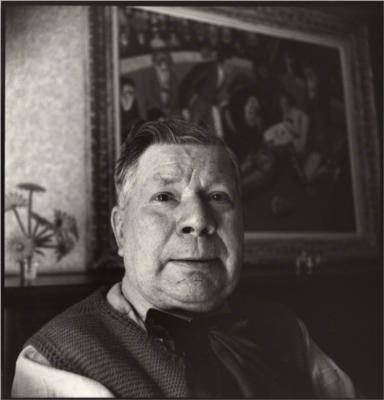
Self-taught French[2] painter and former circus strongman whose naive townscapes and circus scenes emerged from a working life of striking variety.
Where to see Camille Bombois
Collection holdings are reported here; current display varies. Check with each museum before visiting.
-
1 recorded work
Milwaukee Art Museum
Milwaukee, United States
-
1 recorded work
Neue Nationalgalerie
Berlin, Germany


-
1 recorded work
Princeton Art Museum
Princeton, United States
-
1 recorded work
Kunsthaus Zürich
Zurich, Switzerland
-
1 recorded work
Museum of Modern Art
New York City, United States
-
 1 recorded work
Harvard Art Museums
Cambridge, United States
-
1 recorded work
Minneapolis Institute of Art
Minneapolis, United States
-
1 recorded work
Musée National d'Art Moderne
Paris, France
-
1 recorded work
Yale University Art Gallery
New Haven, United States


Frequently Asked Questions
Why are Camille Bombois's works important today?
Camille Bombois (1883[2]-1970[2]) was a French[2] painter and one of the major artists of the Naive school. He is known for his depictions of circus performers, domestic life, and the Parisian landscape. Bombois's work offers a direct, unsophisticated view of early 20th-century French life. His paintings often feature bold outlines, simplified forms, and bright colours, creating a distinctive style that is both charming and powerful. Bombois's focus on everyday subjects, such as market scenes and café interiors, provides a glimpse into the lives of ordinary people during this period. Bombois's work is also valued for its unique perspective. As a self-taught artist, he approached painting with a fresh eye, unburdened by academic conventions. This allowed him to develop a personal style that is both original and accessible. His paintings continue to appeal to audiences today because of their honesty, simplicity, and celebration of the everyday.What techniques or materials did Camille Bombois use?
Camille Bombois was a self-taught artist, and information about his specific techniques and materials is scarce. However, some general observations can be made about the materials available to painters of his era. Oil paint was a common medium. Pigments were mixed with oil and applied to canvas with brushes. The surface of the canvas would often be prepared with a ground layer. The artist's touch, or "hand", influenced the colour effect, just as it changed the material qualities of a line. Artists might prepare preliminary drawings before painting. They might also apply colours in thin layers or thicker impasto. Varnish was sometimes applied as a final layer. The choice of materials is conditioned by the effect the artist intends to achieve. The formal vocation of a painting material has both its possibilities and its limits.Who did Camille Bombois influence?
It is difficult to say with certainty who Camille Bombois influenced directly. Art history tends to focus on influences *on* an artist, rather than the reverse. However, we can consider Bombois's place in the artistic movements of his time. Bombois was associated with the Naïve or Primitive art movement. These artists often worked outside the formal academic system and developed individual styles. It is more likely that Bombois's work contributed to the broader appreciation of Naïve art, rather than serving as a direct model for specific artists. Looking at the other side of influence, Paul Cézanne, who died in 1906[2], had an impact on many early twentieth-century painters. Cézanne's art, with its use of colour and mysterious distortions, provided inspiration for young painters working in Europe. Cézanne was a particularly important influence in the formation of Cubism, even though the Cubists interpreted him in different ways.What is Camille Bombois's most famous work?
It is difficult to identify one single "most famous work" by Camille Bombois, as his notability rests on his distinctive style and favoured subjects. However, several paintings are well-documented and representative of his oeuvre. Bombois (1883[2]-1970[2]) was a self-taught artist, sometimes described as "folk", "naive", or "primitive". He did not exhibit until 1922[2], at the age of 39. Before dedicating himself to art, he worked as a circus strongman, railway worker, and newspaper press operator; he also served in the military. His subject matter came from his immediate surroundings. He is known for lyrical still lifes, townscapes, nudes, and circus scenes. Examples of his townscapes include *The Fortified Gate at Chatenois* (circa 1927) and *Stairway and Butcher Shop* (circa 1928). These paintings often feature open squares or pathways with pedestrians, creating a sense of perspective. Bombois painted a portrait of Utrillo in 1940.What style or movement did Camille Bombois belong to?
Camille Bombois (1883[2]-1970[2]) is usually categorised as a member of the Naive or Modern Primitives. This is not a formal group or school; rather, it is a descriptive label applied retrospectively to artists with particular qualities. Naive artists typically lack formal academic training and often work outside the established art world. Their style is characterised by simplified forms, a lack of conventional perspective, and bold use of colour. There is often a dreamlike quality to the works, or an interest in folklore. Bombois began painting later in life, after working as a farmhand, circus strongman, and railway worker. His paintings often depict scenes from his past, such as circus performers, rural life, and the Parisian streets. His style is distinctive for its strong outlines, flattened perspective, and attention to detail. These qualities link him to the broader category of Naive art.What was Camille Bombois known for?
Camille Bombois (1883[2]-1970[2]) was a French[2] naive artist, a painter without formal training in fine art. He is best known for his depictions of circus performers, market scenes, and female nudes. Working as a manual labourer for many years, Bombois painted in his spare time and exhibited with the Société des Artistes Indépendants from 1911[2]. His work gained attention for its directness and bold colours, aligning with the early 20th-century Fauvist movement, where artists such as Henri Matisse explored the expressive potential of colour. Bombois's paintings often feature strong outlines and simplified forms, contributing to their distinctive and accessible style. Although he shared some aesthetic sensibilities with the Fauves, his self-taught approach set him apart. Bombois continued to paint throughout his life, and his art is now recognised as an important contribution to naive art.What is Camille Bombois known for?
Camille Bombois is known as a self-taught painter whose work was discovered by critics and collectors in 1922[2]. He is known for townscapes, circus scenes, nudes, and still lifes, all painted from direct experience.What was Camille Bombois's art style?
Scholars have noted a resemblance between Camille Bombois's urban scenes and those of Utrillo. He was placed within the tradition of self-taught painting.
Sources
Where to See guide aggregates verified holdings of Camille Bombois's works across the following collections.
- [1] museum Harvard Art Museums Used for: museum holdings.
- [2] wikipedia Wikipedia: Camille Bombois Used for: biography.
- [3] book Dorling Kindersley, Artists: Inspiring Stories of the World's Most Creative Minds Used for: biography.
- [4] book Linda Bolton, Art revolutions _ Impressionism Used for: biography.
- [5] book Anka Muhlstein, Camille Pissarro Used for: biography.
- [6] book guggenheim-byday00viol Used for: stylistic analysis.
- [7] book guggenheim-evelyns00solo Used for: biography.
- [8] book Post-impressionism : cross-currents in European painting Used for: biography.
Editorial overseen by Solis Prints. Sources verified 2026-09-30. Click a source for details, or hover over [N] in the page above to preview.
Editorial standardsMethodologyCorrectionsAI disclosureAbout the editorial team