



About Carla Accardi
Italian · 1924–2014
- Movimento Arte Concreta
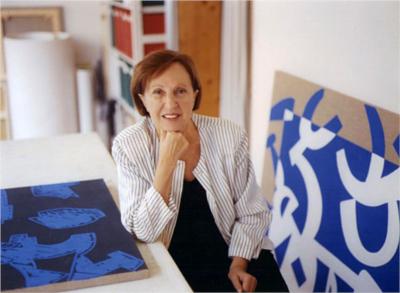
Carla Accardi co-founded Italy's Forma 1 group in 1947[1] and pioneered transparent plastic installations that influenced the Arte Povera generation.
Museums2
Countries2
Most worksSolomon R. Guggenheim Museum, New York City · 2 works
Loading map…
Where to see Carla Accardi
Ranked by works you can see in person.
-
2 works
Solomon R. Guggenheim Museum
New York City, United States
-
1 works
Stedelijk Museum voor Actuele Kunst
Ghent, Belgium


Frequently Asked Questions
Where can I see Carla Accardi's work?
To view Carla Accardi's work, several museums hold relevant collections. In the United States, the Metropolitan Museum of Art (New York), the Minneapolis Institute of Arts, the Museum of Modern Art (New York), the Los Angeles County Museum of Art (LACMA), the High Museum (Atlanta), the Art Institute of Chicago, the Field Museum (Chicago), the Charles Hosmer Morse Museum of American Art (Winter Park, Florida), the Virginia Museum of Fine Arts (Richmond), and the Wolfsonian at Florida International University (Miami Beach) all possess relevant holdings. In Canada, the Royal Ontario Museum (Toronto) may have examples of her output. In the United Kingdom, see the Brighton Museum & Art Gallery, the Geffrye Museum (London), the Manchester Art Gallery, the National Museums of Scotland (Edinburgh), and the Victoria & Albert Museum (London). Elsewhere, the Deutsches Historisches Museum (Berlin), the Kunsthaus Zurich, the Musée des Arts Décoratifs (Paris), the Museo Egizio (Turin), the Rijksmuseum (Amsterdam), and the St Gallen Textilmuseum (Switzerland) are possible locations.What should I know about Carla Accardi's prints?
Carla Accardi (born in Trapani, Sicily, in 1924[1]) was associated with the Forma group in 1947[1]. The eight signatories of its manifesto declared themselves ‘Formalists and Marxists’. This group split from artists who aimed to express social consciousness through figurative art. Accardi's initial solo exhibition was presented in Rome in 1950. By 1951, her work was influenced by Cubism and the static compositions of Magnelli. She also kept up to date with developments in Art Informel. By 1954, Accardi had developed a mature style of black-and-white compositions, which featured a complex of lines and sharp tonal contrasts. By the late 1950s, Accardi began to incorporate shades of grey, then elements of colour, into her paintings. In 1961, she joined the group Continuità and introduced greater order into her work as a reaction against Informel. She also began to use strident colours, which heightened the optical vibrations of the small brushstrokes. In the mid-1960s, she began to construct paintings in actual space with fragile ‘tents’ made of transparent plastic. Accardi had individual exhibitions at the Venice Biennale in 1964 and 1988. She lived and worked in Rome.What techniques or materials did Carla Accardi use?
Carla Accardi employed a range of materials and techniques throughout her career. In her early work, she used casein tempera on canvas, as seen in *Grande inte^jrazione (Large Integrations)*. Accardi's style evolved, and by the late 1950s, she began incorporating shades of grey and then colour into her paintings. She used an automatic script on monochrome backgrounds, which has been compared to the work of Mark Tobey. In the mid-1960s, Accardi moved toward constructing paintings in actual space. She created fragile 'tents' made of transparent plastic, which allowed her coloured forms to float in mid-air, reacting to the surroundings. These experiments with environmental installations influenced the Arte Povera generation. She also used strident colours to heighten the optical vibrations of small, arabesque brushstrokes.Who did Carla Accardi influence?
Carla Accardi, associated with the Forma group in 1947[1], explored abstract art, influenced by Cubism and artists such as Magnelli. Her work contained a dynamism reminiscent of Futurism. By the mid-1960s, Accardi began constructing paintings in actual space, using transparent plastic to create fragile 'tents'. These environmental installations, along with her 'nomadic connotation', influenced artists of the Arte Povera generation. Her use of strident colours also heightened the optical vibrations of small, arabesque brushstrokes. Accardi's emphasis on material and its hidden properties, as well as her focus on a transparent pictorial language, impacted the development of Italian[1] art in the 1960s. Her inventive freedom and colouristic experiments are considered precursors to Op Art.Who influenced Carla Accardi?
Carla Accardi, born in Sicily in 1924[1], was exposed to a range of artistic influences throughout her career. Dissatisfied with academic training at the Accademia di Belle Arti in Palermo and Florence, she studied Old Masters such as Fra Angelico in museums. In 1946[1], she moved to Rome, where she met artists Antonio Sanfilippo (whom she married in 1949), Turcato, Pietro Consagra, and Ugo Attardi. Together with Piero Dorazio, Mino Guerrini, and Achille Perilli, she established the Forma group in 1947. Her early work was influenced by Cubism and the static compositions of Magnelli, whom she met in Paris in 1951. While in Paris, she also became acquainted with Hans Hartung and kept up to date with Art Informel. Her use of automatic script on a monochrome ground has been likened to the work of Mark Tobey, which she saw at the Venice Biennale of 1958. In 1961, she joined the group Continuità and introduced greater order into her work as a reaction against Informel.What is Carla Accardi's most famous work?
It is difficult to name one single work as Carla Accardi's "most famous". However, a few works and series are particularly significant in her career. Accardi, born in Trapani, Sicily, in 1924[1], was a key figure in Italian[1] abstract art. In 1947[1], she co-founded the Forma group, which advocated for both Formalism and Marxism. Her early work was influenced by Cubism and artists such as Magnelli. In 1954, Accardi developed a mature style of black-and-white compositions, characterised by complex lines and tonal contrasts. These works gained international attention after being exhibited in Rome and Paris in 1955 alongside pieces by Burri, Fontana and Yves Klein. Later in her career, Accardi began incorporating colour into her paintings and creating spatial works using transparent plastic. These "tents", as they were called, explored the interaction between colour and space and influenced the Arte Povera movement. She had individual exhibitions at the Venice Biennale in 1964 and 1988. One notable work is Grande inte^jrazione (Large Integrations), a casein tempera on canvas.What style or movement did Carla Accardi belong to?
Carla Accardi, born in Trapani, Sicily, in 1924[1], is associated with several movements. In 1947[1], she co-founded the Forma group with other artists, including Antonio Sanfilippo (whom she later married), Piero Dorazio, and Achille Perilli. The group's manifesto declared them to be both ‘Formalists and Marxists’, marking a divergence from artists of the Fronte Nuovo delle Arti. Accardi's early work was influenced by Cubism and the compositions of Magnelli. While in Paris, she became familiar with Art Informel. Her paintings from this period displayed a dynamism reminiscent of Futurism, despite being based on abstract elements. In 1961, Accardi joined the Continuità group, which promoted order and deliberation in art as a reaction against Informel. By the mid-1960s, she began creating three-dimensional works using transparent plastic, influencing artists associated with Arte Povera.What was Carla Accardi known for?
Carla Accardi (1924[1]-2014[1]) was an Italian[1] abstract painter associated with the Forma 1 group and the Arte Informale movement. She is known for her use of non-traditional materials and her exploration of colour and form. Accardi studied at the Accademia di Belle Arti in Palermo before moving to Rome in 1947[1]. There, she co-founded Forma 1 with artists such as Pietro Consagra, Ugo Attardi, and Giulio Turcato. The group advocated for abstract art with a social purpose, distinct from both socialist realism and pure formalism. In the 1950s, Accardi began experimenting with unconventional materials, including transparent plastics. She developed a distinctive style characterised by bold, linear compositions and the repetition of simple geometric shapes. Her work often featured contrasting colours and a dynamic interplay between positive and negative space. Throughout her career, Accardi remained committed to abstraction, exploring its possibilities through painting, drawing, and installation. She exhibited widely, representing Italy at the Venice Biennale on multiple occasions. Her work is held in major museum collections worldwide.
Sources
Where to See guide aggregates verified holdings of Carla Accardi's works across the following collections.
- [1] wikipedia Wikipedia: Carla Accardi Used for: biography.
- [2] book Giovanni Battista Piranesi; Sarah E Lawrence; Exhibition Piranesi as Designer (2007, Giovanni Battista Piranesi; Sarah E Lawrence; Exhibition Piranesi as Designer (2007 - 2008, New York, NY; Haarlem); Cooper-Hewitt Museum of Decorative Arts and Design (New York, N.Y.); Teylers Museum - Piranesi as designer ; [on the occasion of Used for: biography.
- [3] book guggenheim-futurismmodernfo00solo Used for: biography.
- [4] book guggenheim-giorgioarmani00cela Used for: stylistic analysis.
- [5] book guggenheim-metph00cela Used for: biography.
- [6] book Braun, Emily, 1957-; Asor Rosa, Alberto; Royal Academy of Arts (Great Britain), Italian art in the 20th century : painting and sculpture, 1900-1988 Used for: biography.
- [7] book Unknown, Reclaiming female agency : feminist art history after postmodernism Used for: biography.
Editorial overseen by Solis Prints. Sources verified 2026-09-16. Click a source for details, or hover over [N] in the page above to preview.
Editorial standardsMethodologyCorrectionsAI disclosureAbout the editorial team