



About Charles Gleyre
French · 1806–1874
- Orientalist painting
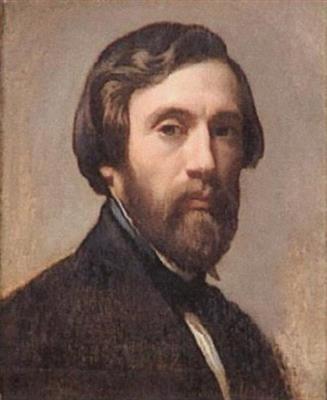
Swiss-French[1] painter whose Paris studio trained Monet, Renoir, Sisley, and Bazille, shaping the origins of Impressionism.
Museums7
Countries4
Most worksLouvre, Paris · 3 works
Loading map…
Where to see Charles Gleyre
Ranked by works you can see in person.
-
3 works
Louvre
Paris, France
-
1 works
Walker Art Gallery
Liverpool, United Kingdom


-
1 works
Building of the Winterthur Museum of Art
Winterthur, Switzerland
-
1 works
Museum of the History of France
Versailles, France
-
1 works
Walters Art Museum
Baltimore, United States
-
1 works
Chrysler Museum of Art
Norfolk, United States
-
1 works
Musée Fabre
Montpellier, France


Frequently Asked Questions
Where can I see Charles Gleyre's work?
Charles Gleyre's paintings are held in several public collections. These include museums in Switzerland, France, and further afield. In Gleyre's home country of Switzerland, his works can be viewed at the Cantonal Museum of Fine Arts in Lausanne. Another collection is held at the Kunstmuseum Basel. France, where Gleyre spent much of his career, also has significant holdings. The Musée d'Orsay in Paris includes paintings such as "Evening (Lost Illusions)" in its collection. The Musée des Beaux-Arts in Nantes holds "The Departure of the Swiss for the Defence of the Fatherland". Outside Europe, the Metropolitan Museum of Art in New York owns Gleyre's "Sappho". These collections provide opportunities to study the scope of Gleyre's artistic output, from history paintings to allegorical subjects. Examination of his works reveals his academic training and later stylistic developments.What should I know about Charles Gleyre's prints?
Charles Gleyre (1806[1]-1874[1]) was a Swiss artist who taught painting in Paris. Though he is not primarily known as a printmaker, prints were made after some of his paintings. These reproductions helped to circulate his compositions to a wider audience. Gleyre took over the studio of the recently deceased Paul Delaroche in 1843[1]. He taught many important later artists, including Monet, Renoir, Sisley, and Whistler. His teaching method was relatively hands-off; he let students develop their own styles, only intervening when he felt it necessary. Gleyre closed his studio in 1864, due to lack of interest and eyesight problems. He explained his decision by saying that 'one must not survive oneself'. His own paintings often featured classical or historical subjects, treated in a precise academic style. 'Evening' (also known as 'Lost Illusions') was one of his most successful paintings; it exists in several versions. Gleyre's work was well regarded in its time, but later lost favour as Impressionism and other modern movements gained prominence.Why are Charles Gleyre's works important today?
Charles Gleyre, a Swiss painter who spent much of his life in France, is significant for his connection to early Impressionism. Although he was sixty years old when he met the future Impressionists, and represented what they saw as the classical school, his studio provided a space for artistic exchange. Monet, Renoir, Bazille, and Sisley all met in Gleyre's studio. He also introduced them to Pissarro. While Gleyre advocated for idealisation and antiquity in art, some of his students, like Monet, resisted his teachings. Gleyre did not charge his pupils for instruction, asking only for contributions to rent and models' fees. Gleyre aimed to aestheticise the past in his paintings. He studied in Lyons and Paris, and he also spent time in Italy, where he encountered German painters. His painting *Evening*, later subtitled *Lost Illusions*, achieved success in 1843[1]. Another important history painting is *The Romans Put Under the Yoke* (1853). Despite a difficult life, Gleyre's work deserves acknowledgement.What techniques or materials did Charles Gleyre use?
Charles Gleyre's students began by drawing from plaster casts of sculptures, learning to represent form through monochrome tonal gradations. This instilled an idealised vision of nature and a conventional drawing style. Only after mastering drawing were students permitted to use colour. Gleyre taught students the materials and tools of painting. They copied painted heads, often Venetian or Flemish examples from the Louvre, to learn lively handling and colour. Students then progressed to painting live heads and nude models. The initial stage involved a thinly painted "ebauche", establishing lines, masses, and halftones. This base layer had to be "leaner" (less oily) than subsequent layers, adhering to the "fat over lean" rule to prevent cracking. Students prepared palettes using mainly earth colours, Prussian blue, black, and lead white. As the 19th century advanced, less stable tarry colours like bitumen became popular, which damaged many paintings. Contours were drawn onto the primed canvas with light charcoal lines, then reworked with a dilute red-brown mixture (the "sauce") using a sable-hair brush. Backgrounds were roughed in early to counter the brilliance of the priming colour. Detail was avoided initially, focusing on light and shade.Who did Charles Gleyre influence?
Charles Gleyre taught at his own studio, and later at the École des Beaux-Arts, from 1843[1] to 1864. He is remembered as a generous teacher who accepted students without regard to their financial circumstances. His pupils included a number of artists who became important figures. Among the best-known are Claude Monet, Pierre-Auguste Renoir, Alfred Sisley, and James Abbott McNeill Whistler. Others include Jean-Léon Gérôme, Auguste Toulmouche, and Louis-Frederic Schützenberger. Gleyre’s approach was relatively hands-off. He allowed students to develop their own styles and interests, rather than imposing a single academic method. This may have prepared them to pursue diverse paths. Monet, Renoir, and Sisley became central to Impressionism, while Whistler pursued a more independent course. Gérôme and Toulmouche became successful Salon painters, working in a more academic style. The diversity of his students’ later work demonstrates the breadth of Gleyre's influence as an instructor.Who influenced Charles Gleyre?
Charles Gleyre, a Swiss artist who spent much of his life in France, was seen as embodying the classical school of art. He trained at the School of Fine Arts and spent six years in Italy. Gleyre instructed his students to consider antiquity when executing a figure. He found realism repellent, preferring idealisation. He told his students that nature was useful as part of a study, but lacked interest in itself, and that style was most important. He also considered painting landscapes a decadent art form. Despite these views, Gleyre's studio provided students with freedom. His program included studying antique sculpture and the paintings of Raphael and Ingres at the Louvre. Students acquired knowledge of painting technique, classical composition, precision in drawing, and paint handling. Monet, Bazille, Renoir, and Sisley attended his studio, where they met each other. Gleyre did not charge his pupils, instead asking for contributions to rent and models' fees.What style or movement did Charles Gleyre belong to?
Charles Gleyre (1806[1]-1874[1]) was a Swiss painter who worked in France. He is associated with Neoclassicism, and his artistic interests also connected him to the Orientalist movement. He aimed to aestheticise the past and bring it to life in painting. Like Jean-Auguste-Dominique Ingres, Gleyre continued to paint in his Neoclassical style well into the second half of the 19th century. His 1853[1] painting *The Romans Put Under the Yoke* may be his most important history painting. Gleyre studied at the Ecole de Pierre in Lyons and in Paris under Louis Hersent. He also practised watercolour painting with Richard Parkes Bonington. Gleyre had contact with German painters in Rome and, in Paris, with the composer Hector Berlioz and fellow Swiss artist Léopold Robert. In 1834, he travelled to the Orient but fell seriously ill. He returned to Paris in 1838. Gleyre's *Egyptian Temple* (1840) shows a detailed, realistic depiction of Egyptian ruins.What was Charles Gleyre known for?
Charles Gleyre (1806[1]-1874[1]) was a Swiss artist who spent most of his career in France. He is best known as a teacher; his studio produced a generation of important Impressionist painters. Born in Chevilly, Switzerland, Gleyre went to Lyon as an apprentice. He later studied in Paris at the École des Beaux-Arts. In the 1830s, he travelled extensively in Italy, Greece, Egypt, and the Near East. Upon his return to France, he took over the studio of Paul Delaroche in 1843[1]. Gleyre taught many now-famous artists, including Claude Monet, Pierre-Auguste Renoir, Alfred Sisley, and James Abbott McNeill Whistler. He encouraged his students to observe nature and develop their own individual styles. This approach was different from the academic style of the time, which emphasised historical or mythological subjects and precise drawing. Although Gleyre’s own paintings are not as well known as those of his students, he had some success at the Salon. His painting *Evening* (also known as *Lost Illusions*) of 1843 is one of his more recognised works; it is an allegorical painting that depicts a seated poet overlooking a river. He retired from teaching in 1864 and died in Paris a decade later.
Sources
Where to See guide aggregates verified holdings of Charles Gleyre's works across the following collections.
- [1] wikipedia Wikipedia: Charles Gleyre Used for: biography.
- [2] book guggenheim-albertgleizes1881robb Used for: biography.
- [3] book guggenheim-guggenh01solo Used for: biography, stylistic analysis.
- [4] book guggenheim-handboo00pegg Used for: stylistic analysis.
- [5] book guggenheim-thirdenlargedcat1938reba Used for: biography, stylistic analysis.
- [6] book Nathalia Brodskaia, Nathalia Brodskaia - Impressionism Used for: biography.
- [7] book Nathalia Brodskaia, Nathalia Brodskaia - Impressionism Used for: biography.
- [8] book Nathalia Brodskaia, Nathalia Brodskaia - Impressionism Used for: biography.
Editorial overseen by Solis Prints. Sources verified 2026-08-29. Click a source for details, or hover over [N] in the page above to preview.
Editorial standardsMethodologyCorrectionsAI disclosureAbout the editorial team