



About Antoine-Jean Gros
- Neoclassicism
- Pre-romanticism
Napoleon's official war painter and unwilling father of French[6] Romanticism, who drowned himself in the Seine at sixty-four, convinced he was already dead.
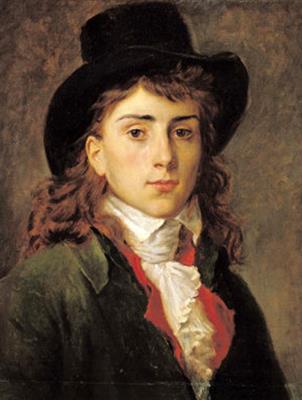
Where to see Antoine-Jean Gros
Collection holdings are reported here; current display varies. Check with each museum before visiting.
-
27 recorded works
Louvre
Paris, France
-
14 recorded works
Museum of the History of France
Versailles, France


-
7 recorded works
Palace of Versailles
Versailles, France
-
5 recorded works
Musée de l'Armée
Paris, France
-
 4 recorded works
Musée des beaux-arts de Marseille
Marseille, France
-
3 recorded works
Musée des Beaux-Arts de la ville de Paris
Paris, France
-
3 recorded works
Musée des Augustins
Toulouse, France
-
2 recorded works
Musea Brugge
Bruges, Belgium
-
2 recorded works
Detroit Institute of Arts
Detroit, United States
-
2 recorded works
Musée Carnavalet
Paris, France


Own a piece of it
Antoine-Jean Gros prints
Hand-finished archival prints from Antoine-Jean Gros's body of work.

View all 38 museums
-
1 recorded work
Museum of Fine Arts of Rennes
Rennes, France
-
1 recorded work
Toledo Museum of Art
Toledo, United States
-
1 recorded work
Pushkin Museum of Fine Arts
Moscow, Russia
-
1 recorded work
National Museum in Kraków
Kraków, Poland
-
1 recorded work
Speed Art Museum
Louisville, United States
-
1 recorded work
Musée des Beaux-Arts et d'Archéologie de Besançon
Besançon, France
-
1 recorded work
Tokyo Fuji Art Museum
Hachiōji, Japan
-
1 recorded work
Condé Museum
Chantilly, France
-
1 recorded work
Museum of Grenoble
Grenoble, France
-
1 recorded work
Wallraf–Richartz Museum
Cologne, Germany
-
1 recorded work
Musée Magnin
Dijon, France
-
1 recorded work
Smith College Museum of Art
Northampton, United States
-
1 recorded work
Musée des Beaux-Arts de Bordeaux
Bordeaux, France
-
1 recorded work
National Gallery of Art
Washington D.C., United States
-
1 recorded work
Nantes Museum of Arts
Nantes, France
-
1 recorded work
Musée des Beaux-Arts de Caen
Caen, France
-
1 recorded work
Wallace Collection
London, United Kingdom
-
1 recorded work
Hermitage Museum
Saint Petersburg, Russia
-
1 recorded work
Art Institute of Chicago
Chicago, United States
-
1 recorded work
National Trust
Swindon, United Kingdom
-
1 recorded work
Metropolitan Museum of Art
New York City, United States
-
1 recorded work
Los Angeles County Museum of Art
Los Angeles, United States
-
1 recorded work
Kunsthalle Bremen
Bremen, Germany
-
1 recorded work
Musée d'art moderne (Saint-Étienne)
Saint-Étienne, France
-
1 recorded work
Musée des Beaux-Arts d'Angers
Angers, France
-
1 recorded work
Museum of Fine Arts of Nancy
Nancy, France
-
1 recorded work
National Gallery of Canada
Ottawa, Canada
-
0 recorded works
Nationalmuseum
Stockholm, Sweden


Can't travel? Bring Antoine-Jean Gros home.
See all Antoine-Jean Gros prints →Frequently Asked Questions
Where can I see Antoine-Jean Gros's work?
Antoine-Jean Gros (1771[6]-1835[6]) was a French[6] painter who moved toward Realism and Romanticism. Although he trained with Jacques-Louis David, a Neo-Classical painter, Gros reacted against Neo-Classicism. He is known for his naturalistic compositions and capturing the atmosphere of a moment. Several museums hold examples of Gros's paintings. The Musée National du Louvre in Paris possesses Napoleon at Arcola, November 17, 1796[6] (1796) and Napoleon on the Battlefield at Eylau, February 9, 1807 (1808). The Hermitage Museum in St Petersburg has Napoleon Bonaparte on the Bridge at Arcole (1796). In this painting, Gros depicts Napoleon's victory over the Italians at the battle of Arcole in 1796. Gros served as an official war painter for Napoleon, and he received the cross of the Legion of Honour from Napoleon.Why are Antoine-Jean Gros's works important today?
Antoine-Jean Gros (1771[6]-1835[6]) is important for his history paintings and his role in French[6] Neoclassicism[6] and Romanticism. Gros moved away from strict Neoclassical conventions. He incorporated greater emotion and drama into his work. Gros trained with Jacques-Louis David. He was influenced by the French Revolution and Napoleon Bonaparte. His painting *Napoleon Visiting the Plague-Stricken in Jaffa* (1804[6]) portrays Napoleon as a compassionate leader. It also demonstrates Gros's skill in depicting human suffering and exotic settings. This work marked a shift towards Romanticism. It placed emotion and contemporary events above classical ideals. Later in his career, Gros struggled to adapt to changing artistic tastes. The rise of Romanticism, led by artists like Théodore Géricault and Eugène Delacroix, overshadowed his earlier style. Gros's attempts to return to more classical forms were not well-received. Despite this, his earlier paintings remain significant for their historical documentation and artistic innovation. They bridge the gap between Neoclassicism and Romanticism in French art.What techniques or materials did Antoine-Jean Gros use?
Antoine-Jean Gros is known for his history paintings and portraits, produced during the Neoclassical and Romantic periods. He studied with Jacques-Louis David, absorbing David's emphasis on precise drawing and formal composition. Gros moved away from strict Neoclassicism[6], however, by incorporating a greater interest in colour and dramatic lighting effects. He achieved this through the use of oil paints, applied in layers to create luminosity. His handling of paint became looser and more expressive than that of his Neoclassical predecessors. Gros often made preparatory sketches in pencil or chalk before beginning a painting. These studies helped him to work out the composition and the poses of his figures. He also studied anatomy to ensure the accuracy of his depictions of the human form. Gros's use of colour and his attention to detail contributed to the emotional impact of his paintings, such as "Napoleon Visiting the Plague-Stricken in Jaffa" (1804[6]). He aimed to capture the drama and intensity of historical events.Who did Antoine-Jean Gros influence?
Antoine-Jean Gros (1771[6]-1835[6]) trained with Jacques-Louis David, a leading Neoclassical painter. David's studio was popular; he taught and influenced many artists. David encouraged his students to study Latin and to draw subject matter from Plutarch. Despite this rigid classical foundation, David allowed his students to develop their own styles. Gros, along with Anne-Louis Girodet-Trioson and Jean-Auguste-Dominique Ingres, moved away from Neoclassicism[6] and towards Romanticism. These artists explored exotic and erotic themes, often using fictional narratives for their paintings. Gros gained recognition as an official war painter for Napoleon, capturing the atmosphere of the moment in paintings such as *Napoleon Bonaparte on the Bridge at Arcole*. Gros's naturalistic compositions and sombre palette contrasted with the theatricality of Neoclassical art. Although Gros inspired the French[6] Romantic movement, he attempted to return to a Neoclassical style later in his career. David named Gros as his successor when he went into exile. Gros's influence can be seen in the works of Théodore Géricault, Eugène Delacroix, and Thomas Lawrence.Who influenced Antoine-Jean Gros?
Antoine-Jean Gros (1771[6]-1835[6]) was a student of Jacques-Louis David, the foremost Neoclassical painter. David had a large studio and greatly affected many artists of the period. He encouraged his students to study Latin so they could understand classical culture; initially, he even demanded they take their subjects from Plutarch's *Lives of the Great Greeks and Romans*. David was not authoritarian, however, and encouraged his students to develop their own artistic identities. Gros moved away from Neoclassicism[6] and helped lay the foundations for Romanticism. He and other David pupils, such as Anne-Louis Girodet-Trioson and Jean-Auguste-Dominique Ingres, explored exotic and erotic themes, often using fictional narratives as subjects. Gros, like David, understood the advantages of being favoured by those in power. Following David's example, Gros created paintings that contributed to the myth of Napoleon Bonaparte. He became an official war painter, capturing the atmosphere of the moment. Gros's naturalistic compositions and sombre palette were a reaction against the theatrical set-pieces of the Neoclassicists.What is Antoine-Jean Gros's most famous work?
Antoine-Jean Gros is best known for his large-scale history paintings that combine Neoclassical and Romantic elements. He was a student of Jacques-Louis David, and he initially worked in a Neoclassical style. Gros's most celebrated painting is *Napoleon Visiting the Plague-Stricken in Jaffa*, completed in 1804[6]. The painting depicts Napoleon Bonaparte during the French[6] campaign in Egypt. Napoleon is shown visiting his soldiers infected with the bubonic plague at a hospital in Jaffa. The scene is meant to portray Napoleon as a heroic figure, unafraid of disease and concerned for his troops' welfare. The painting departs from Neoclassical conventions through its emotional intensity and exotic setting. It is an example of French Romanticism. The composition, use of colour, and dramatic lighting contribute to the painting's emotional impact. Gros received commissions from Napoleon and other members of the French government. He produced other works depicting Napoleon's military campaigns. These paintings solidified Gros's reputation as a leading painter of the Napoleonic era.What style or movement did Antoine-Jean Gros belong to?
Antoine-Jean Gros (1771[6]-1835[6]) was a French[6] painter whose career spanned the Neoclassical and Romantic periods. Initially, he worked in a Neoclassical style, studying with Jacques-Louis David. David's influence is visible in Gros's early works, which display an emphasis on clear lines and classical subjects. However, Gros moved away from strict Neoclassicism[6]. He developed a more Romantic approach, characterised by dramatic compositions, intense emotion, and the use of colour to create atmosphere. This shift is apparent in paintings such as "Napoleon Visiting the Plague-Stricken in Jaffa" (1804[6]). The painting depicts Napoleon's visit to his troops during the plague outbreak. It emphasises the horror and pity of the scene. Gros's style is often considered a bridge between Neoclassicism and Romanticism. He retained some elements of Neoclassical training, such as a focus on historical subjects, but infused these with Romantic characteristics. Later in his career, Gros returned to a more classical style, which was not well received. He struggled to reconcile his earlier Romantic tendencies with the prevailing Neoclassical tastes of the time.What was Antoine-Jean Gros known for?
Antoine-Jean Gros (1771[6]-1835[6]) was a French[6] painter who moved away from Neoclassicism[6], becoming a leader in Realism and Romanticism. Although he was a student of Jacques-Louis David, Gros developed his own style. His naturalistic compositions and sombre palette were a reaction against the theatricality of the Neoclassicists. Gros gained recognition as Napoleon's official war painter. He is known for capturing the atmosphere of the moment in his paintings of Napoleon's battles and victories. Napoleon commissioned Gros to paint *Napoleon at the Pesthouse at Jaffa* (1804[6]), which depicts Napoleon's visit to his plague-stricken soldiers during the Near Eastern campaigns of 1799. The painting served to rehabilitate Napoleon's public image. Gros's paintings combined elements of Neoclassicism and Romanticism. He structured his compositions in a manner reminiscent of David, but his emphasis on death, suffering, and emotional rendering of scenes foreshadowed aspects of Romanticism. His moral conception of the battle picture was innovative. He portrayed war from a humanitarian point of view, showing the unspectacular sides of battle.
Sources
Where to See guide aggregates verified holdings of Antoine-Jean Gros's works across the following collections.
- [1] museum Musea Brugge Used for: museum holdings.
- [2] museum Château de Compiègne Used for: museum holdings.
- [3] museum Musée Magnin Used for: museum holdings.
- [4] museum Musée des Beaux-Arts de Bordeaux Used for: museum holdings.
- [5] museum Musée des beaux-arts de Marseille Used for: museum holdings.
- [6] wikipedia Wikipedia: Antoine-Jean Gros Used for: biography.
- [7] book Beard, Lee, 1973- author, Butler, Adam, author; Van Cleave, Claire, author; Fortenberry, Diane, author; Stirling, Susan, author, Beard, Lee, 1973- author, Butler, Adam, author; Van Cleave, Claire, author; Fortenberry, Diane, author; Stirling, Susan, author - The Art Book_ New Edition, Mini Format Used for: biography, stylistic analysis.
- [8] book Fred S. Kleiner, Helen Gardner, Kleiner & Mamiya, Gardner's Art through the Ages, Western Perspective, 16th edition, Vol. 2, Harcourt Brace Jovanovich, Used for: biography, stylistic analysis.
- [9] book Masterpieces of western art : a history of art in 900 individual studies from the Gothic to the present day Used for: biography, stylistic analysis.
- [10] book Neoclassicism and romanticism : architecture, sculpture, painting, drawings, 1750-1848 Used for: biography.
Editorial overseen by Solis Prints. Sources verified 2026-09-30. Click a source for details, or hover over [N] in the page above to preview.
Editorial standardsMethodologyCorrectionsAI disclosureAbout the editorial team