



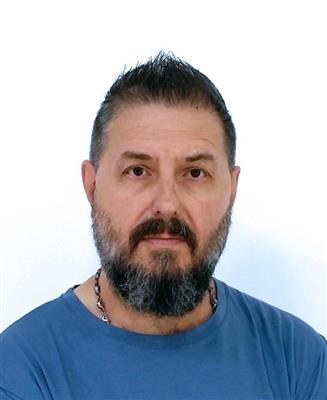
About Christian Eckart
Canadian · 1959–present
Canadian[3]-American Neo-Minimalist who fuses altarpiece formats and sacred geometry with industrial materials; works held at MoMA and the Guggenheim.
Museums5
Countries2
Largest reported holdingVictoria and Albert Museum, London · 3 recorded works
Loading map…
Where to see Christian Eckart
Collection holdings are reported here; current display varies. Check with each museum before visiting.
-
 3 recorded works
Victoria and Albert Museum
London, United Kingdom
-
 2 recorded works
Harvard Art Museums
Cambridge, United States
-
2 recorded works
Detroit Institute of Arts
Detroit, United States
-
1 recorded work
Art Institute of Chicago
Chicago, United States
-
1 recorded work
Museum of Fine Arts, Houston
Houston, United States


Frequently Asked Questions
Who was Christian Eckart?
Christian Eckart was born in Calgary in 1959[3] and studied sculpture at the Alberta College of Art before completing an MFA at Hunter College in 1986. Robert Morris was among his teachers.Who did Christian Eckart influence?
It is difficult to identify specific artists who were directly influenced by Christian Eckart. Art history sources do not discuss Eckart's direct influence on other artists. However, it is possible to discuss related movements and artists who explored similar ideas. Eckart's work engages with abstraction, light, and spirituality, themes that also appear in the work of earlier artists. Wassily Kandinsky, a pioneer of abstract art and a member of Der Blaue Reiter group, explored the connection between art and spirituality. Kandinsky aimed to evoke spiritual states through non-representational forms and colour. Similarly, the American Abstract Expressionists, such as Barnett Newman and Mark Rothko, used large colour fields to create contemplative experiences. These artists shared an interest in transcendentalism, seeking to express emotions and ideas beyond the material world.What is Christian Eckart's most famous work?
It is difficult to name one single work as Christian Eckart's "most famous". His practice involves modular, serialised artworks that often rework historical designs through minimalist aesthetics. Eckart is known for his engagement with the visual languages of modernism, minimalism, and the sacred geometries found in religious art. He frequently employs materials like polished metal and lacquered surfaces to create works that explore perception and reflection. These pieces often take the form of wall-mounted panels or sculptural objects. Without a singular, iconic piece to point to, it is more accurate to say that Eckart is recognised for his distinctive approach to abstraction and his ongoing investigation into the intersection of art, architecture, and spirituality. His work invites contemplation on the nature of light, space, and the viewing experience itself.What style or movement did Christian Eckart belong to?
It is difficult to assign Christian Eckart to a single style or movement, as his career has spanned several decades and explored diverse approaches. The concept of 'style' itself is complex. Style emerges through limitations and systems; it requires a consensus on social ideals. The absence of such agreement results in artists feeling isolated, as their ideas may not be understood or shared. Some argue 'style' is merely the expression of conventional content, its variations simply 'taste'. Some art historians see the early 20th-century Bauhaus movement as grappling with modernity, including irrational elements. Others view art produced during the Third Reich as an integral component of modernity, not an exception. These debates suggest the challenges in categorising artists within rigid stylistic boundaries. Artists play an active role in deepening our knowledge, seeking the highest perception of totality. Selectivity is not an option, as it is imperative to penetrate the whole cosmic law of rhythm, power, and matter, which is the true world.What is Christian Eckart known for?
Christian Eckart is known for his Neo-Minimalist paintings that incorporate precise geometry, hand-polished automotive lacquer, dichroic glass, and aluminium. He works in a tradition of the icon, locating him at the intersection of Malevich's reduction and the devotional object.
Sources
Where to See guide aggregates verified holdings of Christian Eckart's works across the following collections.
- [1] museum Harvard Art Museums Used for: museum holdings.
- [2] museum Victoria and Albert Museum Used for: museum holdings.
- [3] wikipedia Wikipedia: Christian Eckart Used for: biography.
- [4] book Beard, Lee, 1973- author, Butler, Adam, author; Van Cleave, Claire, author; Fortenberry, Diane, author; Stirling, Susan, author, Beard, Lee, 1973- author, Butler, Adam, author; Van Cleave, Claire, author; Fortenberry, Diane, author; Stirling, Susan, author - The Art Book_ New Edition, Mini Format Used for: biography, stylistic analysis.
- [5] book German expressionism : documents from the end of the Wilhelmine Empire to the rise of national socialism Used for: biography, stylistic analysis.
- [6] book guggenheim-refigur00kren Used for: biography.
- [7] book Taylor, Seth, Left-Wing Nietzscheans_ The Politics of German Expressionism 1910-1920 (Monographien und Texte zur Nietzsche-Forschung, 22) Used for: biography, stylistic analysis.
Editorial overseen by Solis Prints. Sources verified 2026-10-14. Click a source for details, or hover over [N] in the page above to preview.
Editorial standardsMethodologyCorrectionsAI disclosureAbout the editorial team