



About Else Berg
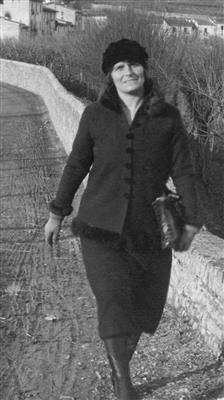
Museums2
Countries1
Most worksStedelijk Museum Amsterdam, Amsterdam · 18 works
Loading map…
Where to see Else Berg
Ranked by works you can see in person.
-
18 works
Stedelijk Museum Amsterdam
Amsterdam, Netherlands
-
0 works
Museum Boijmans Van Beuningen
Rotterdam, Netherlands


Frequently Asked Questions
Where can I see Else Berg's work?
To view works similar to Else Berg's, examples of related art styles can be found in several collections. In Germany, you might visit the Brücke Museum or the Nationalgalerie, both in Berlin. Other German museums include the Kunsthalle in Bremen, the Ludwig Museum and Wallraf-Richartz Museum in Cologne, the Folkwang Museum in Essen, and the Von der Heydt Museum in Wuppertal. The Kunsthalle in Hamburg and the Niedersächsisches Landesmuseum in Hanover also hold relevant pieces. Outside Germany, the Los Angeles County Museum of Art (LACMA) and the Art Institute of Chicago in the USA have relevant holdings. In the UK, the Brighton Museum & Art Gallery, Manchester Art Gallery, and the Victoria & Albert Museum in London may also contain similar works.What should I know about Else Berg's prints?
Else Berg (1877[1]-1969) was a German-Dutch[1] artist known for her involvement with the Bergen School, a group of early twentieth-century Dutch expressionist painters. Berg's prints, while less numerous than her paintings, offer insight into her artistic range. Berg studied art in Paris and Berlin before settling in the Netherlands. Her work often features portraits and scenes of daily life, rendered in a style that blends elements of German Expressionism[1] with a more personal, decorative approach. She was married to fellow painter Mommie Schwarz, and they often depicted each other in their work. Although Berg is best known for her paintings, she also produced linocuts and woodcuts. These prints share the bold lines and simplified forms found in her paintings. Her prints often depict figures, sometimes with a satirical or critical edge. Berg's work was suppressed during the Nazi occupation of the Netherlands, and she and Schwarz were eventually arrested. Schwarz was murdered in Auschwitz in 1942[1], but Berg survived the war in hiding. After the war, she continued to paint and exhibit her work until her death in 1969.Why are Else Berg's works important today?
Else Berg (1877[1]-1969) was a German-Dutch[1] artist whose paintings, drawings, and graphic work are significant for their expressionist style and subject matter. Berg's work provides insight into the cultural milieu of early 20th-century Europe, particularly the artistic communities of Berlin and Amsterdam. As a Jewish woman artist, Berg faced considerable adversity during her career. Her experiences during the Nazi era, when her work was labelled as degenerate, add a layer of historical importance to her artistic output. Her survival as an artist, and her later recognition, are important aspects of her biography. Berg's association with the Amsterdamse School, though not a formal membership, places her within a specific artistic movement in the Netherlands. Her individual approach to portraiture and the figure distinguishes her work. She developed a distinctive style, characterised by bold colours and simplified forms. Her work captures the spirit of her time, offering a personal perspective on the people and places around her.What techniques or materials did Else Berg use?
Information regarding Else Berg's specific techniques is limited. However, a broader look at artistic techniques of the period can provide some context. Technique in art involves a relationship between materials, manual and mechanical processes, and the artist's intention. Twentieth-century painters employed varied techniques, so the role of technique differs from artist to artist. Knowing an artist's materials offers insight into their technique, but a complete understanding requires considering equipment, media, manual processes, and intentions. Some artists used soft, fine brushes with fluid oil mediums to achieve smooth surfaces. Others used coarse hog's hair brushes on canvas. The use of a painting spatula and a painting knife could help to evenly cover a shape. Some artists primed canvases with animal-skin glue and then applied a ground consisting of red ochre and gesso tempered with linseed oil. The outlines of the composition were then sketched on the ground, probably with black oil paint.Who did Else Berg influence?
It is difficult to identify specific individuals who were directly influenced by Else Berg. Information about Berg's influence on other artists is scarce in the provided texts. The texts discuss the broader Scandinavian art scene and the challenges faced by artists in the region. They mention the dominance of certain artistic trends and the struggle for younger artists to break free from established traditions. The texts also note the importance of international contacts and the influence of movements such as COBRA and Fluxus on Scandinavian art. While the passages do not offer specific information about Berg's influence, they provide context for understanding the artistic environment in which she worked. The texts suggest that Scandinavian artists, in general, were grappling with tradition and seeking to establish their own identities within a complex and evolving art world.Who influenced Else Berg?
Paul Klee, Wassily Kandinsky, and Joan Miró are cited as influences on artists from the Bauhaus art school. Klee, in particular, taught Annelise Else Frieda Fleischmann (later known as Anni Albers) at the Bauhaus from 1922[1]. Fleischmann considered Klee a genius because of his ability to combine abstract and geometric forms with natural and organic ones. Jan Groth cited Sonja Ferlov Mancoba and her husband, Ernest Mancoba, as "my teachers". Sonja, a Danish sculptor affiliated with the COBRA group, maintained an idealism that Groth found impressive. He admired the continuity in her work, which gave her entire output the wholeness of a single project. Groth met the Mancobas in 1967.What is Else Berg's most famous work?
It is difficult to identify Else Berg's single most famous work, as different sources may emphasise various pieces. However, some of her notable works include double portraits and portraits of women. Berg painted several double portraits, suggesting this was a recurring theme in her work. She also created numerous portraits of women, some titled simply "Female Portrait", while others depict specific individuals such as "Ellen Warburg" and "Elisabeth Förster-Nietzsche". These portraits often capture the subjects in different settings and styles, demonstrating Berg's versatility as an artist. Without further information, it is challenging to definitively name one work as her most famous. However, the recurrence of double portraits and female portraits in available records suggests these were significant aspects of her artistic output.What style or movement did Else Berg belong to?
Else Berg is associated with German Expressionism[1], a movement that surfaced around 1905[1]. Expressionism is often considered a German phenomenon because it flourished in Germany for specific social and political reasons. However, it had a wider significance. Expressionism encompasses a range of styles and issues. It can be characterised as anguished, tortured, brutally primitive, passionately spiritual, and reflecting elemental cosmic forces. Expressionist art often features distortion and subjectivism. Expressionism developed artistic importance in the works of leading artists. The scale of subjective expression was immense, and its limits are vague. The accents changed with the impulses that provoked them. Not everything expressive in Germany between 1905 and 1920 can be called Expressionism.
Sources
Where to See guide aggregates verified holdings of Else Berg's works across the following collections.
- [1] wikipedia Wikipedia: Else Berg Used for: biography.
- [2] book Art Das Kunstmagazin Mai No 05 2019 Used for: biography, stylistic analysis.
- [3] book Smith, T’ai; , Bauhaus Weaving Theory Used for: biography, stylistic analysis.
- [4] book Elizabeth Otto & Patrick Rössler, Bauhaus Women Used for: biography, stylistic analysis.
- [5] book guggenheim-expger00neug Used for: biography.
- [6] book Post-impressionism : cross-currents in European painting Used for: biography.
- [7] book Post-impressionism : cross-currents in European painting Used for: biography.
Editorial overseen by Solis Prints. Sources verified 2026-08-29. Click a source for details, or hover over [N] in the page above to preview.
Editorial standardsMethodologyCorrectionsAI disclosureAbout the editorial team