



About Carel Willink
- magic realism
Dutch[1] painter of unsettling classical scenes, Willink's imaginary realism suspended figures in ancient ruins that suggested impending catastrophe.
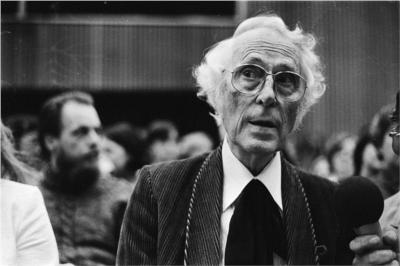
Where to see Carel Willink
Ranked by works you can see in person.
-
12 works
Centraal Museum
Utrecht, Netherlands
-
11 works
Stedelijk Museum Amsterdam
Amsterdam, Netherlands


-
7 works
Kunstmuseum Den Haag
The Hague, Netherlands
-
6 works
Museum Boijmans Van Beuningen
Rotterdam, Netherlands
-
6 works
Groninger Museum
Groningen, Netherlands
-
2 works
Royal Museum of Fine Arts Antwerp
Antwerp, Belgium
-
2 works
Van Abbemuseum
Eindhoven, Netherlands
-
2 works
Museum van Bommel van Dam
Venlo, Netherlands
-
2 works
Fries Museum
Leeuwarden, Netherlands
-
2 works
Kröller-Müller Museum
Otterlo, Netherlands


Own a piece of it
Carel Willink prints
Hand-finished archival prints from Carel Willink's body of work.

View all 13 museums
-
1 works
Museum of Fine Arts Ghent (MSK)
Ghent, Belgium
-
1 works
Rijksmuseum
Amsterdam, Netherlands
-
1 works
Museum de Fundatie
Heino, Netherlands


Can't travel? Bring Carel Willink home.
See all Carel Willink prints →Frequently Asked Questions
Where can I see Carel Willink's work?
Carel Willink's paintings are held in several European and North American museums. In the Netherlands, Museum Boymans-van Beuningen in Rotterdam and the Kréller-Müller Museum in Otterlo hold examples. Elsewhere in Europe, museums with Willink's work include the Kunstmuseum Basel, the Musée d’Art et d’Histoire in Geneva, the National Gallery of Scotland in Edinburgh, and the Hermitage Museum in St Petersburg. In Spain, the Museo Nacional del Prado and the Fundacíon Coleccion Thyssen-Bornemisza, both in Madrid, also have pieces. In the United States, museums holding Willink's paintings are the Museum of Fine Arts in Boston, the Art Institute of Chicago, the Minneapolis Institute of Arts, and the Saint Louis Art Museum. The National Gallery of Art in Washington, DC also owns some of his work.What should I know about Carel Willink's prints?
Carel Willink (1900[1]-1983[1]) was a Dutch[1] painter known for his magic realist style. Although he is best known for his paintings, prints form a significant part of his artistic output. These prints often echo the themes and imagery found in his paintings, featuring surreal and dreamlike compositions. Willink's prints frequently depict classical architecture, statues, and figures in unexpected juxtapositions. These elements create a sense of unease and mystery, characteristic of magic realism[1]. He explored themes of isolation, the passage of time, and the relationship between humanity and the environment. His printmaking techniques varied, including lithography and etching. These methods allowed him to create detailed and precise images, which suited his meticulous style. Willink's prints offer collectors a more accessible entry point into his oeuvre, as they are generally more affordable than his paintings. They provide insight into his artistic vision and his contribution to twentieth-century Dutch art.Why are Carel Willink's works important today?
Carel Willink (1900[1]-1983[1]) was a Dutch[1] painter known for his magic-realist style. He developed a precise, almost photographic technique. This approach gives his paintings a distinctive, unsettling quality. Willink's importance stems partly from his technical skill. He mastered traditional oil painting methods. His smooth surfaces and attention to detail create a sense of hyper-reality. This technical ability set him apart from many of his contemporaries. His subject matter also contributes to his continued relevance. Willink often depicted strange, dreamlike scenes. These feature classical architecture, ominous skies, and stiffly posed figures. These elements combine to create a feeling of unease and alienation. His paintings invite viewers to contemplate the mysteries of existence. Willink's work offers a unique perspective on the anxieties of the 20th century. His paintings remain popular with collectors and art enthusiasts. They are appreciated for their technical skill and thought-provoking imagery.What techniques or materials did Carel Willink use?
Carel Willink is best known for his precise and somewhat unsettling paintings in oil paint. He laboured to create smooth surfaces and a high degree of realism. Willink favoured traditional methods. He often painted on wood panels or canvas, carefully prepared with layers of gesso. This provided a smooth base for his meticulous brushwork. His technique involved layering thin glazes of oil paint to build up colour and form gradually. This painstaking approach allowed him to achieve subtle gradations of tone and a remarkable level of detail. He often combined careful observation with imaginative or symbolic elements; this placed him in the magic realist movement. Willink's technical skill contributed significantly to the disquieting atmosphere that characterises his work.Who did Carel Willink influence?
Carel Willink (1900[1]-1983[1]) was a Dutch[1] painter who developed a style of magic realism[1] after early experiments with expressionism and abstract art. Identifying direct influences is difficult, but his work has connections with other artists of his time. Willink's precise, detailed style and unsettling imagery have some affinity with the Italian painter Giorgio de Chirico (1888-1978[1]), who founded the Metaphysical art movement. Both artists created still and frozen scenes. De Chirico's influence on surrealism is well established, and Willink shared some of surrealism's interest in dreams and the subconscious. More recently, some have seen Willink's approach in the work of contemporary artists who explore similar themes of alienation and the uncanny. However, these are more like shared sensibilities than direct artistic lineage. Willink's individual style makes it difficult to draw lines of influence. His impact is perhaps more diffuse, contributing to a broader appreciation for magic realism in the Netherlands and beyond.Who influenced Carel Willink?
Carel Willink (1900[1]-1983[1]) was a Dutch[1] painter known for his magic realist style. His artistic development involved several influences, most notably the Old Masters and the German New Objectivity movement. Willink admired the technical skill and sense of realism found in the works of painters such as Jan van Eyck and Hans Memling. These artists informed his approach to detail and composition. He also drew inspiration from the Italian Renaissance artists. The German New Objectivity (Neue Sachlichkeit) movement, which emerged in the 1920s, also played a role in Willink's artistic style. Artists associated with this movement, such as Otto Dix and George Grosz, aimed to depict reality with clarity and precision, often portraying unsettling or critical views of society. This approach resonated with Willink, who adopted a similar objective style in his own paintings. He combined it with a sense of the surreal or uncanny.What is Carel Willink's most famous work?
Carel Willink is best known for his paintings in a style he termed "imaginary realism". This style is characterised by a meticulous technique reminiscent of the Old Masters, combined with unsettling and often dreamlike imagery. While it is difficult to single out one definitive "most famous" work, several paintings are particularly well recognised and frequently reproduced. "Simeon Stylites" from 1938[1] is a prime example of his mature style. It depicts a lone figure atop a column in a stark, deserted setting, rendered with precise detail and unsettling stillness. The painting is in the collection of the Museum MORE in Gorssel, Netherlands. Other notable works include "Wilma with Cat" (1950), a portrait of his wife that captures the cool detachment often associated with his portraits, and "The Eternal Cry" (1961), which presents a desolate, post-apocalyptic scene. These paintings, along with others such as "Job's Message" (1951), cemented Willink's reputation as a significant figure in 20th-century Dutch[1] art, an artist whose work continues to fascinate and disturb.What style or movement did Carel Willink belong to?
Carel Willink is generally associated with Magic Realism, a style that gained traction in the 1920s. This movement distinguished itself from Surrealism by concentrating on depictions of real objects, rather than exploring the unconscious mind. Magic Realist artists aimed to combine true-to-life elements with fantastical or imaginary ones. The art historian Franz Roh’s book *Post-Expressionism: Magic Realism* (1925[1]) defined this shift towards a more naturalistic and object-oriented style of painting. Roh was careful to distinguish it from a simple revival of 19th-century naturalism, pointing to its affinity with Italian "metaphysical painting", especially Giorgio de Chirico. Roh identified several sub-divisions within the broader movement of *Neue Sachlichkeit* (New Objectivity), placing them between what he called "the abyss on the left and on the right". Artists like Alexander Kanoldt employed highly realistic styles, often using muted colours to give ordinary subjects an otherworldly feel.
Sources
Where to See guide aggregates verified holdings of Carel Willink's works across the following collections.
- [1] wikipedia Wikipedia: Carel Willink Used for: biography.
- [2] book Tromp, Henk, A Real Van Gogh Used for: stylistic analysis.
- [3] book guggenheim-amsterdamparisdu00solo Used for: biography, stylistic analysis.
- [4] book guggenheim-futurismmodernfo00solo Used for: biography.
- [5] book guggenheim-guggenheimintern00frye Used for: biography.
- [6] book Metropolitan Museum Of Art, Metropolitan Museum Of Art - Dutch Painting, the Golden Age_ an Exhibition of Dutch Pictures of the Seventeenth Century, under the High Patronage of Her Majesty the Queen of the Netherlands - Metropolitan Museum of Art, Toledo Museum of Art, Art Used for: biography, stylistic analysis.
Editorial overseen by Solis Prints. Sources verified 2026-08-29. Click a source for details, or hover over [N] in the page above to preview.
Editorial standardsMethodologyCorrectionsAI disclosureAbout the editorial team