



About Giuseppe Abbati
1836–1868
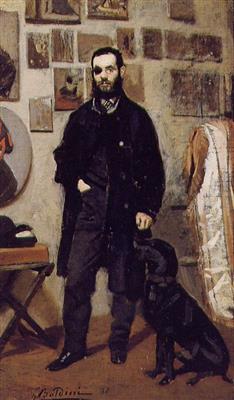
Macchiaioli painter Giuseppe Abbati, who lost his right eye fighting with Garibaldi, made luminous Tuscan landscapes before dying at 32.
Museums2
Countries2
Largest reported holdingGalleria Nazionale d'Arte Moderna e Contemporanea di Roma, Rome · 1 recorded work
Loading map…
Where to see Giuseppe Abbati
Collection holdings are reported here; current display varies. Check with each museum before visiting.
-
 1 recorded work
Galleria Nazionale d'Arte Moderna e Contemporanea di Roma
Rome, Italy
-
1 recorded work
Metropolitan Museum of Art
New York City, United States

Frequently Asked Questions
Where can I see Giuseppe Abbati's work?
Giuseppe Abbati's work can be viewed in several locations. In the United States, you can find his pieces at The Metropolitan Museum of Art in New York; the Los Angeles County Museum of Art (LACMA); the Minneapolis Institute of Arts; the Museum of Modern Art, also in New York; the Charles Hosmer Morse Museum of American Art in Winter Park, Florida; the Virginia Museum of Fine Arts in Richmond; and the Wolfsonian at Florida International University in Miami Beach. In Canada, Abbati's work is exhibited at the Royal Ontario Museum in Toronto. Within the United Kingdom, you can see Abbati's art at the Bakelite Museum in Williton; the Brighton Museum & Art Gallery; the Geffrye Museum and the Victoria & Albert Museum, both in London; the Manchester Art Gallery; and the National Museums of Scotland Royal Museum in Edinburgh.What should I know about Giuseppe Abbati's prints?
Giuseppe Abbati (1836[2]-1868[2]) was an Italian painter, a member of the Macchiaioli group. This movement reacted against academic conventions in Italian art during the mid-nineteenth century. Abbati trained at the Academy of Fine Arts in Venice, then Florence. He volunteered in Garibaldi's army in 1860[2]. Abbati's experiences in combat near Capua may have influenced his artistic direction. His mature work focused on scenes of daily life. He often depicted domestic interiors and the countryside. Abbati's style is characterised by its attention to natural light and shadow. The Macchiaioli technique involved creating paintings from patches, or "macchie", of colour. These patches built up an overall image. Although Abbati is known mainly for his paintings, prints of his work are available. These reproductions allow a wider audience to appreciate his artistic vision. They offer a glimpse into the world he captured with his distinctive approach to colour and form. His career was cut short; Abbati died at 32 after being bitten by his dog.Why are Giuseppe Abbati's works important today?
Giuseppe Abbati (1836[2]-1868[2]) was an Italian painter, a member of the Macchiaioli group. This movement, active in Tuscany in the mid-19th century, broke with academic tradition. They are known for their focus on plein-air painting and the effects of light. Abbati's importance stems partly from his role within the Macchiaioli. He explored modern subjects and techniques. His paintings often depict scenes of everyday life. They also show the Tuscan countryside. These works offer insight into 19th-century Italy. His artistic development was cut short by his early death in 1868[2]. He died during military service. Despite a brief career, Abbati produced a significant body of work. Art historians continue to study his paintings for their innovative approach to colour and form. His exploration of light and shadow influenced later generations of Italian artists. Today, his paintings are held in major collections. These include the Galleria d'Arte Moderna in Florence.What techniques or materials did Giuseppe Abbati use?
Giuseppe Abbati (1836[2]-1868[2]) was an Italian painter associated with the Macchiaioli group. He is known for his landscapes and interior scenes. Abbati studied at the Academy of Fine Arts in Venice. There, he trained in a traditional manner. However, he later rejected academic conventions in favour of painting *en plein air*. This approach involved painting directly from nature, capturing the immediate effects of light and atmosphere. He employed a technique characterised by broken brushstrokes, or *macchie* (patches), from which the Macchiaioli took their name. These patches of colour were applied in a loose, spontaneous manner. This contrasted with the smooth, blended surfaces favoured by academic painters. Abbati's use of colour was also distinctive. He often employed a limited palette, focusing on subtle tonal variations to create a sense of atmosphere and depth. Oil paint was his primary medium. He worked on canvas and sometimes panel. His subjects included the Tuscan countryside, gardens, and scenes of everyday life.Who did Giuseppe Abbati influence?
Giuseppe Abbati's influence is most apparent among the Macchiaioli painters, a group of Italian artists active in Tuscany during the mid-19th century. This circle included Giovanni Fattori, Telemaco Signorini, and Silvestro Lega. Abbati's emphasis on plein-air painting, capturing the effects of light and shadow directly from nature, had a particular impact on their artistic development. His work encouraged a move away from academic conventions toward a more immediate and subjective representation of the visual world. Abbati's exploration of light, colour, and the broken "macchia" (or spot) technique became central to the Macchiaioli aesthetic. His influence can be seen in their shared focus on scenes of everyday life, rendered with bold brushstrokes and a simplified approach to form. Although Abbati died relatively young, his artistic contributions helped shape the Macchiaioli movement and contributed to the development of modern Italian painting.Who influenced Giuseppe Abbati?
Giuseppe Abbati belonged to the Macchiaioli group; this artistic movement developed in Tuscany in the second half of the 19th century. The Macchiaioli reacted against the academic conventions of the Italian art academies. While specific individuals who influenced Abbati are not definitively recorded, the Macchiaioli, as a whole, were inspired by the Barbizon school of French painting. They shared an interest in working *en plein air* (outdoors) to capture the effects of light and atmosphere directly. The Macchiaioli also looked to the past for inspiration. They admired the Old Masters, particularly for their use of colour and composition. Their name, Macchiaioli, derives from "macchia", meaning "stain" or "spot", referring to their technique of composing pictures from patches of colour. This approach can be seen as related to Impressionism, although the Macchiaioli developed their style independently.What is Giuseppe Abbati's most famous work?
It is difficult to name one single work as Giuseppe Abbati's 'most famous'. Abbati was associated with the Macchiaioli group of painters, and his paintings are appreciated for their naturalism and light effects. Without specific references to Abbati's work, one can only point to general trends. Common subjects for artists of his time included religious scenes such as 'The Holy Family', as well as depictions of the Italian countryside. Some artists gained recognition for particular works within these genres, such as Nicolas Poussin, whose paintings like 'The Holy Family in Egypt' (Leningrad) and 'Hannibal Crossing the Alps' (Paris) are well known. However, further research would be needed to identify Abbati's most celebrated painting.What style or movement did Giuseppe Abbati belong to?
Giuseppe Abbati was associated with the Macchiaioli movement, an Italian artistic group active in Tuscany during the second half of the 19th century. The Macchiaioli are sometimes considered Italian Realists. The Macchiaioli distinguished themselves from academic conventions through their emphasis on painting *en plein air* (outdoors), and their exploration of the effects of light and shadow using patches (*macchie*) of colour. This approach aimed to capture the immediate visual impression of a scene. While the Macchiaioli shared some similarities with the French Impressionists, they developed independently and had distinct concerns, including a focus on Italian subjects and a greater emphasis on structure within their compositions. Giovanni Fattori is another artist associated with this movement.
Sources
Where to See guide aggregates verified holdings of Giuseppe Abbati's works across the following collections.
- [1] museum Galleria Nazionale d'Arte Moderna e Contemporanea di Roma Used for: museum holdings.
- [2] wikipedia Wikipedia: Giuseppe Abbati Used for: biography.
- [3] book Masterpieces of western art : a history of art in 900 individual studies from the Gothic to the present day Used for: biography.
- [4] book Post-impressionism : cross-currents in European painting Used for: biography.
- [5] book Post-impressionism : cross-currents in European painting Used for: biography.
Editorial overseen by Solis Prints. Sources verified 2026-09-30. Click a source for details, or hover over [N] in the page above to preview.
Editorial standardsMethodologyCorrectionsAI disclosureAbout the editorial team