



About Antonio Mancini
- portrait
Italian[3] painter whose surfaces of impastoed paint, glass, and tinfoil so impressed Sargent that he called Mancini the greatest living painter.
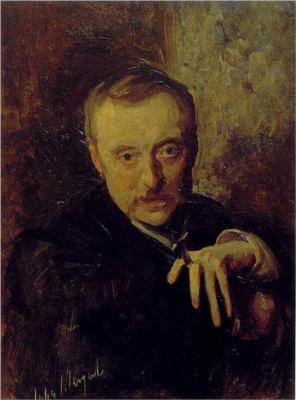
Where to see Antonio Mancini
Ranked by works you can see in person.
-
14 works
The Mesdag Collection
The Hague, Netherlands
-
5 works
National Gallery
London, United Kingdom


-
5 works
Hugh Lane Gallery
Dublin, Ireland
-
3 works
Isabella Stewart Gardner Museum
Boston, United States
-
 3 works
Galleria Nazionale d'Arte Moderna e Contemporanea di Roma
Rome, Italy
-
3 works
Groninger Museum
Groningen, Netherlands
-
3 works
Musée d'Orsay
Paris, France
-
2 works
Gallerie d'Italia – Milano
Milan, Italy
-
2 works
National Museum of Fine Arts, Argentina
Buenos Aires, Argentina
Also here (6)
-
2 works
Museum of Fine Arts Boston
Boston, United States


View all 27 museums
-
2 works
National Museum Cardiff
Cardiff, United Kingdom
-
1 works
Milwaukee Art Museum
Milwaukee, United States
-
1 works
Buffalo AKG Art Museum
Buffalo, United States
-
1 works
Barber Institute of Fine Arts
Birmingham, United Kingdom
-
1 works
Galleria d'arte moderna di Milano
Milan, Italy
-
1 works
Stedelijk Museum Amsterdam
Amsterdam, Netherlands
-
1 works
Glasgow Museums Resource Centre
Glasgow, United Kingdom
-
1 works
Atkinson Art Gallery and Library
Southport, United Kingdom
-
1 works
Museo Nacional Centro de Arte Reina Sofía
Madrid, Spain
-
1 works
Museo del Prado
Madrid, Spain
-
1 works
Rijksmuseum
Amsterdam, Netherlands
-
1 works
Harvard Art Museums
Cambridge, United States
-
1 works
Art Institute of Chicago
Chicago, United States
-
1 works
Minneapolis Institute of Art
Minneapolis, United States
-
1 works
Metropolitan Museum of Art
New York City, United States
-
1 works
National Gallery of Victoria
Melbourne, Australia
-
1 works
Tate
London, United Kingdom


Frequently Asked Questions
Where can I see Antonio Mancini's work?
It is difficult to pinpoint all locations of Antonio Mancini's work. However, some museums and galleries with collections of European art may hold examples. For instance, in the UK, the National Gallery, the National Gallery of Scotland, the Fitzwilliam Museum in Cambridge, Leeds City Art Gallery, and the Burrell Collection in Glasgow have collections of European art. Outside the UK, the National Gallery of Victoria in Melbourne, the Minneapolis Institute of Arts, the Hermitage Museum in St Petersburg, the Tretyakov Gallery in Moscow, the Museo Nacional del Prado in Madrid, and the Musée d’Art et d’Histoire in Geneva may be worth investigating. It is advisable to check the collections catalogues of these and similar institutions or contact them directly for information about specific holdings of Mancini's paintings, drawings, or prints.What should I know about Antonio Mancini's prints?
Antonio Mancini (1852[3]-1930[3]) was an Italian[3] painter, but information specifically regarding his prints is scarce. He is best known for his paintings, which often depicted scenes of everyday life in Naples. Mancini's work is characterised by his distinctive impasto technique and his use of colour to create mood and atmosphere. He was a contemporary of other Italian artists such as Giovanni Boldini and Giacomo Favretto, and his work can be seen as part of the broader movement of Italian Realism. Although Mancini's paintings are relatively well known, his prints are less so. It is possible that he produced prints as studies for his paintings, or as independent works of art, but further research is needed to confirm this. Collectors interested in Mancini's work may wish to consult catalogues and databases of Italian prints to see if any examples of his work are known to exist.What techniques or materials did Antonio Mancini use?
Antonio Mancini was a painter active in Italy during the late 19th and early 20th centuries. Although precise details of his methods are scarce, some general observations can be made. Mancini's paintings suggest he employed techniques common to the period. He likely used brushes with soft hairs, along with a fluid oil medium, to achieve smooth surfaces and fine detail. Linseed oil was a likely choice, as it dried more quickly than walnut oil. Some artists of the time sketched outlines before applying paint, possibly using black oil paint. Light areas would be blocked in with white or pale grey. Opaque colours were applied next, followed by modifications with an oil glaze. Without more specific documentation, a complete account of Mancini's studio practice is difficult. However, his finished works offer some insight into the materials and methods he favoured.Who did Antonio Mancini influence?
It is difficult to summarise Antonio Mancini's influence on other artists. The art historian Roberto Longhi was especially important in bringing Caravaggio to the attention of the public and raising his critical fortune among twentieth-century scholars. Caravaggio's realistic style has influenced today’s art, particularly in photography and cinema; rather, his paintings’ ambiguities are essential to the conception of modernity. The Dutchmen Hendrick ter Brugghen, Gerrit van Honthorst, Dirck van Baburen and Rembrandt van Rijn; the Frenchmen Simon Vouet, Valentin de Boulogne and Georges de La Tour; and the Spaniards Francisco Ribalta, Jusepe de Ribera, Diego Velázquez and others. Their work is inconceivable without his example, even if in Rome the wild enthusiasm for his art by the younger painters eventually gave way to classicism and the High Baroque. During much of the eighteenth century and the first half of the nineteenth, Caravaggio’s reputation declined, even if nineteenth-century painters such as Gustave Courbet embraced a proletarian approach to art that was reminiscent of his own. Renewed interest in Caravaggio accompanied the rise of modern art in the twentieth century that introduced radical new styles conditioned by complexity, ambiguity, contradiction and the response of the viewer.Who influenced Antonio Mancini?
Giulio Mancini, writing in Rome circa 1620, considered the folds and highlights of drapery to be an important element of an artist's individual style. Mancini felt that the handling of drapery was inimitable, and depended more on the imagination of the artist than on the appearance of the object itself. Bellori characterised Barocci’s draperies as sweet and pure, while Lanfranco’s folds were few and simple; Guido Reni’s possessed ease and grace. Caravaggio restored naturalism to Italian[3] art. Many were excited by his innovations, purchased his paintings, and followed his lead, but he was a polarizing figure who seemed to defy the established ideals of art. Some felt he relied too much on direct observation, and was deficient in imagination because he needed models in front of him for every figure.What style or movement did Antonio Mancini belong to?
Antonio Mancini (1852[3]-1930[3]) was an Italian[3] painter. He is best known for genre paintings and portraits. It is difficult to assign Mancini to one specific movement. His career began in the late 19th century, and he developed a personal style that incorporated elements of realism, impressionism, and other contemporary trends. Some consider him a late Realist, due to his focus on everyday life and his attention to detail. Others see his work as aligned with aspects of Impressionism, because of his interest in capturing light and atmosphere. Mancini's technique was distinctive. He often used thick paint application and unconventional tools, such as palette knives, to create textured surfaces. He sometimes incorporated reflective materials into his paintings. This gave his works a unique, almost sculptural, quality. While he engaged with some contemporary trends, his individual approach sets him apart from any single school or movement.What was Antonio Mancini known for?
Antonio Mancini (1852[3]-1930[3]) was an Italian[3] artist known for his genre scenes and portraits. He worked primarily in Naples and Rome. Mancini's style is characterised by its realism and attention to detail. He often depicted everyday life, such as street urchins, musicians, and working-class people. His portraits captured the likenesses and social details of his subjects. Mancini experimented with technique. He sometimes employed a graticola (grid) to aid accurate drawing, and he built up paint in textured layers. His use of colour and light created dramatic effects. Although appreciated in his lifetime, Mancini suffered periods of mental instability and financial hardship. His work can be found in collections both in Italy and internationally.What is Antonio Mancini known for?
Antonio Mancini is known for applying paint so thickly that his canvases needed reinforcement. In his later work, he pressed glass, tinfoil, and other materials into the wet surface, creating a glittering, encrusted texture that made his paintings as much relief sculpture as picture.
Sources
Where to See guide aggregates verified holdings of Antonio Mancini's works across the following collections.
- [1] museum The Mesdag Collection Used for: museum holdings.
- [2] museum Galleria Nazionale d'Arte Moderna e Contemporanea di Roma Used for: museum holdings.
- [3] wikipedia Wikipedia: Antonio Mancini Used for: biography.
- [4] book Braun, Emily, 1957-; Asor Rosa, Alberto; Royal Academy of Arts (Great Britain), Italian art in the 20th century : painting and sculpture, 1900-1988 Used for: biography.
- [5] book Post-impressionism : cross-currents in European painting Used for: biography.
- [6] book Post-impressionism : cross-currents in European painting Used for: biography.
Editorial overseen by Solis Prints. Sources verified 2026-08-29. Click a source for details, or hover over [N] in the page above to preview.
Editorial standardsMethodologyCorrectionsAI disclosureAbout the editorial team