

Fine Art Poster
From $29
A giclée print on 200gsm matte fine art paper, using a twelve-colour process for accurate, fade-resistant colour. Supplied unframed, delivered flat or rolled.




Archival giclée
Frames arrive ready to hang
Secure checkout
Made to order
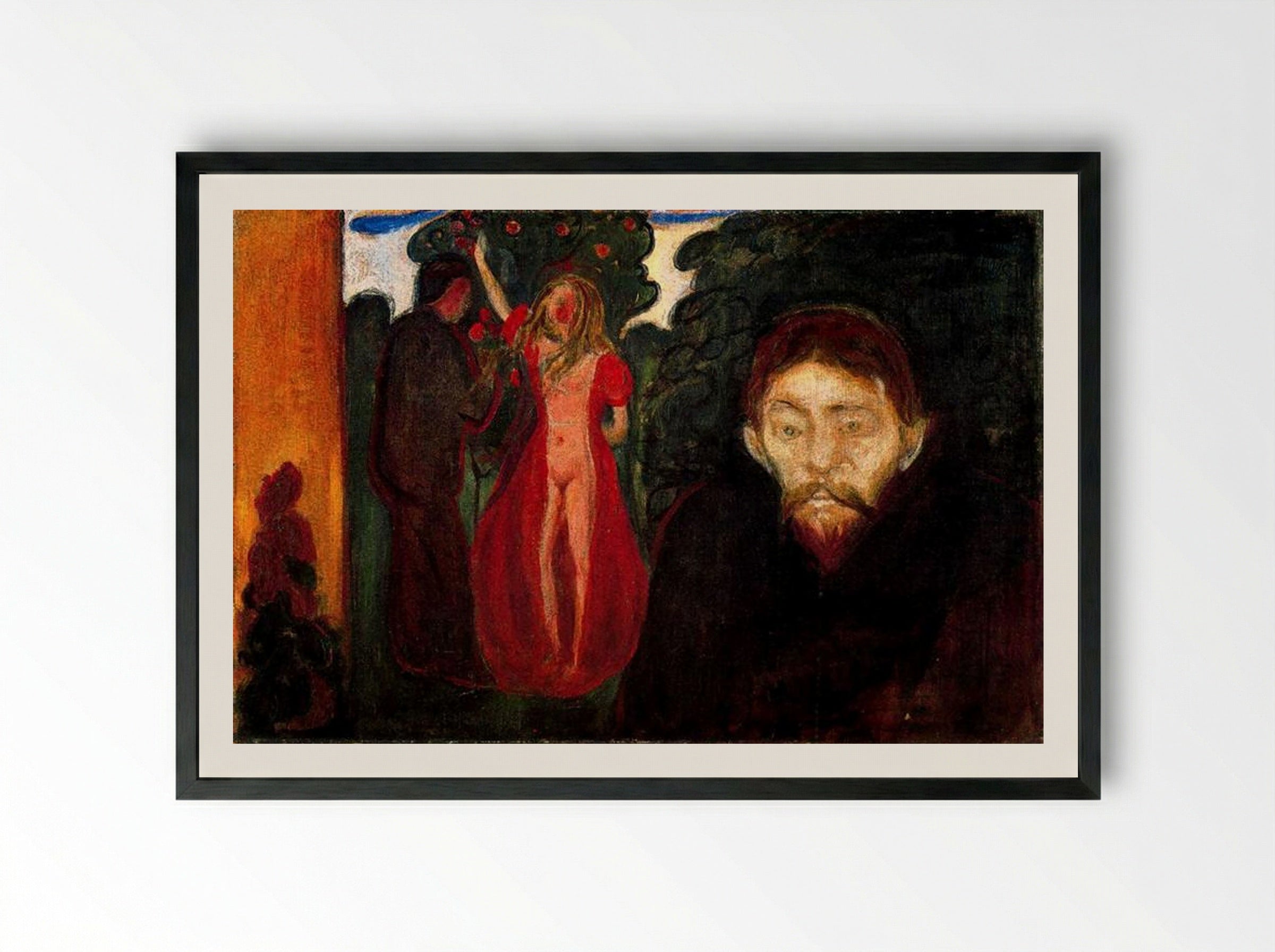
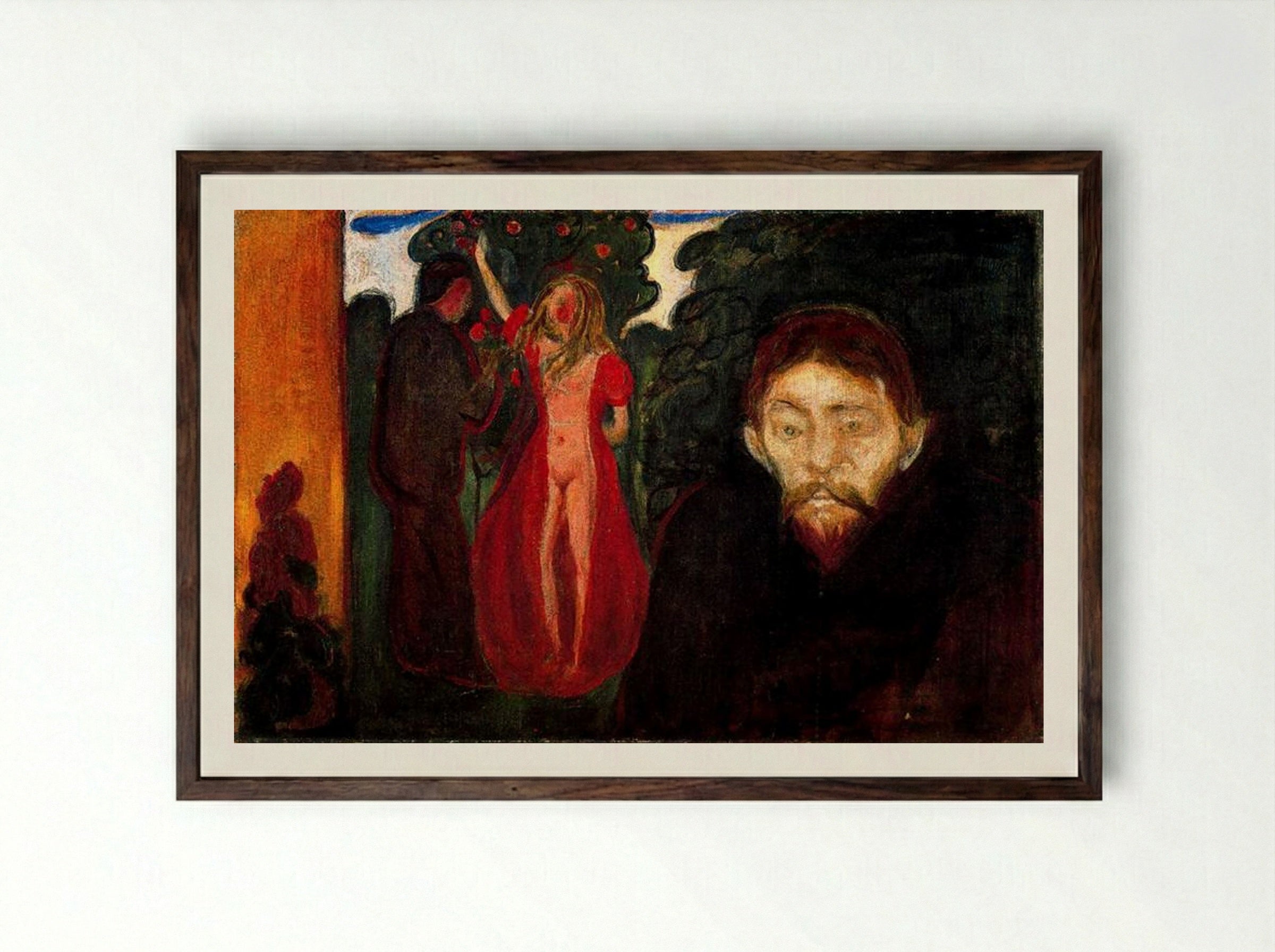
Edvard Munch's "Jealousy II" (1896) is a Symbolist oil painting exploring themes of envy and suspicion. The work features a man in the foreground with a jealous gaze, while a couple in the background stands beneath a tree.
Edvard Munch's "Jealousy II", painted in 1896, is a potent exploration of human emotion, a recurring theme throughout his oeuvre. Munch, a Norwegian painter whose work is often associated with Symbolism and Expressionism, used his art to explore the depths of the human psyche, confronting themes of love, anxiety, and death. "Jealousy II" is part of a series of works that grapple with the destructive power of envy and suspicion. The painting presents a complex scene with multiple figures. A man with a beard dominates the foreground, his intense gaze directed towards the viewer, conveying a sense of unease and suspicion. In the background, a couple stands beneath a tree bearing red fruit, possibly alluding to the biblical story of Adam and Eve and the loss of innocence. The woman, unclothed, reaches for the fruit, while the man beside her appears to be engaged in conversation. The composition, with its stark contrasts and distorted figures, amplifies the emotional intensity of the scene. Munch's use of colour, particularly the dominant reds and dark greens, further enhances the sense of foreboding and psychological turmoil. The loose brushwork and flattened perspective contribute to the overall feeling of anxiety and emotional rawness, characteristic of Munch's distinctive style.
Because every print is made to order, we don't offer change-of-mind returns, refunds or exchanges. If your order arrives faulty, damaged or incorrect, we'll replace it free of charge — just contact us within 48 hours of delivery. See our refunds page for full details.
We ship worldwide, printing at the production hub nearest to your delivery address. Delivery times and costs vary by destination — you'll see the options available to you at checkout.
Each print is produced to order using 12-colour giclée printing on FSC-certified archival paper. Designed in Britain and printed at your nearest production hub to reduce waste and speed up delivery.

Artist Biography
Our Features
Designed for Lasting Impact
Every Solis piece is made to order with archival, gallery-quality materials built to last.
To keep your artwork looking its best:
Museum-grade giclée on FSC-certified archival matte paper, with framed and canvas options.
Made to order
Every piece is printed to order. These are the five finishes, and what makes each one different.
From $29
A giclée print on 200gsm matte fine art paper, using a twelve-colour process for accurate, fade-resistant colour. Supplied unframed, delivered flat or rolled.

From $89
The same fine art print in a solid wood frame with UV-protective acrylic glaze and rigid backing. Five frame colours. Arrives ready to hang.
Why Choose Us ?
Damage-free delivery guarantee
Fast Shipping
Museum-Quality Materials
Artist Biography
Edvard Munch
You May Also Like
We use cookies to measure our marketing and see which prints people love.We use cookies to measure our marketing.
By continuing to browse, you agree · Privacy Policy