

Fine Art Poster
From $29
A giclée print on 200gsm matte fine art paper, using a twelve-colour process for accurate, fade-resistant colour. Supplied unframed, delivered flat or rolled.






Archival giclée
Frames arrive ready to hang
Secure checkout
Made to order
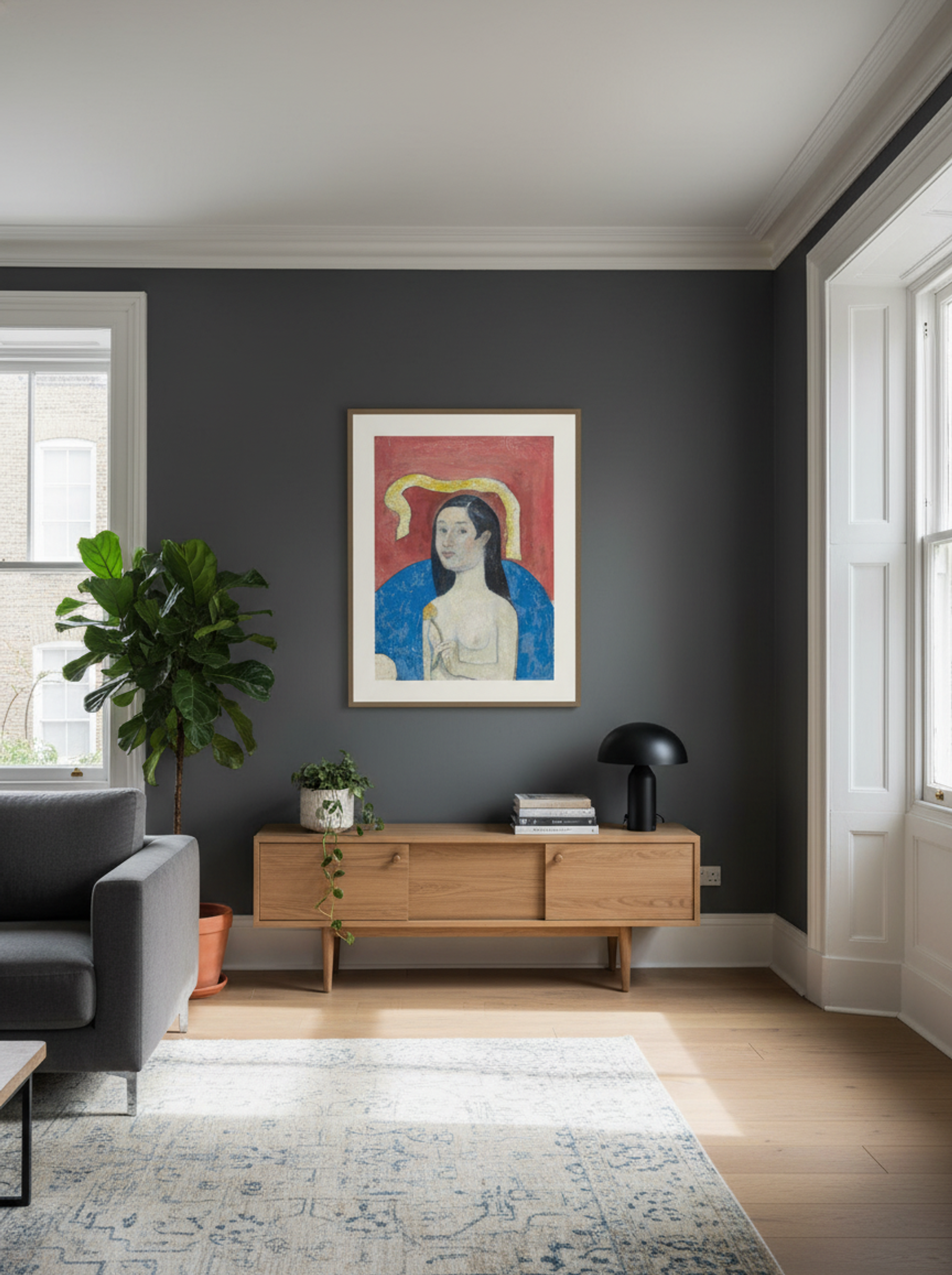
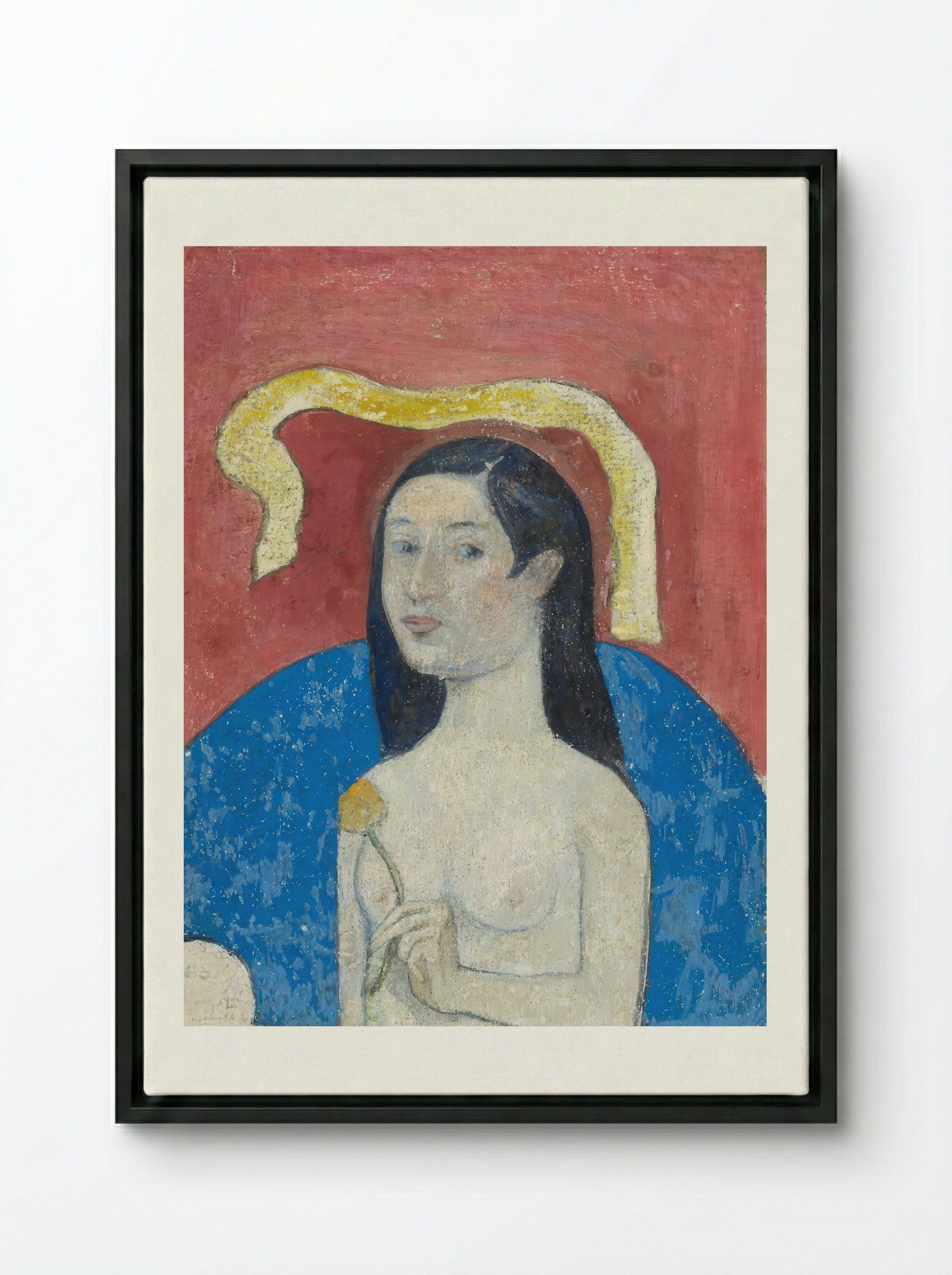
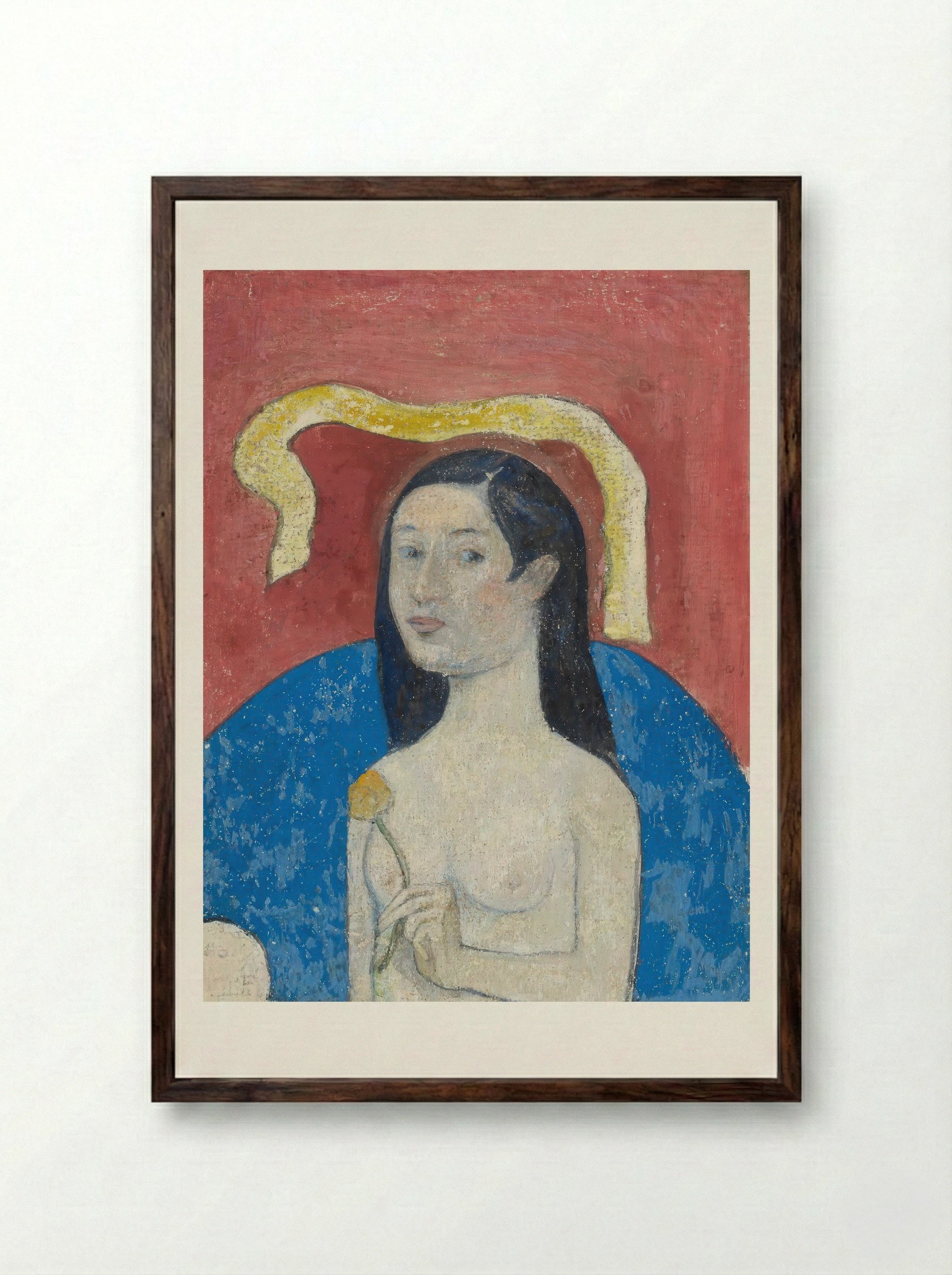
A tender portrait, likely of Gauguin's mother, rendered in bold colours and simplified forms characteristic of his Post-Impressionist style. This fine art print offers a touch of bohemian elegance and introspective beauty to any space.
This intimate portrait, believed to be of Paul Gauguin's mother, Aline Chazal, is a tender and somewhat enigmatic work from the late 1880s. Painted in a style that anticipates Gauguin's later, more overtly Symbolist works, the portrait depicts a woman, nude from the shoulders up, holding a single yellow flower. The background is divided into blocks of colour: a vibrant red above and a striking blue behind the figure. A looping yellow shape hovers above her head, adding to the painting's symbolic ambiguity. Gauguin's Post-Impressionist style is evident in the simplified forms, bold colours, and the emphasis on emotional expression over strict realism. The portrait possesses a quiet intensity, inviting contemplation on the relationship between artist and mother, and the broader themes of femininity and nature. As a fine art print, this work brings a touch of bohemian elegance and introspective beauty to any space. Its striking colours and unique composition make it a captivating focal point, ideal for adding a touch of artistic flair to a living room, bedroom, or study.
Because every print is made to order, we don't offer change-of-mind returns, refunds or exchanges. If your order arrives faulty, damaged or incorrect, we'll replace it free of charge — just contact us within 48 hours of delivery. See our refunds page for full details.
We ship worldwide, printing at the production hub nearest to your delivery address. Delivery times and costs vary by destination — you'll see the options available to you at checkout.
Each print is produced to order using 12-colour giclée printing on FSC-certified archival paper. Designed in Britain and printed at your nearest production hub to reduce waste and speed up delivery.

Artist Biography
Our Features
Designed for Lasting Impact
Every Solis piece is made to order with archival, gallery-quality materials built to last.
To keep your artwork looking its best:
Museum-grade giclée on FSC-certified archival matte paper, with framed and canvas options.
Made to order
Every piece is printed to order. These are the five finishes, and what makes each one different.
From $29
A giclée print on 200gsm matte fine art paper, using a twelve-colour process for accurate, fade-resistant colour. Supplied unframed, delivered flat or rolled.

From $89
The same fine art print in a solid wood frame with UV-protective acrylic glaze and rigid backing. Five frame colours. Arrives ready to hang.

From $169
A deeper solid wood frame: 33mm deep with a 20mm face and Perspex glaze. The print sits unmounted for a clean gallery presentation. Black, white or natural.

From $59
Hand-stretched canvas with neat gallery-wrapped edges, giving the artwork surface texture and depth. Arrives ready to hang.

From $175
Stretched canvas set in a floating wood frame, our most substantial finish. Arrives ready to hang.
Why Choose Us ?
Damage-free delivery guarantee
Fast Shipping
Museum-Quality Materials
Artist Biography
Paul Gauguin
You May Also Like
Cookies show us which prints people love, so we hang the right art. Help us fill it?
Essential cookies only if you prefer · Privacy Policy