

Fine Art Poster
From $29
A giclée print on 200gsm matte fine art paper, using a twelve-colour process for accurate, fade-resistant colour. Supplied unframed, delivered flat or rolled.



Archival giclée
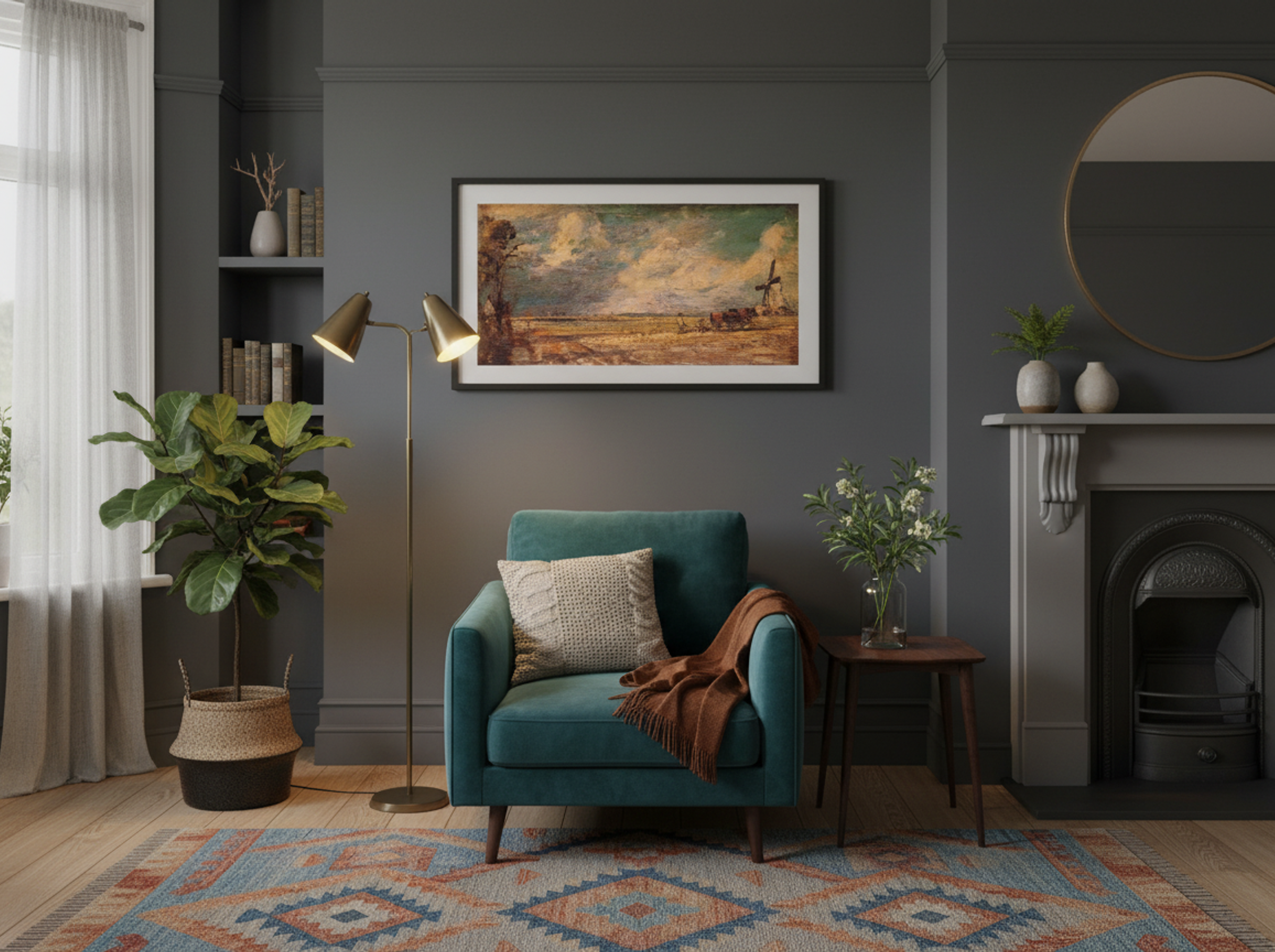
Frames arrive ready to hang
Secure checkout
Made to order
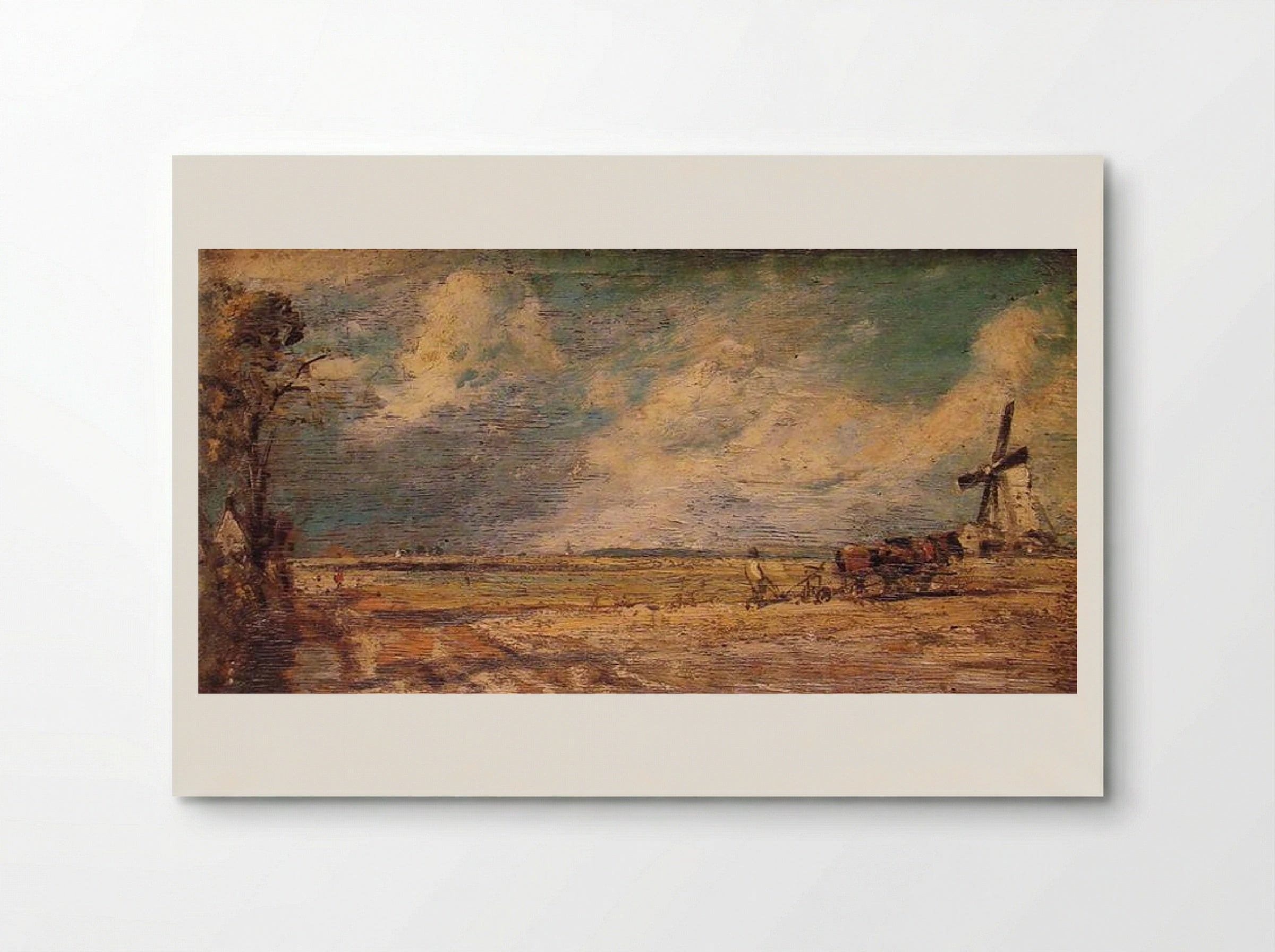
This oil on canvas artwork by John Constable captures a rural scene with a farmer ploughing a field under a dynamic sky, showcasing the artist's skill in depicting atmospheric effects and the English countryside.
John Constable, a celebrated British Romantic painter, is best known for his landscape paintings of Dedham Vale, his home region. Constable's art captures the essence of the English countryside, with a focus on naturalism and atmospheric effects. He famously studied cloud formations, believing the sky was a key element in landscape painting. His works often depict rural scenes, featuring working people and the changing seasons. Constable's innovative techniques and dedication to capturing the transient effects of light and weather had a significant influence on later generations of artists. 'Spring Ploughing' presents a broad, flat field under a sky filled with dynamic clouds. A windmill stands to the right, its form softened by the atmospheric perspective. In the middle ground, a farmer guides a plough, pulled by horses, across the field. The colour palette is dominated by earth tones, with browns and yellows in the field contrasting with the blues and whites of the sky. The brushwork is loose and expressive, capturing the texture of the land and the movement of the clouds.
Because every print is made to order, we don't offer change-of-mind returns, refunds or exchanges. If your order arrives faulty, damaged or incorrect, we'll replace it free of charge — just contact us within 48 hours of delivery. See our refunds page for full details.
We ship worldwide, printing at the production hub nearest to your delivery address. Delivery times and costs vary by destination — you'll see the options available to you at checkout.
Each print is produced to order using 12-colour giclée printing on FSC-certified archival paper. Designed in Britain and printed at your nearest production hub to reduce waste and speed up delivery.
Specific Features
Every Solis piece is made to order with archival, gallery-quality materials built to last.
Care & Cleaning
To keep your artwork looking its best:
Materials & Sizing
Museum-grade giclée on FSC-certified archival matte paper, with framed and canvas options.

Artist Biography
Made to order
Every piece is printed to order. These are the five finishes, and what makes each one different.
From $29
A giclée print on 200gsm matte fine art paper, using a twelve-colour process for accurate, fade-resistant colour. Supplied unframed, delivered flat or rolled.

From $89
The same fine art print in a solid wood frame with UV-protective acrylic glaze and rigid backing. Five frame colours. Arrives ready to hang.
Why Choose Us ?
Damage-free delivery guarantee
Fast Shipping
Museum-Quality Materials
You May Also Like
We use cookies to measure our marketing and see which prints people love.We use cookies to measure our marketing.
By continuing to browse, you agree · Privacy Policy