

Fine Art Poster
From $29
A giclée print on 200gsm matte fine art paper, using a twelve-colour process for accurate, fade-resistant colour. Supplied unframed, delivered flat or rolled.



Archival giclée
Frames arrive ready to hang
Secure checkout
Made to order
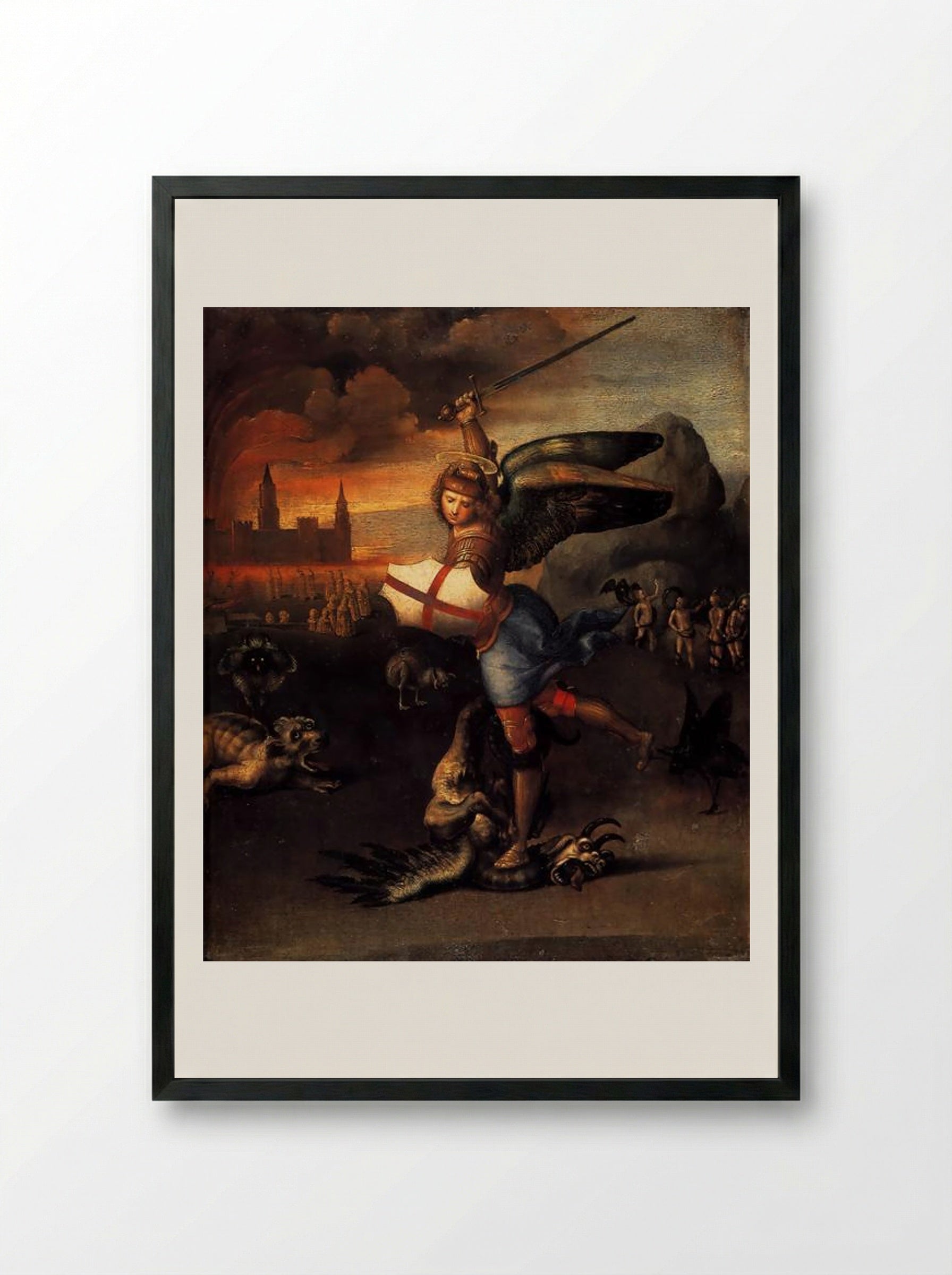
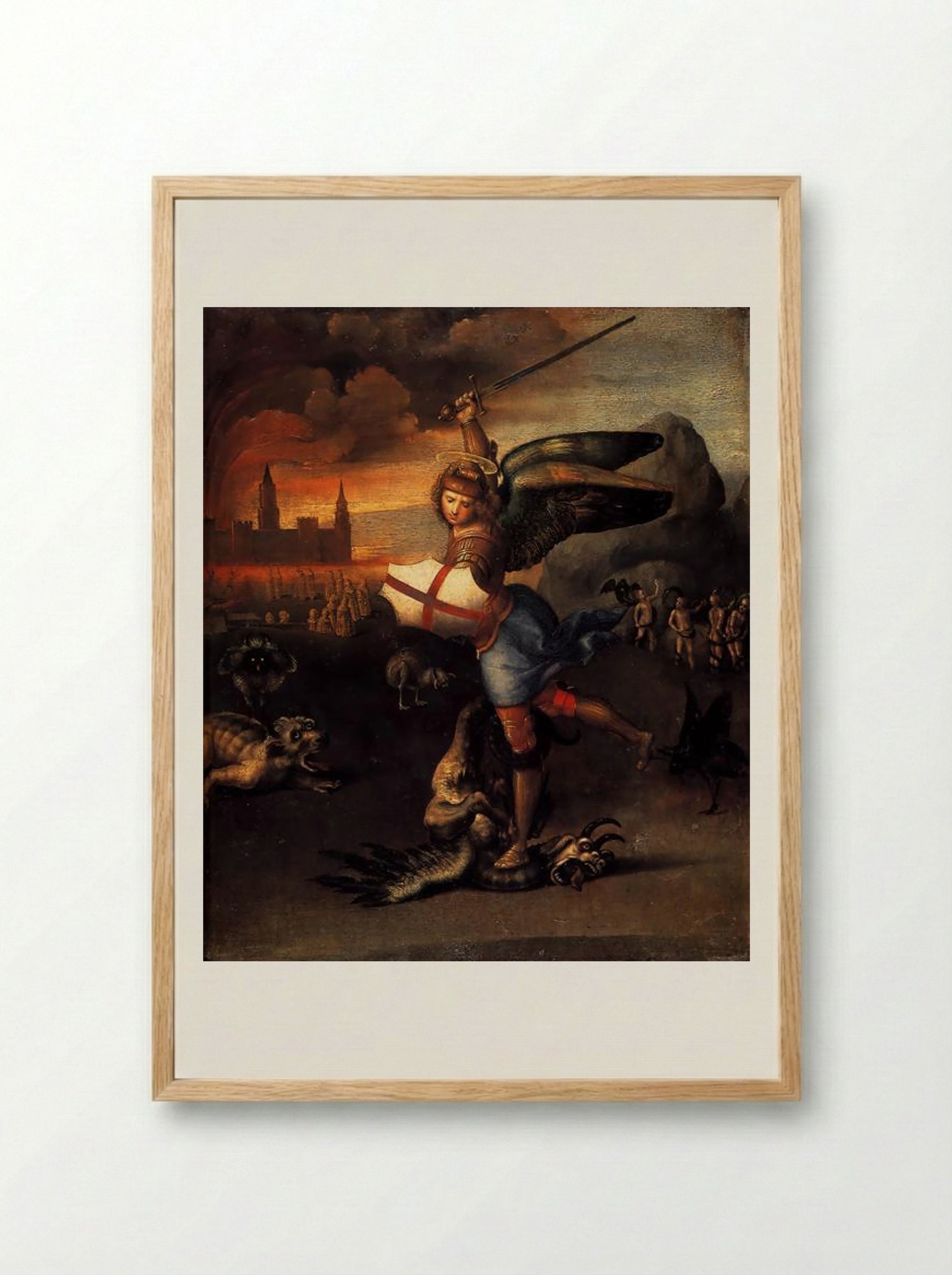
Raphael's "St. Michael", painted between 1504 and 1505, captures the Archangel's triumph over evil in a dynamic composition, showcasing the artist's early mastery of High Renaissance style and his ability to blend dramatic action with serene beauty.
Raphael's "St. Michael" (1504-1505) depicts the Archangel Michael standing triumphantly over a defeated demon. Painted in oil on panel, the work dates to Raphael's early Florentine period, showing the influence of Leonardo da Vinci in its dynamic composition and sfumato technique. The painting portrays St. Michael as a youthful, armoured figure, his sword raised in victory. He stands atop a grotesque, multi-headed demon, symbolising the triumph of good over evil. The background features a distant cityscape engulfed in flames, contrasting with the serene figures of angels and the faithful in the middle ground. This juxtaposition creates a dramatic tension, reinforcing the theme of divine intervention and salvation. The colour palette is dominated by warm tones of red, brown, and gold, with cooler blues and greens providing contrast. The meticulous detail in the armour and the expressive faces of the figures exemplify Raphael's mastery of High Renaissance style. "St. Michael" is one of two small panels commissioned by Guidobaldo da Montefeltro, Duke of Urbino, the other being "St. George". The panels were likely intended as personal devotional images, reflecting the Duke's military and spiritual aspirations. The painting is now part of the Louvre Museum's collection in Paris.
Because every print is made to order, we don't offer change-of-mind returns, refunds or exchanges. If your order arrives faulty, damaged or incorrect, we'll replace it free of charge — just contact us within 48 hours of delivery. See our refunds page for full details.
We ship worldwide, printing at the production hub nearest to your delivery address. Delivery times and costs vary by destination — you'll see the options available to you at checkout.
Each print is produced to order using 12-colour giclée printing on FSC-certified archival paper. Designed in Britain and printed at your nearest production hub to reduce waste and speed up delivery.
Specific Features
Every Solis piece is made to order with archival, gallery-quality materials built to last.
Care & Cleaning
To keep your artwork looking its best:
Materials & Sizing
Museum-grade giclée on FSC-certified archival matte paper, with framed and canvas options.

Artist Biography
Made to order
Every piece is printed to order. These are the five finishes, and what makes each one different.
From $29
A giclée print on 200gsm matte fine art paper, using a twelve-colour process for accurate, fade-resistant colour. Supplied unframed, delivered flat or rolled.

From $89
The same fine art print in a solid wood frame with UV-protective acrylic glaze and rigid backing. Five frame colours. Arrives ready to hang.
Why Choose Us ?
Damage-free delivery guarantee
Fast Shipping
Museum-Quality Materials
You May Also Like
We use cookies to measure our marketing and see which prints people love.We use cookies to measure our marketing.
By continuing to browse, you agree · Privacy Policy