

Fine Art Poster
From $29
A giclée print on 200gsm matte fine art paper, using a twelve-colour process for accurate, fade-resistant colour. Supplied unframed, delivered flat or rolled.



Archival giclée
Frames arrive ready to hang
Secure checkout
Made to order
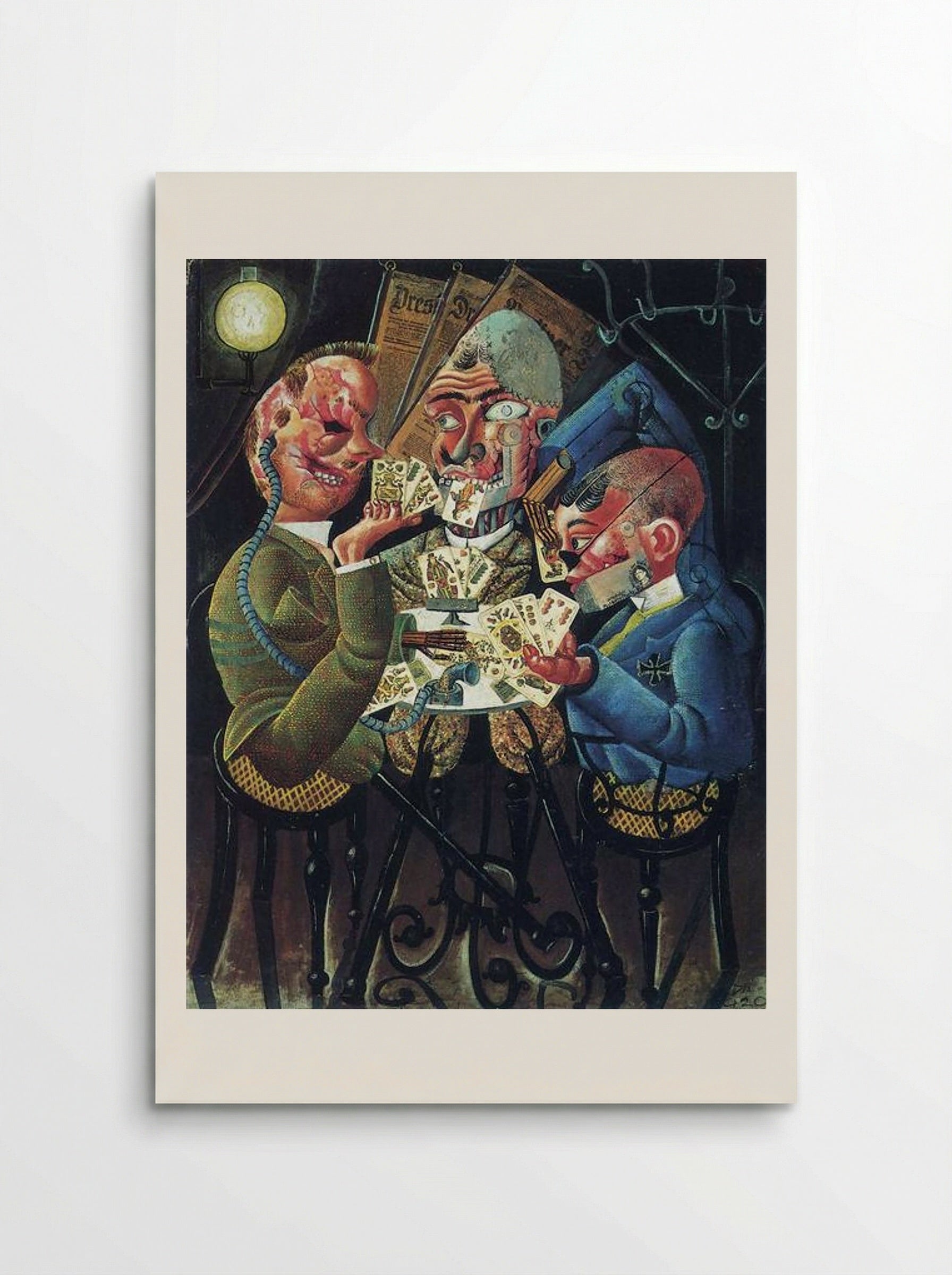
Otto Dix's *The Skat Players* is a powerful and disturbing depiction of disfigured World War I veterans, rendered in the harsh style of the New Objectivity movement. The painting serves as a critique of war and its devastating consequences.
Otto Dix's 1920 painting, *The Skat Players*, is a brutal commentary on the physical and psychological damage inflicted upon veterans of the First World War. Dix himself served on the Western Front, and his experiences profoundly shaped his artistic vision. This work is a prime example of the New Objectivity movement, which sought to portray the realities of post-war Germany with unflinching honesty. The painting depicts three disfigured men playing skat, a popular German card game. Their bodies are grotesquely distorted, with missing limbs, mechanical prostheses, and faces ravaged by injury. Dix uses collage elements, such as newspaper clippings, to further emphasise the fragmented and chaotic nature of their existence. The garish colours and harsh lines contribute to the overall sense of unease and alienation. The figures are surrounded by newspapers, perhaps a comment on the media's role in shaping public perception of the war and its aftermath. The painting is not simply a depiction of physical suffering; it is a statement about the dehumanising effects of war and the psychological toll it takes on individuals and society.
Because every print is made to order, we don't offer change-of-mind returns, refunds or exchanges. If your order arrives faulty, damaged or incorrect, we'll replace it free of charge — just contact us within 48 hours of delivery. See our refunds page for full details.
We ship worldwide, printing at the production hub nearest to your delivery address. Delivery times and costs vary by destination — you'll see the options available to you at checkout.
Each print is produced to order using 12-colour giclée printing on FSC-certified archival paper. Designed in Britain and printed at your nearest production hub to reduce waste and speed up delivery.
Specific Features
Every Solis piece is made to order with archival, gallery-quality materials built to last.
Care & Cleaning
To keep your artwork looking its best:
Materials & Sizing
Museum-grade giclée on FSC-certified archival matte paper, with framed and canvas options.
Made to order
Every piece is printed to order. These are the five finishes, and what makes each one different.
From $29
A giclée print on 200gsm matte fine art paper, using a twelve-colour process for accurate, fade-resistant colour. Supplied unframed, delivered flat or rolled.

From $89
The same fine art print in a solid wood frame with UV-protective acrylic glaze and rigid backing. Five frame colours. Arrives ready to hang.
Why Choose Us ?
Damage-free delivery guarantee
Fast Shipping
Museum-Quality Materials
You May Also Like
We use cookies to measure our marketing and see which prints people love.We use cookies to measure our marketing.
By continuing to browse, you agree · Privacy Policy