

Fine Art Poster
From $29
A giclée print on 200gsm matte fine art paper, using a twelve-colour process for accurate, fade-resistant colour. Supplied unframed, delivered flat or rolled.







Archival giclée
Frames arrive ready to hang
Secure checkout
Made to order
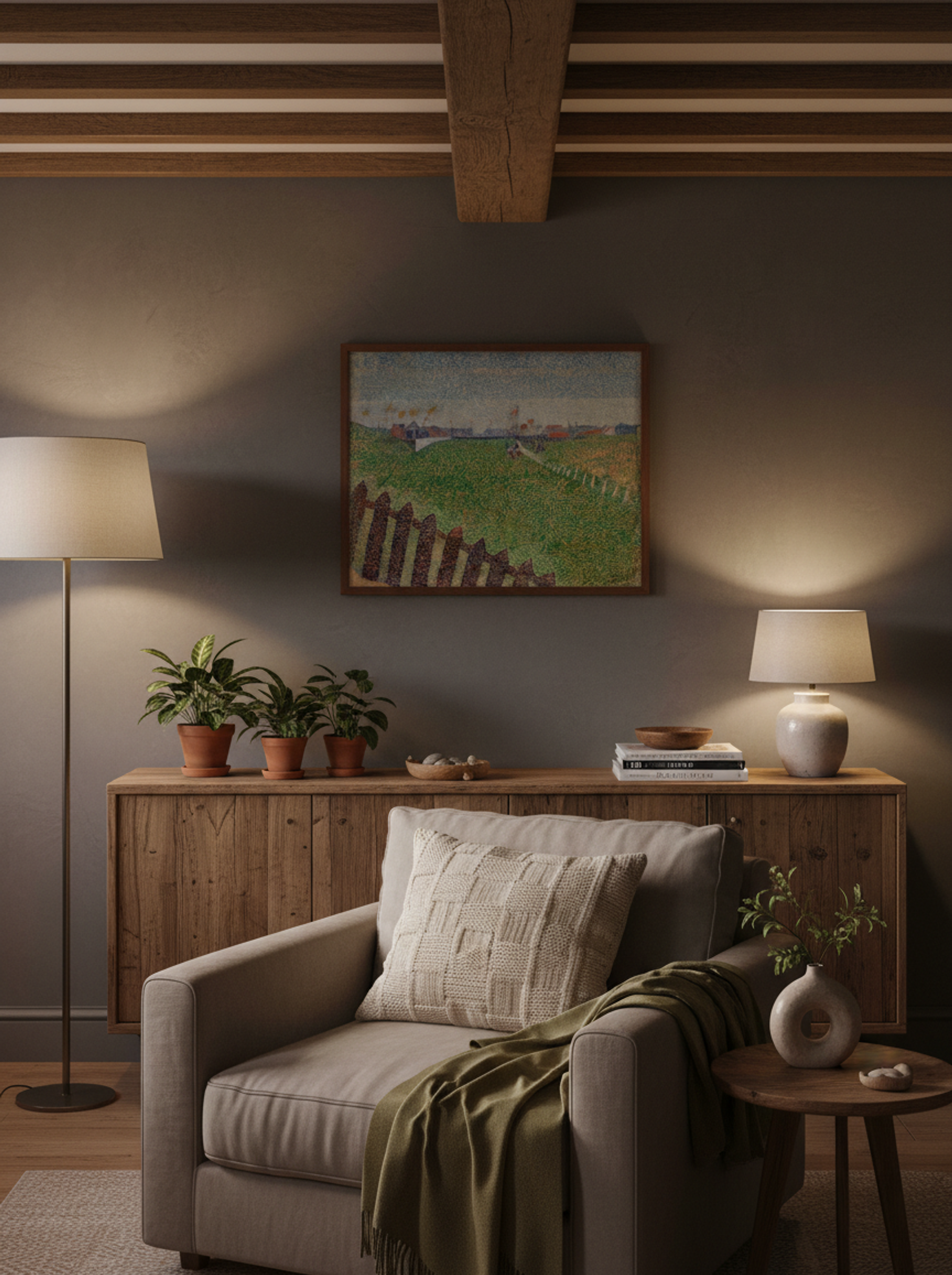
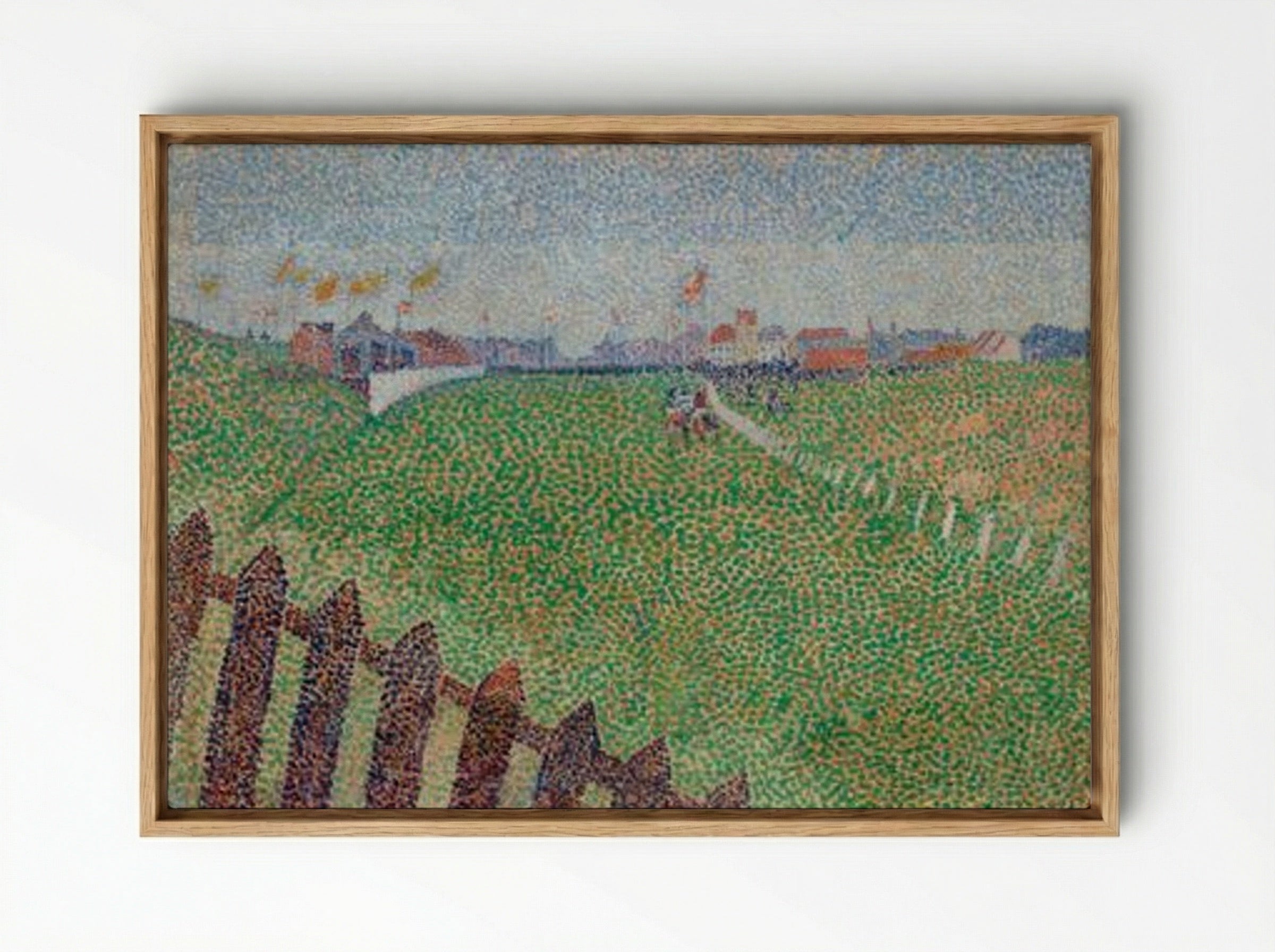
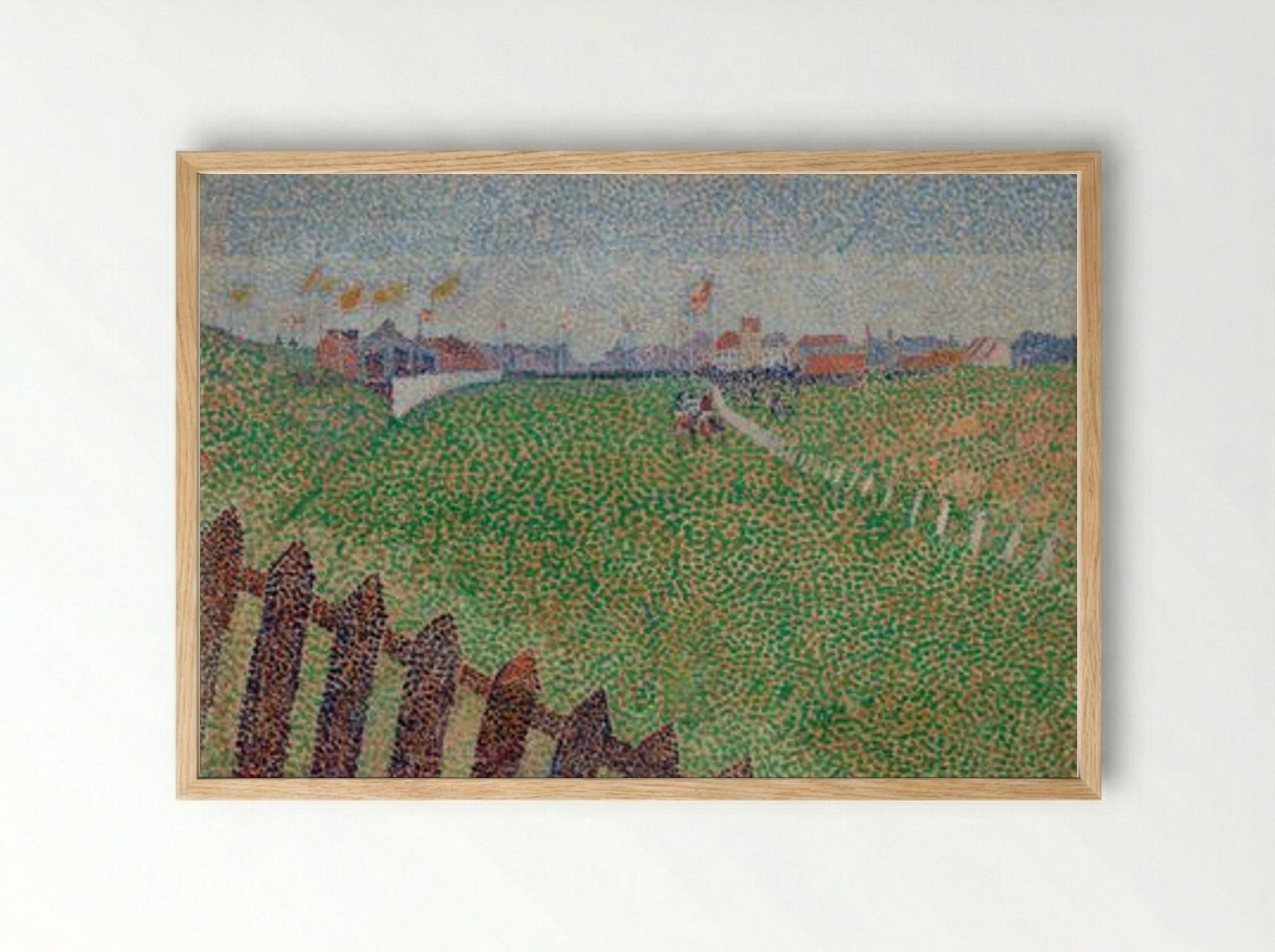
Alfred William Finch's 1888 painting, "The Wellington Racecourse in Drizzle, Ostende", rendered in a pointillist style, captures a hazy day at the races. This fine art print brings a touch of Impressionist charm to any room.
Alfred William Finch's "The Wellington Racecourse in Drizzle, Ostende" (1888) captures a fleeting moment at the Belgian racetrack with a distinctive Neo-Impressionist technique. Finch, a British-born artist who later became a key figure in Finnish art, employs pointillism to render the scene in a mosaic of tiny, individual dots of colour. This method, pioneered by Seurat and Signac, creates a shimmering effect, evoking the hazy atmosphere of a drizzly day. The composition is divided into distinct zones: a rustic wooden fence in the foreground, a vast expanse of green field dotted with spectators, and the distant buildings and flags of the racecourse under a pale sky. The overall effect is one of quiet observation, inviting the viewer to contemplate the subtle beauty of an ordinary scene. As a fine art print, this work brings a touch of Impressionist charm and historical interest to any interior. Its muted colours and tranquil subject matter make it a versatile addition to a living room, study, or hallway, offering a glimpse into the artistic innovations of the late 19th century.
Because every print is made to order, we don't offer change-of-mind returns, refunds or exchanges. If your order arrives faulty, damaged or incorrect, we'll replace it free of charge — just contact us within 48 hours of delivery. See our refunds page for full details.
We ship worldwide, printing at the production hub nearest to your delivery address. Delivery times and costs vary by destination — you'll see the options available to you at checkout.
Each print is produced to order using 12-colour giclée printing on FSC-certified archival paper. Designed in Britain and printed at your nearest production hub to reduce waste and speed up delivery.

Artist Biography
Our Features
Designed for Lasting Impact
Every Solis piece is made to order with archival, gallery-quality materials built to last.
To keep your artwork looking its best:
Museum-grade giclée on FSC-certified archival matte paper, with framed and canvas options.
Made to order
Every piece is printed to order. These are the five finishes, and what makes each one different.
From $29
A giclée print on 200gsm matte fine art paper, using a twelve-colour process for accurate, fade-resistant colour. Supplied unframed, delivered flat or rolled.

From $89
The same fine art print in a solid wood frame with UV-protective acrylic glaze and rigid backing. Five frame colours. Arrives ready to hang.

From $169
A deeper solid wood frame: 33mm deep with a 20mm face and Perspex glaze. The print sits unmounted for a clean gallery presentation. Black, white or natural.

From $59
Hand-stretched canvas with neat gallery-wrapped edges, giving the artwork surface texture and depth. Arrives ready to hang.

From $175
Stretched canvas set in a floating wood frame, our most substantial finish. Arrives ready to hang.
Why Choose Us ?
Damage-free delivery guarantee
Fast Shipping
Museum-Quality Materials
Artist Biography
Alfred William Finch
You May Also Like
Cookies show us which prints people love, so we hang the right art. Help us fill it?
Essential cookies only if you prefer · Privacy Policy