

Fine Art Poster
From $29
A giclée print on 200gsm matte fine art paper, using a twelve-colour process for accurate, fade-resistant colour. Supplied unframed, delivered flat or rolled.



Archival giclée
Frames arrive ready to hang
Secure checkout
Made to order
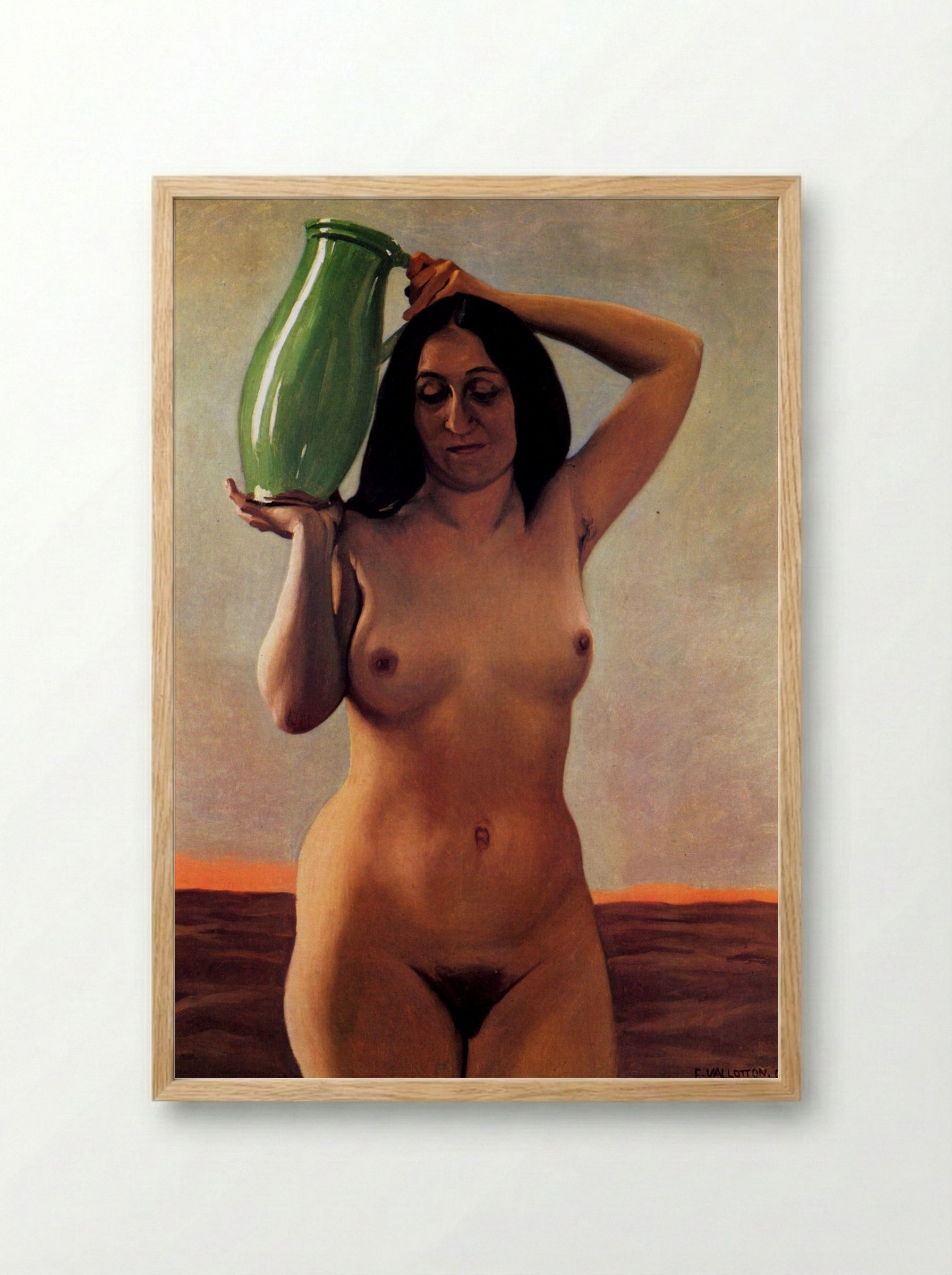
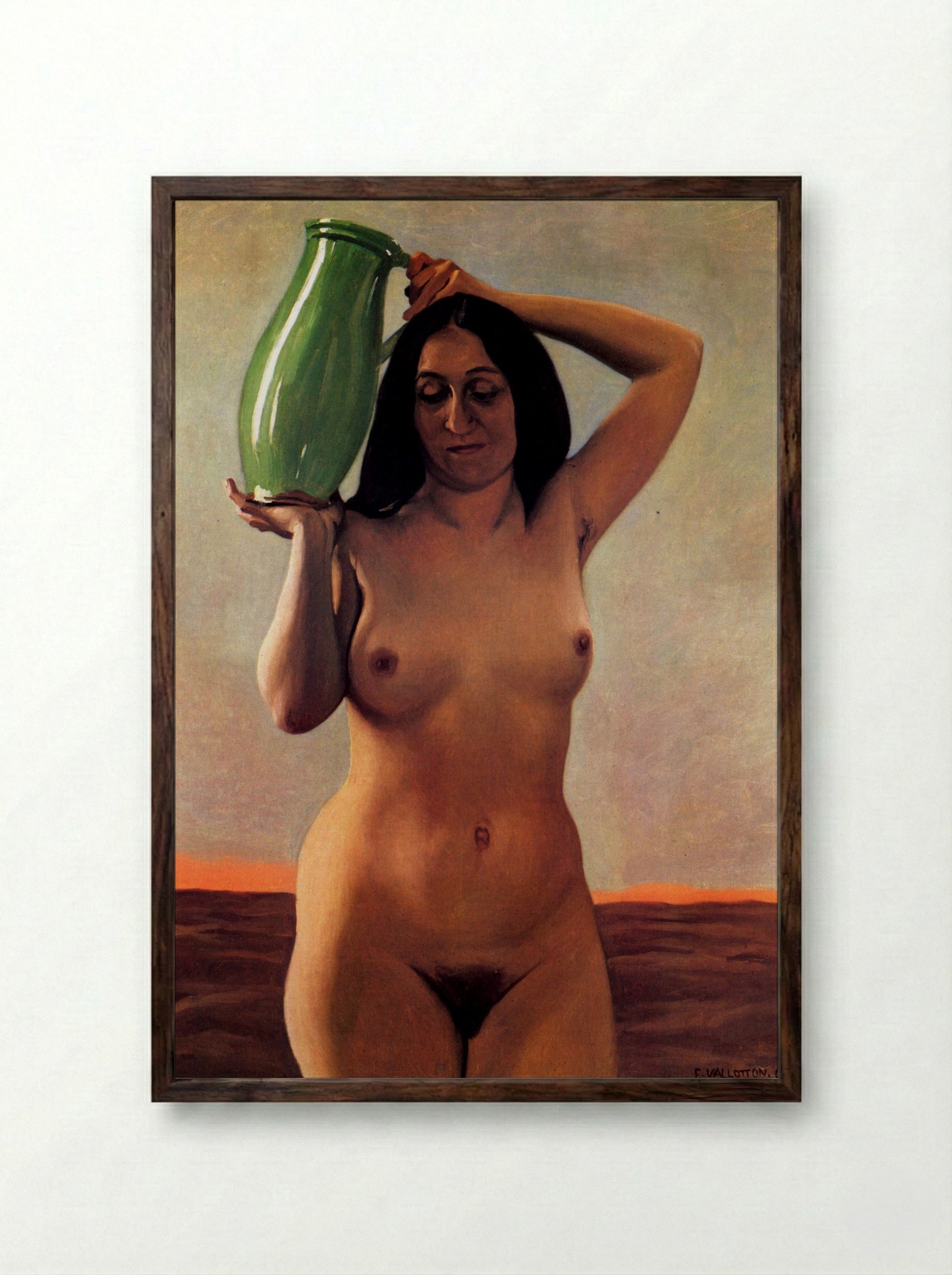
Painted in 1906, Félix Vallotton's 'Woman with the Jug' is a nude study, depicting a woman holding a green jug, rendered in the artist's signature stark and realistic style.
Félix Vallotton's 'Woman with the Jug', painted in 1906, presents a nude female figure holding a large, green jug. Vallotton, a Swiss artist associated with the Les Nabis group, was known for his stark realism and simplified forms. This painting exemplifies his style through its direct and unidealised depiction of the female form. The woman stands against a muted background of a pale sky and a dark, undefined horizon, which draws attention to her figure and the jug. Her dark hair contrasts with the pale tones of her skin, and her gaze is directed downwards, creating a sense of introspection. The jug, rendered in a striking shade of green, serves as a focal point, its smooth, rounded shape contrasting with the angularity of the woman's pose. Vallotton's use of light and shadow is subtle, enhancing the three-dimensionality of the figure and the jug. The composition is simple yet powerful, reflecting Vallotton's interest in capturing the essence of his subjects without unnecessary embellishment. The painting is a study in contrasts: the smoothness of the jug against the texture of the skin, the coolness of the green against the warmth of the flesh tones, and the stillness of the pose against the implied action of pouring water.
Because every print is made to order, we don't offer change-of-mind returns, refunds or exchanges. If your order arrives faulty, damaged or incorrect, we'll replace it free of charge — just contact us within 48 hours of delivery. See our refunds page for full details.
We ship worldwide, printing at the production hub nearest to your delivery address. Delivery times and costs vary by destination — you'll see the options available to you at checkout.
Each print is produced to order using 12-colour giclée printing on FSC-certified archival paper. Designed in Britain and printed at your nearest production hub to reduce waste and speed up delivery.

Artist Biography
Our Features
Designed for Lasting Impact
Every Solis piece is made to order with archival, gallery-quality materials built to last.
To keep your artwork looking its best:
Museum-grade giclée on FSC-certified archival matte paper, with framed and canvas options.
Made to order
Every piece is printed to order. These are the five finishes, and what makes each one different.
From $29
A giclée print on 200gsm matte fine art paper, using a twelve-colour process for accurate, fade-resistant colour. Supplied unframed, delivered flat or rolled.

From $89
The same fine art print in a solid wood frame with UV-protective acrylic glaze and rigid backing. Five frame colours. Arrives ready to hang.
Why Choose Us ?
Damage-free delivery guarantee
Fast Shipping
Museum-Quality Materials
Artist Biography
Félix Vallotton
You May Also Like
Cookies show us which prints people love, so we hang the right art. Help us fill it?
Essential cookies only if you prefer · Privacy Policy