



Alberto Magnelli
- Movimento Arte Concreta
- concrete art
In 1915[1], while the First World War was dissolving European certainties, Alberto Magnelli painted a series of works in Florence that abandoned representation entirely. His Composizioni (Compositions) of that year, made in direct response to Matisse and the developments he had witnessed in Paris, placed him at the furthest edge of Italian[1] modernism two decades before abstraction became a self-conscious movement in his home country.
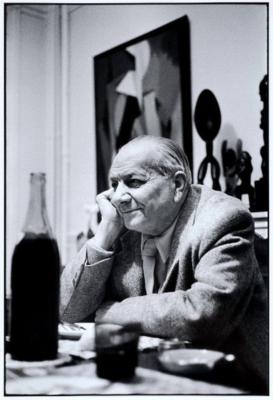
Biography
Born in Florence in 1888[1], Magnelli spent time in Paris in the early twentieth century before returning to Italy, where the Composizioni emerged in 1915[1]. He then largely set abstraction aside. The sustained return came in the 1930s: in 1935 he was included in the landmark grouping of Italian[1] non-figurative painters at the second Quadriennale in Rome, the first occasion on which Bogliardi, Ghiringhelli, Reggiani, Licini, Soldati, and Magnelli exhibited together as a collective front. The records note that Magnelli was 'living in Paris' by then: he had already relocated and would remain there for the rest of his life.
In Paris he moved in the circle of Hans Arp and Sonia and Robert Delaunay. He was among the first to identify Nicolas de Stael's talent, alongside Arp and the Delaunays, encouraging the young Russian-born painter before he had found an audience.
His output is catalogued in Anne Maisonnier's catalogue raisonne, Alberto Magnelli: L'Oeuvre peint, published in Paris in 1975. A centenary exhibition was held at the Palais des Papes in Avignon in 1988. He died in 1971.
Timeline
- 1888Born in Florence, Italy
- 1915Painted abstract 'Composizioni' series in Florence
- 1935Exhibited at the second Quadriennale in Rome
- 1935Relocated to Paris, France
- 1971Died in Paris, France
Notable Works
Tap to view larger.
Next stop
Browse the movements →
Every movement in the collection, from the Renaissance to Pop art.
Alberto Magnelli prints
Hand-finished archival prints from Alberto Magnelli's body of work.


Related Artists


Take Alberto Magnelli home.
See all Alberto Magnelli prints →Frequently Asked Questions
What is Alberto Magnelli known for?
Alberto Magnelli is known for his abstract works, particularly the Composizioni series from 1915[1]. These works, influenced by Matisse and developments in Paris, made him a pioneer of abstraction in Italy. He was also among the first to recognise the talent of Nicolas de Stael.What is Alberto Magnelli's most famous work?
It is difficult to name one single work as Alberto Magnelli's 'most famous'. He moved through several styles, and his reputation rests on his contribution to abstract art, rather than on one particular painting. Born in Florence in 1888[1], Magnelli was a self-taught painter, associated with the Florentine avant-garde from about 1909[1]. Although he began painting in a representational style, a visit to Paris in 1911 exposed him to Cubism, which influenced him towards abstraction. By the mid-1930s, he was creating purely non-figurative compositions. During the Second World War, Magnelli lived in France with other abstract artists, such as Sonia Delaunay and Jean Arp. This group developed a style of geometric abstraction known as 'concrete art[1]'. After the war, Magnelli continued to explore abstract painting, often incorporating bold colours and textured surfaces. He died in 1971, leaving behind a varied body of work that resists easy categorisation.What should I know about Alberto Magnelli's prints?
Alberto Magnelli was an Italian[1] artist associated with the concrete art[1] movement. He exhibited in the 1945[1] *Art concret* show at the Galerie Rene Drouin, Paris. He also participated in the 1946 *Salon des realites non nouvelles: art abstrait, concret, constructiviste, non figuratif* exhibition at the Palais des Beaux-Arts de la Ville de Paris, which presented various historic abstractionists. Magnelli's prints are part of his wider engagement with abstract and concrete art. These movements moved away from representational art, favouring geometric forms. Magnelli explored the relationships between colour, shape, and composition. His prints often feature bold lines, flat planes of colour, and a sense of geometric balance. They reflect his exploration of non-representational forms and his place among other Italian abstractionists.What style or movement did Alberto Magnelli belong to?
Alberto Magnelli was associated with several movements during his career. Early on, he was linked to Futurism, an Italian[1] artistic and social movement that celebrated technology and dynamism. Later, Magnelli became a proponent of Concrete Art. This abstract movement, formally defined in 1930[1] by Theo van Doesburg, rejected any reference to the visible world. Instead, Concrete Art focused on pure geometric forms and non-representational compositions. Magnelli's involvement with Concrete Art placed him within a network of artists across Europe and Latin America. These artists shared a belief in complete abstraction, with no allusions to nature or subjective emotion. Concrete Art groups emerged in various countries, promoting the style through exhibitions and publications. In Italy, movements such as MAC (Movimento Arte Concreta[1]) gained traction around 1950, further solidifying Concrete Art's presence.What techniques or materials did Alberto Magnelli use?
Alberto Magnelli worked with various materials and techniques throughout his career. The available passages do not offer an exhaustive list, but they do provide some insight into his methods. One passage mentions that, like other modernists, Magnelli viewed artistic material as a means to capture life. His practice involved shaking up history with "dynamic explosions of energy" using both conscious and unconscious notions. Another passage discusses the use of materials in 20th-century art, noting that after World War II, artists in Europe and America brought the material of art into the light. While it does not specifically name Magnelli, it mentions movements like Art Informel, which embraced a wider range of materials and techniques. Without more specific information, it is difficult to provide a comprehensive account of Magnelli's materials. Further research into his catalogue raisonné and exhibition catalogues might yield a more detailed understanding of his artistic practice.What was Alberto Magnelli known for?
Alberto Magnelli (1888[1]-1971) was an Italian[1] artist, best known for his move from early figurative painting to geometric abstraction. He worked in Florence and Paris, associating with the avant-garde. Initially, Magnelli painted in a post-impressionist style. Around 1913[1], his work shifted toward abstraction. He destroyed most of his early paintings when he moved away from figuration. After a period of producing no art, he returned to painting around 1931, developing a style of geometric abstraction. His work often featured hard-edged forms and non-representational compositions. He explored the relationships between shapes, colours, and textures, creating a sense of spatial ambiguity. During the Second World War, he lived in France with his partner, Volia, and other artists, including Sonia Delaunay and Jean Arp. Magnelli experimented with various media, including oil paint, collage, and printmaking. He produced lithographs and screenprints later in his career. He is considered an important figure in the development of abstract art in Italy and Europe.When did Alberto Magnelli live and work?
Alberto Magnelli was born in Florence, Italy, on 1 July 1888[1]. He died in 1971. Largely self-taught as a painter, Magnelli began his artistic career associating with the Florentine avant-garde, around 1909[1]. Although he was connected with the Futurist movement early on, he remained independent of it. His early work was figurative; however, around 1914, he began experimenting with abstraction, creating geometric compositions. During the First World War, he lived in Paris, where he encountered Cubism and continued to develop his abstract style. After a period of producing figurative work again in the 1920s, Magnelli definitively returned to abstraction around 1930. He lived in France for much of his career, and he was associated with groups such as Abstraction-Création. He developed a personal style characterised by hard-edged forms and a restricted range of colours. Magnelli continued to work and exhibit extensively until his death in 1971, solidifying his place as a significant figure in the development of abstract art in Europe.Where can I see Alberto Magnelli's work?
To view works by Alberto Magnelli, several museums hold pieces in their collections. In Italy, the Civica Galleria d’Arte Moderna in Milan has some of his output. Other Italian[1] locations include the Museo d’Arte Moderna in Venice, and the Galleria Nazionale d’Arte Moderna in Rome. Outside Italy, the Museum of Modern Art in New York holds some examples. The Solomon R Guggenheim Museum, also in New York, is another possibility. The Musée National d’Art Moderne, Centre Georges Pompidou, in Paris, may also hold works by the artist. It is always advisable to check with the museum in advance to confirm that works by Magnelli are on display, as collections can rotate.Where was Alberto Magnelli from?
Alberto Magnelli was Italian[1]. Though passage 1 does not specify Magnelli's place of birth, it includes him in a list of Italian artists. He is also mentioned in other passages as part of the Italian art scene, specifically in Milan during the mid-20th century. Magnelli was among the artists exhibited in the Prima Mostra Nazionale d'Arte Contemporanea (First national show of contemporary art) in Bologna in 1948[1]. He was also included in the Salon des réalités nouvelles, an exhibition catalogue of abstract, concrete, constructivist, and non-figurative art in Paris, 1946. These exhibitions place Magnelli within a network of Italian and European artists exploring abstraction and modernism after the Second World War.Who did Alberto Magnelli influence?
Alberto Magnelli's influence is complex and not easily summarised. His engagement with abstraction, combined with his earlier figurative work, places him in a web of exchanges with other artists of his time. Figures such as Fausto Melotti and Lucio Fontana, while distinct in their practices, shared some ground with Magnelli. Melotti, like Magnelli, explored the boundary between abstraction and figuration. Fontana's work, with its rejection of pre-existing schemes, echoes a sentiment found in Magnelli's move towards abstraction. Both artists, along with Osvaldo Licini, demonstrate individualistic approaches to art that resist easy categorisation. Magnelli's impact can also be seen in the broader context of Italian[1] postwar art, where artists frequently referenced their Futurist roots. While not directly linked, artists like Alberto Burri, Piero Dorazio, and Emilio Vedova engaged with ideas and materials that resonate with Magnelli's artistic trajectory.Who influenced Alberto Magnelli?
Alberto Magnelli's artistic development occurred in contact with several other artists. Piero Manzoni, associated with the Gruppo Nucleare, created works using novel materials, a practice that may have influenced Magnelli. Manzoni's theories about art originating in a collective unconscious could also have resonated with Magnelli's ideas. There is evidence that Magnelli was also stimulated by the work of Joaquin Torres-Garcia. Both artists belonged to the Abstraction-Creation group. Torres-Garcia, who had been friends with Gonzalez since youth, was committed to abstraction. His exploration of pre-Columbian art and development of 'constructive universalism' offered another possible avenue for Magnelli. Torres-Garcia combined Cubist composition with Neo-Plasticism, focusing on schematic motifs linked to urban life and figures inspired by pre-Columbian art. The muted tones and archaic character of Torres-Garcia's figures created a tactile background, which may have influenced Magnelli's artistic approach.Who was Alberto Magnelli?
Alberto Magnelli (1888[1]-1971) was an Italian[1] artist, regarded as a key figure in the development of abstract art in Italy. Initially, Magnelli's work showed the influence of Henri Matisse. By 1915[1], he was producing abstract compositions. These early works marked a departure from representational art. In 1934, Magnelli exhibited with Oreste Bogliardi, and Mauro Reggiani at the Galleria del Milione in Milan. The gallery became a centre for Italian abstract art during the 1930s. In 1945, Magnelli's work was included in the "Art Concret" exhibition at the Galerie Rene Drouin in Paris. The following year, he was among the historic abstractionists exhibited at the Salon des realites nouvelles in Paris. Magnelli's place in the history of modern art is associated with the rise of abstraction in Italy and his participation in important exhibitions in both Italy and France.
Sources
Editorial draws on the following primary and tertiary references for Alberto Magnelli.
- [1] wikipedia Wikipedia: Alberto Magnelli Used for: biography, birth dates, death dates, identifiers, movement attribution, nationality.
- [2] book guggenheim-metph00cela Used for: biography.
- [3] book guggenheim-youngereuropeanp00swee Used for: biography.
- [4] book Braun, Emily, 1957-; Asor Rosa, Alberto; Royal Academy of Arts (Great Britain), Italian art in the 20th century : painting and sculpture, 1900-1988 Used for: biography.
Editorial overseen by Solis Prints. Sources verified 2026-09-16. Click a source for details, or hover over [N] in the page above to preview.
Editorial standardsMethodologyCorrectionsAI disclosureAbout the editorial team