



Edouard Debat-Ponsan
- academic art
Édouard Debat-Ponsan trained under Alexandre Cabanel, the pre-eminent salon painter of his generation, and inherited both his master's technical fluency and his ambition to work across multiple registers simultaneously. Born in Toulouse in 1847[1], Debat-Ponsan pursued the standard academic route: an 1877[1] grant took him to Italy, where he began shifting towards portraiture, and a journey to Istanbul in 1882 produced some of his most enduring work.

Biography
The Istanbul paintings, completed in 1883[1] and typified by "Massage: Scène de Hammam", are now in the Musée des Augustins in Toulouse. They show the Orientalist mode at its most technically assured: figures rendered with classical precision in exoticised settings, pitched at the level of acceptable sensationalism that the Paris Salon reliably rewarded. By the time Debat-Ponsan settled into portraiture for Paris's wealthy families, that technical mastery had made him one of the more sought-after society painters of the Third Republic.
He is perhaps now best known for his decision to wade into the Dreyfus affair. "La Vérité" (1898[1]), depicting Truth rising from a well, was an unambiguous statement of support for Dreyfus at a moment when such statements carried professional risk. An earlier history painting, "One Morning at the Gates of the Louvre" (1880), had shown Catherine de Medici examining the victims of the St Bartholomew's Day Massacre with cold detachment. His grandson was Michel Debré, who drafted the constitution of the Fifth Republic and served as Prime Minister under de Gaulle.
Timeline
- 1847Born in Toulouse.
- 1877Received a grant that enabled him to travel to Italy.
- 1880Painted "One Morning at the Gates of the Louvre", depicting Catherine de Medici.
- 1882Travelled to Istanbul.
- 1883Completed the Istanbul paintings, including "Massage: Scène de Hammam".
- 1898Painted "La Vérité", a statement of support for Dreyfus.
- 1913Died at age 66.
Notable Works
Tap to view larger.
Next stop
Browse the movements →
Every movement in the collection, from the Renaissance to Pop art.
Related Artists


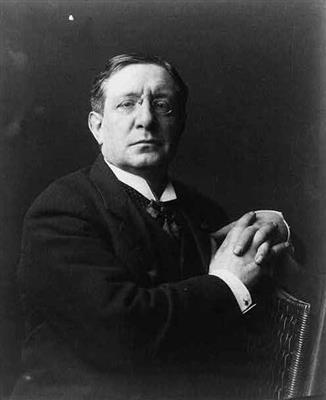
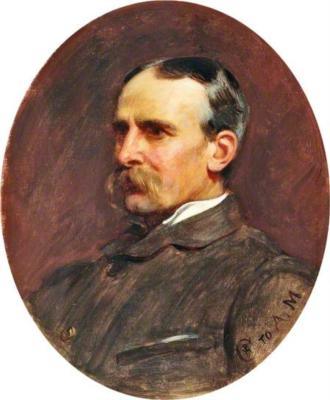
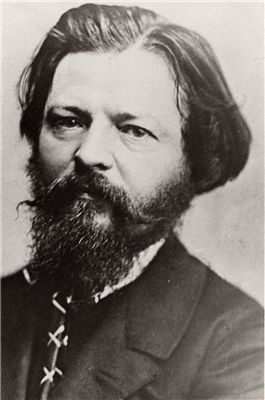
Frequently Asked Questions
What is Edouard Debat-Ponsan known for?
Édouard Debat-Ponsan is perhaps best known for his painting "La Vérité", which was an unambiguous statement of support for Dreyfus. He was also a sought-after society painter of the Third Republic, and his Istanbul paintings are in the Musée des Augustins in Toulouse.What is Edouard Debat-Ponsan's most famous work?
Édouard Debat-Ponsan, born in Toulouse in 1847[1] and deceased in Paris in 1913[1], is best known for his history and genre paintings, as well as portraits. Among his most recognised works is *Le Massage, Scène de Hammam* (1883[1]), sometimes called *The Turkish Bath*. This painting depicts a scene within a hammam, showing women in various states of undress as they engage in bathing and massage. The work is celebrated for its naturalistic depiction of the human form and its ethnographic interest in orientalist subjects. Another significant painting is *Un coin de l’atelier* (1885), which offers a glimpse into the artist's studio. It provides insight into the artistic process and the environment in which Debat-Ponsan worked. Debat-Ponsan also created *La Dégénérescence* (1901), a painting addressing concerns about social decay. These works, along with his portraits, have secured his place in French[1] art history.What should I know about Edouard Debat-Ponsan's prints?
Édouard Debat-Ponsan (1847[1]-1913[1]) was a French[1] academic painter, known for genre scenes and portraits. While not primarily a printmaker, his work appeared in various print media, including posters and portfolios. Prints of the late 19th century served many purposes, such as advertising, political communication, and artistic expression. They were collected by both men and women and sold in limited editions. Print portfolios containing original prints were also common. The rise of print collecting coincided with a growing interest in the historical value of everyday images. Collectors preserved posters and other printed ephemera as historical documents, recognising their significance in reflecting contemporary life. These "iconophiles" actively collected, catalogued, and exhibited prints, making them accessible to the public. Debat-Ponsan's prints, like those of his contemporaries, offer a glimpse into the visual culture of the late 19th century. They reflect the artistic trends, social concerns, and commercial practices of the time.What style or movement did Edouard Debat-Ponsan belong to?
Édouard Debat-Ponsan was associated with both Academic art and Realism. During the 19th century, European art academies held considerable power. Most artists needed acceptance into their country's main academy to achieve success. These institutions, however, grew increasingly conservative and resistant to innovation. In Paris, the Académie Royale de Peinture et de Sculpture (founded in 1648) merged with other academies in 1816 to form the Académie des Beaux-Arts. This became the standard for other academies, promoting a blend of Neoclassicism and Romanticism. Painters were instructed to employ clean lines, detailed and lifelike depictions, concealed brushwork, and subtly mixed colours. The most esteemed subjects were historical, biblical, mythological, and portraiture. Academic art, in this context, signified technical skill without much individuality. Alongside Academic art, Realism also influenced artists of the period.What techniques or materials did Edouard Debat-Ponsan use?
Information on Debat-Ponsan's specific techniques is scarce; however, we can discuss the general practices of academic painters in France during his period. Students in the French[1] academic system typically began by drawing from sculptures, often casts of antique works. This monochrome exercise trained them to perceive form through tonal gradations. Only after mastering drawing were students permitted to use colour. Instruction included the materials of painting, their care, and copying painted heads, often by Venetian or Flemish artists, for their lively colour. The initial stage in painting was the *ébauche*: a thinly painted laying-in of lines, broad masses, and halftones. This base layer had to be "leaner" (containing less oil) than subsequent layers, adhering to the rule of "fat over lean" to prevent cracking. Palettes were prepared in advance, typically using earth colours, Prussian blue, black, and lead white. As the 19th century progressed, some artists moved to less stable tarry colours like bitumen.What was Edouard Debat-Ponsan known for?
Édouard Debat-Ponsan was a French[1] artist working in the late 19th century. During this period, art academies across Europe held considerable power. Acceptance into a major national academy was almost a prerequisite for artistic success. These academies, such as the Académie des Beaux-Arts in Paris, founded in 1648, promoted a conservative style. The Parisian academy, which set the standard for others, insisted on a combination of Neoclassicism and Romanticism. This meant artists were trained to produce work with precise lines, lifelike detail, and subtle colours, while also favouring certain subjects. Historical, biblical, and mythological scenes, along with portraiture, were considered the most prestigious genres. Academic art valued technical skill, but it sometimes did so at the expense of individual expression.Where can I see Edouard Debat-Ponsan's work?
Édouard Debat-Ponsan's works can be viewed in several museums and galleries. Many are located in France, including the Musée des Beaux-Arts in Nancy, the Musée des Arts Décoratifs in Paris, and the Musée des Beaux-Arts in Rouen. Other French[1] institutions that hold his paintings include the Musée d’Art et d’Industrie in Saint Etienne, Musée des Beaux-Arts in Nantes, and Musée des Beaux-Arts in Lille. Works may also be seen at the Musée d’Orsay and Musée du Petit Palais, both in Paris. Outside France, museums that sometimes exhibit Debat-Ponsan's art include the Los Angeles County Museum of Art (LACMA) and the Metropolitan Museum of Art in New York. The Royal Ontario Museum in Toronto also holds relevant works.Who did Edouard Debat-Ponsan influence?
Édouard Debat-Ponsan's artistic connections are not well documented. However, context can suggest potential influences. Debat-Ponsan's career occurred during a shift from Impressionism. Artists at this time were grappling with how to move beyond it. Charles Morice's 1905[1] questionnaire to painters revealed that Impressionism was still a yardstick for artists. They felt it had positive value, but something more was needed. Painters explored the use of colour, structure, and personal expression, moving away from simply exploring the artist's relationship to the world. This transition saw artists reintroducing meaning into their work. They explored the significance of the relationship between the spectator and the work. Given this context, Debat-Ponsan would have been part of the artistic debates of his time. He may have been influenced by Impressionism, as well as the Post-Impressionist explorations of Gauguin and Cézanne.Who influenced Edouard Debat-Ponsan?
Édouard Debat-Ponsan studied at the École des Beaux-Arts. There, he worked under Henri Lehmann, whose own art was influenced by Jean-Auguste-Dominique Ingres. Lehmann was a history painter and portraitist, and his instruction instilled in Debat-Ponsan an appreciation for academic technique. Later, Debat-Ponsan became a professor. Among his pupils was Maurice Denis, who co-founded the Nabis. Denis also studied at the École des Beaux-Arts. He exhibited at the Salon des Indépendants and Le Barc de Boutteville's, working in media such as book illustration, prints, decorative art, theatre design, stained glass, and costume designs. Denis wrote extensively about art and set about reviving Christian art mainly through the Ateliers d'Art Sacré. His two most important books are Theories (1912[1]) and Nouvelles Theories (1922).Who was Edouard Debat-Ponsan?
Édouard Debat-Ponsan was a French[1] painter who trained under Alexandre Cabanel. He is known for his work across multiple artistic areas, including portraiture and history paintings. His grandson was Michel Debré, who drafted the constitution of the Fifth Republic.Why are Edouard Debat-Ponsan's works important today?
Édouard Debat-Ponsan (1847[1]-1913[1]) was part of a generation of French[1] artists working in the late 19th century. During this time, art critics and historians were re-evaluating the legacy of Nicolas Poussin (1594-1665[1]). Poussin had been a touchstone for discussions of classicism and the relationship between nature and the antique. Some critics saw Poussin as an exemplar of sterile academicism. Others, however, viewed him as a model of originality, who combined the study of nature and ancient art in a way that revitalised tradition. The question of how to interpret Poussin's classicism became a way for critics to explore their own assumptions about art history. The various interpretations of Poussin, even contradictory ones, continue to offer valuable insights for art historians today. Similarly, re-evaluations of artists such as Debat-Ponsan can reveal the changing values of the art world.
Sources
Editorial draws on the following primary and tertiary references for Edouard Debat-Ponsan.
- [1] wikipedia Wikipedia: Edouard Debat-Ponsan Used for: biography, birth dates, death dates, identifiers, movement attribution, nationality.
- [2] book Bénédicte Savoy, Charlotte Guichard, Christine Howald, Acquiring Cultures Used for: stylistic analysis.
- [3] book Harding, James, Artistes pompiers : French academic art in the 19th century Used for: biography, stylistic analysis.
Editorial overseen by Solis Prints. Sources verified 2026-10-07. Click a source for details, or hover over [N] in the page above to preview.
Editorial standardsMethodologyCorrectionsAI disclosureAbout the editorial team