



About Anne Brigman
American · 1869–1950
- Feminist Art
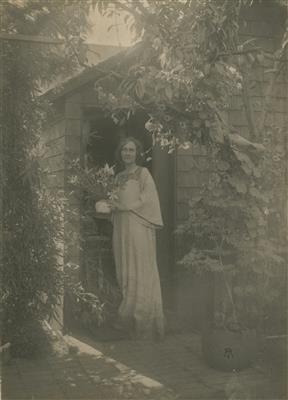
Pictorialist photographer and Photo-Secession member who spent decades photographing nude figures among the boulders and pines of the Sierra Nevada.
Museums3
Countries1
Largest reported holdingMetropolitan Museum of Art, New York City · 38 recorded works
Loading map…
Where to see Anne Brigman
Collection holdings are reported here; current display varies. Check with each museum before visiting.
-
38 recorded works
Metropolitan Museum of Art
New York City, United States
-
1 recorded work
Cleveland Museum of Art
Cleveland, United States


-
1 recorded work
National Gallery of Art
Washington D.C., United States

Frequently Asked Questions
Where can I see Anne Brigman's work?
Anne Brigman's photographs can be viewed in several public collections. In the United States, these include the Los Angeles County Museum of Art (LACMA), at 5905 Wilshire Boulevard, Los Angeles; the Metropolitan Museum of Art, 1000 Fifth Avenue, New York; the Minneapolis Institute of Arts, 2400 Third Avenue South, Minneapolis; the Museum of Modern Art, 11 West 53rd Street, New York; the Charles Hosmer Morse Museum of American[1] Art, 445 North Park Avenue, Winter Park, Florida; the Wolfsonian at Florida International University, 1001 Washington Avenue, Miami Beach; and the Center for Creative Photography, 1030 N Olive Road, Arizona. In Canada, the Royal Ontario Museum, 100 Queens Park, Toronto, also holds works by Brigman. In the United Kingdom, collections can be found at the Victoria & Albert Museum, Cromwell Road, London; the Brighton Museum & Art Gallery, Royal Pavilion Gardens, Brighton; the Manchester Art Gallery, Mosley Street, Manchester; and the National Museums of Scotland, Royal Museum, Chambers Street, Edinburgh.What should I know about Anne Brigman's prints?
Anne Brigman (1869[1]-1950[1]) was an American[1] photographer and a founding member of the Photo-Secession movement. This group promoted photography as a fine art during the early 29th century. Brigman is best known for her pictorialist photographs, often featuring nude female figures in natural settings. These images frequently evoke a sense of mythology or symbolism. Her work broke from convention by presenting the female body as strong and unidealised. She began her photography career in California, joining the Camera Club of Southern California in 1901[1]. By 1903, Alfred Stieglitz had recognised her talent, electing her as a member of the Photo-Secession. Her photographs appeared in Camera Work, the movement's influential journal. Brigman's printing process often involved manipulating the negatives and using soft-focus techniques. This gave her prints a painterly quality, aligning with the aesthetic goals of pictorialism. She experimented with various printing methods, including platinum and gum bichromate prints, to achieve specific tonal effects. Her photographs are now held in major museum collections, including the Metropolitan Museum of Art and the Los Angeles County Museum of Art.Why are Anne Brigman's works important today?
Anne Brigman (1869[1]-1950[1]) was a key figure in the Photo-Secession movement in the United States. This movement promoted photography as a fine art during the early 20th century. Brigman's photographs often featured nude female figures in natural settings, such as forests and rocky landscapes. These images challenged conventional Victorian ideals of female representation. Instead, they presented women as strong, independent, and connected to nature. Her work frequently explored themes of freedom, spirituality, and the relationship between humans and the environment. Brigman was one of the few women elected as a Fellow of the Photo-Secession. Alfred Stieglitz, the leader of the movement, championed her work in his journal Camera Work. Her artistic vision and technical skill contributed significantly to the development of artistic photography. Brigman's photographs remain relevant for their artistic merit and their exploration of female identity. They offer a unique perspective on the changing social and cultural attitudes of the early 20th century. Her photographs are important documents in the history of both art and women.Who was Anne Brigman?
Anne Brigman was a photographer who hauled her equipment into the Sierra Nevada to photograph her own naked body among the rocks and trees. Her work occurred during a time when such behaviour from a woman was not considered respectable.What techniques or materials did Anne Brigman use?
Anne Brigman was a photographer, but the references provided discuss the printmaking techniques of Anni Albers, Brice Marden, and others. These include photo-offset, etching, drypoint, aquatint, lift-ground, serigraphy, and lithography. Photo-offset enabled Albers to reproduce irregular pencil strokes, and to obtain crystalline edges using machine technology. The photographic reproduction of her grey markings had never been possible in the print mediums with which she had previously worked: lithography, etching and screenprinting. Drypoint is a type of etching that harmonises with the present day atmosphere of haste, and possesses the incisive character of precision. The etching needle works with determination and bores into the plate. The point is created in the negative through a precise prick in the plate. Aquatint is used to obtain tonal gradations in etchings. A covering of powdered resin is sprinkled over the plate in varying degrees of density. The plate is heated, causing the resin particles to adhere to the metal. The plate is immersed in acid, and the areas not covered by resin are bitten away. Lithography involves drawing with a greasy pencil on limestone or a thin metal plate. The stone or plate is dampened with a wet sponge and greasy ink is rolled on its surface. The ink sticks to the greasy areas and runs off the wet ones.Who influenced Anne Brigman?
It is difficult to identify specific influences on Anne Brigman, given the limited information available. However, some context can be gleaned from the influences on artists connected to the Bauhaus school, where Annelise Else Frieda Fleischmann (later Anni Albers) studied. Paul Klee, a teacher at the Bauhaus from 1922[1], followed transcendentalism. This philosophy, emerging from English and German Romanticism and German Idealism, held that people succeed when independent and that the visual world is just one reality. Klee aimed to create his own style devoid of preconceptions. Fleischmann considered Klee a genius, particularly for combining abstract and geometric elements with natural and organic ones. Klee's associates included Joan Miró and Wassily Kandinsky. Albers combined hand-weaving with modern art ideas.What style or movement did Anne Brigman belong to?
Anne Brigman was active in the early 20th century. She is associated with the Pictorialism movement in photography. Pictorialism flourished from the late 19th century into the early 20th century. It prioritised artistic effect over strict representation. Pictorialist photographers often manipulated their images using soft focus, special printing techniques, and alternative processes to create atmospheric and painterly effects. Later in the 20th century, from the 1960s onward, the Feminist Art[1] movement emerged. This movement involved women artists challenging traditional representations of women and addressing issues of gender inequality. Feminist artists employed diverse materials and approaches, including painting, performance, and crafts, to express their perspectives and fight for equality. The movement continues to evolve, encompassing considerations of race, class, and gender identity.What was Anne Brigman known for?
Anne Brigman (1869[1]-1950[1]) was an American[1] photographer and one of the original members of the Photo-Secession movement in New York. She is best known for her dreamlike, allegorical photographs of female nudes in natural settings. Born in Hawaii, Brigman moved to California, where she developed her artistic style. Her works often featured herself or other women posed nude in forests, mountains, and along the Pacific coast. These images challenged conventional notions of female representation. Rather than objectifying the female form, Brigman sought to portray women as powerful, spiritual beings connected to nature. Her artistic approach aligned with the broader Symbolist movement, which explored mystical and emotional themes. Brigman's photographs are celebrated for their artistic vision and their contribution to early 20th-century photography.
Sources
Where to See guide aggregates verified holdings of Anne Brigman's works across the following collections.
- [1] wikipedia Wikipedia: Anne Brigman Used for: biography.
- [2] book Titia Hulst (editor), A History of the Western Art Market _ A Sourcebook of Writings on Artists, Dealers, and Markets Used for: biography, stylistic analysis.
- [3] book guggenheim-annialbers00webe Used for: biography, stylistic analysis.
- [4] book guggenheim-artoftomorrowfif1939gugg Used for: biography.
- [5] book guggenheim-paintingsfromare00solo Used for: biography.
- [6] book guggenheim-thirdenlargedcat1938reba Used for: biography.
Editorial overseen by Solis Prints. Sources verified 2026-09-30. Click a source for details, or hover over [N] in the page above to preview.
Editorial standardsMethodologyCorrectionsAI disclosureAbout the editorial team