



About Archibald Motley
American · 1891–1981
- Harlem Renaissance
Chicago-based Harlem Renaissance[1] painter whose jazz-age scenes of Bronzeville nightlife are among the most compelling records of Black urban life in America.
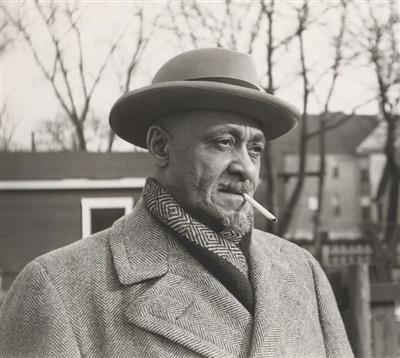
Museums6
Countries1
Most worksArt Institute of Chicago, Chicago · 2 works
Loading map…
Where to see Archibald Motley
Ranked by works you can see in person.
-
2 works
Art Institute of Chicago
Chicago, United States
-
1 works
Museum of Fine Arts Boston
Boston, United States


-
1 works
National Gallery of Art
Washington D.C., United States
-
1 works
Detroit Institute of Arts
Detroit, United States
-
1 works
Metropolitan Museum of Art
New York City, United States
-
1 works
Saint Louis Art Museum
St. Louis, United States


Frequently Asked Questions
Where can I see Archibald Motley's work?
Archibald Motley's artworks can be viewed in several locations. The Art Institute of Chicago holds a number of his pieces; an exhibition at the museum examined Toulouse-Lautrec's art in relation to celebrity culture in Paris. The Victoria and Albert Museum in London also possesses works that reflect a modernist view of African art. This came about through a distribution policy that aimed to give such works to African American[1] institutions. Thomas Mabry, then Executive Director of MoMA, proposed giving them to "3 leading Negro colleges". Other museums with collections of American art include the Peabody Essex Museum in Salem, Massachusetts, and the Crystal Bridges Museum of American Art in Bentonville, Arkansas. These museums sometimes feature works by African American artists in their exhibitions. The Minneapolis Institute of Art mounted an exhibition titled, In the Presence of Our Ancestors: Southern Perspectives in African American Art, which ran until April 11. The Westmoreland Museum also held an exhibition of African American Art in the 20th Century, which closed on January 17.What should I know about Archibald Motley's prints?
Archibald Motley is best known for his paintings that depict scenes of Black American[1] life, particularly in Chicago during the Jazz Age. While he is not primarily known as a printmaker, some of his works have been reproduced as prints. When considering Motley's prints, it is important to verify their authenticity and provenance. Due to the rise in popularity of his work after his death in 1981[1], many reproductions of variable quality have appeared on the market. Pay close attention to the printing technique, paper quality, and the presence of any markings or signatures. Consulting with art experts or appraisers who specialise in African American art can help determine the value and genuineness of a Motley print. Also, research the publisher; prints issued by reputable galleries or museums are more likely to be authentic.Why are Archibald Motley's works important today?
Archibald Motley's paintings offer insight into the complexities of Black identity in the early 20th century. During the New Negro movement (also known as the Harlem Renaissance[1]), artists were expected both to "represent the race" and to challenge negative stereotypes. Figures such as Alain Locke encouraged artists to draw inspiration from African heritage, blending African, European, and American[1] elements into something new. Locke felt that the Harlem Renaissance generation should learn from modernists such as Picasso and Modigliani, reactivating the "ancestral heritage" of precontact African cultures as a source of originality. Motley, along with peers such as Aaron Douglas, negotiated these expectations. The diversity within African American art means that it cannot be easily categorised. As black consciousness grew, the existence of a specifically Black form of expression came into question, and each artist uniquely defined their visual responses to the contemporary world.What techniques or materials did Archibald Motley use?
Archibald Motley is known for his depictions of twentieth-century American[1] life, and he used a variety of techniques to create his images. Artists often prepare their canvases with gesso, and some apply additional coats. Grounds are important, and some artists apply a light grey oil paint on top of the ground; this allows them to paint directly using a mid-ground technique. Dark grounds can be made by mixing ivory black and lead white, modified with other colours. When applying colour to the canvas, standard artists' oil paint can be mixed with a medium of wax and turpentine. The mixture is applied to the canvas with a brush and worked over, so the medium and paint are thoroughly mixed and evenly cover the shape. The paint is then worked with a large painting spatula and a small painting knife until it reaches a satisfactory state.Who did Archibald Motley influence?
Archibald Motley's impact is complex. During the Harlem Renaissance[1], intellectuals like W. E. B. Du Bois and Alain Locke called on African American[1] artists to represent their race and refute negative stereotypes. Locke encouraged artists such as Aaron Douglas, Sargent Johnson, and Lois Mailou Jones to create a "racially representative idiom of group expression". Locke wanted the Harlem Renaissance generation to learn from European modernists such as Picasso and Modigliani. He also urged them to reactivate the "ancestral heritage" of pre-contact African cultures. This would provide a source of originality and distinction for African American visual art. Jacob Lawrence, who moved to Harlem around 1927[1], found inspiration in African art and African American history. He was also influenced by the politically oriented art of Goya, Daumier, and Orozco. Lawrence's work addressed the African American struggle against discrimination, as seen in his 60-painting series, *The Migration of the Negro*.Who influenced Archibald Motley?
Archibald Motley was part of the Harlem Renaissance[1], and like other artists of the time, he was interested in African art. Hale Woodruff's interest in African art was sparked in the early 1920s after Hermann Lieber gave him Carl Einstein’s book, Afrikanische Plastik (African Sculpture). Woodruff's engagement deepened during conversations with Alain Locke, who promoted Black artists studying the art of their African ancestors. Woodruff collected African art during a four-year stay in Paris in the late 1920s. Jacob Lawrence moved to Harlem, New York, in 1927[1] and was inspired by African art and African American[1] history he found in lectures, exhibitions, and special programmes sponsored by the 135th Street New York Public Library. Lawrence was also inspired by the politically oriented art of Goya, Daumier, and Orozco, and influenced by the many artists and writers of the Harlem Renaissance, including Aaron Douglas.What is Archibald Motley's most famous work?
Determining Archibald Motley's single "most famous" work is difficult, as his notability rests on his overall contribution to twentieth-century American[1] art and his depictions of Black culture. However, some specific pieces are frequently cited. Motley is well known for his paintings of Bronzeville, a historically Black neighbourhood in Chicago. These paintings often depict lively street scenes and social gatherings. Examples include "Nightlife," "Bronzeville at Night," and "Saturday Night." These works capture the energy and cultural richness of the community. Motley also created portraits and figure studies that gained attention. His portraits often challenged racial stereotypes and explored themes of identity. While it's challenging to isolate one definitive work, his Bronzeville scenes and insightful portraits have secured his place in art history.What style or movement did Archibald Motley belong to?
Archibald Motley is associated with the Harlem Renaissance[1], a period of significant artistic and cultural output in the African American[1] community between 1910[1] and 1940. This movement, also known as the New Negro Movement, centred primarily in Harlem, New York, and Chicago's South Side. It aimed to foster self-discovery and establish a distinct black identity. The Harlem Renaissance encompassed literature, music, theatre, and visual arts. Artists were encouraged to develop a distinctive style reflecting a black sensibility, reclaiming the African past and portraying African American life. While some artists of the time, such as Aaron Douglas, drew inspiration from Synthetic Cubism, incorporating African sculpture motifs, African American modernism generally differed from mainstream modernist art theory. It often combined approaches relating to literature, music, popular culture, and applied arts.
Sources
Where to See guide aggregates verified holdings of Archibald Motley's works across the following collections.
- [1] wikipedia Wikipedia: Archibald Motley Used for: biography.
- [2] book Susie Hodge, Artists and Their Pets Used for: biography.
- [3] book Fred S. Kleiner, Gardner's Art through the Ages Used for: biography, stylistic analysis.
- [4] book Fred S. Kleiner, Helen Gardner, Kleiner & Mamiya, Gardner's Art through the Ages, Western Perspective, 16th edition, Vol. 2, Harcourt Brace Jovanovich, Used for: biography, stylistic analysis.
Editorial overseen by Solis Prints. Sources verified 2026-08-29. Click a source for details, or hover over [N] in the page above to preview.
Editorial standardsMethodologyCorrectionsAI disclosureAbout the editorial team