

About Barnett Newman
New York painter whose vertical 'zip' paintings transformed abstraction in the late 1940s and became a cornerstone of Colour Field and Minimalist art.
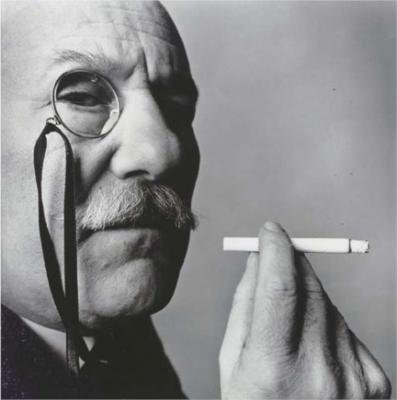
Where to see Barnett Newman
Collection holdings are reported here; current display varies. Check with each museum before visiting.
-
20 recorded works
National Gallery of Art
Washington D.C., United States
-
7 recorded works
Museum of Modern Art
New York City, United States


-
5 recorded works
Metropolitan Museum of Art
New York City, United States
-
4 recorded works
Stedelijk Museum Amsterdam
Amsterdam, Netherlands
-
4 recorded works
Harvard Art Museums
Cambridge, United States
-
3 recorded works
Neue Nationalgalerie
Berlin, Germany
-
3 recorded works
Tate
London, United Kingdom
-
3 recorded works
National Gallery of Canada
Ottawa, Canada
-
2 recorded works
Beyeler Foundation
Riehen, Switzerland
-
2 recorded works
Whitney Museum of American Art
New York City, United States


Own a piece of it
Barnett Newman prints
Hand-finished archival prints from Barnett Newman's body of work.


View all 12 museums
-
2 recorded works
Art Institute of Chicago
Chicago, United States
-
2 recorded works
Musée National d'Art Moderne
Paris, France


Can't travel? Bring Barnett Newman home.
See all Barnett Newman prints →Frequently Asked Questions
Where can I see Barnett Newman's work?
Barnett Newman's artworks are held in many public collections. In New York, you can find his pieces at the Solomon R. Guggenheim Museum, the Whitney Museum of American Art, and the Museum of Modern Art. Other American museums with Newman's art include the Albright-Knox Art Gallery (Buffalo), the Art Institute of Chicago, the Krannert Art Museum (Champaign, Illinois), and the San Francisco Museum of Art. His work is also held by the National Gallery of Canada (Ottawa). Newman's *Covenant* (1949[1]) is in the Hirshhorn Museum and Sculpture Garden, Washington, DC. The Carnegie Museum of Art (Pittsburgh) also has examples. These museums have displayed Newman's work in group shows, such as the 1969 exhibition *New York Painting and Sculpture: 1940-1970[1]* at the Metropolitan Museum of Art.What should I know about Barnett Newman's prints?
Barnett Newman's paintings gained attention in New York during the 1950s, attracting a dedicated group of admirers. His art moved away from gestural styles. Newman emphasised the holistic nature of painting; his works resist analysis based on individual components. There are no subdivisions; instead, the total field constitutes the unit of meaning. His even surfaces were brushed, but not ostentatiously so. Narrow canvases, which he painted in 1951[1], prefigured the shaped canvas ten years later. Newman's writings offer insight into his artistic ideas. He saw Northwest Coast Indian paintings as ritualistic expressions of mythological beliefs, rather than mere decoration. He wrote that the Kwakiutl artist's abstract shapes were directed by a ritualistic will towards metaphysical understanding. Newman also explored abstract thought, rather than abstract disciplines. His exhibition, 'The Stations of the Cross', consists of black and white paintings on raw canvas.What techniques or materials did Barnett Newman use?
Barnett Newman is best known for his large-scale abstract expressionist paintings. He worked primarily in oil paint applied to canvas. His signature technique involved creating expansive fields of colour punctuated by vertical bands, which he termed "zips". Newman's approach to painting was methodical. He often began by priming the canvas with multiple layers of gesso to create a smooth surface. He then applied thin layers of oil paint, sometimes using a roller or knife to achieve an even distribution of colour. The zips were typically added last, often with a single, decisive stroke of the brush. While Newman is most recognised for his paintings, he also produced a small number of sculptures and prints. His sculpture, "Broken Obelisk" (1963[1]-1967[1]), is constructed from Cor-Ten steel, a material known for its rust-like appearance. He also experimented with lithography and etching, creating abstract compositions that echo the visual language of his paintings. These prints allowed him to explore the relationship between colour and form on a smaller scale.Who did Barnett Newman influence?
Barnett Newman's art initially appealed to a small circle of admirers in New York around 1950[1]. By the later 1950s, as tastes shifted away from gestural art, a larger audience began to appreciate his work. Even artists who had not directly viewed his pieces discussed and speculated about Newman's ideas. Newman's approach, which asserted the holistic character of painting, influenced younger artists seeking alternatives to Abstract Expressionists like de Kooning and Kline. His paintings resisted analysis based on subdivisions; instead, the entire field constituted the unit of meaning. The narrow canvases he painted in 1951, closely related in height to a person's size, prefigured the shaped canvas development ten years later. Critics such as Clement Greenberg observed that Newman's vertical bands acted as a 'parody' of the frame. This idea was later expanded by Michael Fried, who applied it to Frank Stella's paintings, where the stretcher defines the limits of the surface.Who influenced Barnett Newman?
Barnett Newman (1905[1]-1970[1]) argued for art based on pure sensation. He published essays in the late 1940s in *The Tiger’s Eye*, a magazine that also included work by Pollock, Rothko, and Still. Newman embraced the role of contrarian. He dismissed philosophers, declaring that "aesthetics is for the artists as ornithology is for the birds". At a time when expressionist paint handling was popular, he worked with solid planes of smoothly applied colour, interrupted by vertical bands he called “zips”. He aimed for something “real” and “concrete”. Newman studied Native American art and admired the totem poles of the Northwest and the burial mounds of the Midwest. Newman asserted the holistic character of painting. His paintings could not be analysed in terms of small parts; the total field is the unit of meaning. His even, brushed paint surface appealed to a new generation of artists. His narrow canvases, painted in 1951[1], prefigure the development of the shaped canvas ten years later.What is Barnett Newman's most famous work?
Barnett Newman is best known for his large, abstract expressionist paintings characterised by fields of colour and vertical lines, which he called "zips". While it is difficult to identify a single "most famous" work, *Vir Heroicus Sublimis* (1950[1]-1951[1]) is often cited as one of his most important and recognisable pieces. This monumental painting, measuring approximately 2.4 by 5.4 metres, is predominantly red and features a few vertical "zip" lines. The title, Latin for "Man, heroic and sublime", reflects Newman's interest in conveying a sense of human presence and the sublime through abstract means. He aimed to evoke a direct, emotional response from the viewer, unmediated by traditional representational imagery. Another significant work is *Who's Afraid of Red, Yellow and Blue III* (1967), part of a series exploring primary colours. This painting became infamous when it was slashed in 1986 while on display in Amsterdam. The attack and subsequent restoration raised questions about the value and vulnerability of abstract art. Newman's works continue to be discussed and exhibited, solidifying his position as a major figure in abstract expressionism.What style or movement did Barnett Newman belong to?
Barnett Newman (1905[1]-1970[1]) is generally categorised as an American Abstract Expressionist painter, although his work also anticipates both Colorist and Minimalist styles. He is particularly associated with colour field painting, creating large canvases dominated by single colours, often punctuated by vertical lines he termed "zips". Newman began as an art critic and advocate for Abstract Expressionism before becoming a painter himself. His paintings from 1950[1] and 1951 gained a compact group of admirers in New York. Later in the decade, his work found a larger audience as sensibilities shifted away from gestural art. Newman sought to create a "pure tension" between asymmetrical blocks of colour. His "zips" became a trademark, encouraging viewers to focus on the spatial experience of colour. He aimed to evoke a sense of refined spirituality and mysticism through colour and scale. Despite initial scepticism, younger artists embraced his work as a move beyond the emotional intensity of other Abstract Expressionists.What was Barnett Newman known for?
Barnett Newman (1905[1]-1970[1]) was an American painter known for his advocacy of art's elemental power. He argued for an art grounded in pure sensation. Newman published essays in the late 1940s in *The Tiger's Eye*, a magazine that also featured work by Pollock, Rothko, and Still. A native New Yorker, Newman embraced controversy. He famously quipped that 'aesthetics is for the artists as ornithology is for the birds'. At a time when expressionist paint handling was common, Newman worked with solid planes of smoothly applied colour, interrupted by vertical bands he called 'zips'. He aimed for something 'real' and 'concrete'. His studies of Native American art, including totem poles and burial mounds, influenced his work. Although his paintings met with scepticism in the 1950s, a younger generation embraced them, seeking to move beyond the emotions of Abstract Expressionists like de Kooning and Kline. Newman asserted the holistic character of painting; his paintings could not be analysed in terms of small parts.
Sources
Where to See guide aggregates verified holdings of Barnett Newman's works across the following collections.
- [1] wikipedia Wikipedia: Barnett Newman Used for: biography.
- [2] book Jed Perl, Art in America 1945-1970 Used for: biography, stylistic analysis.
Editorial overseen by Solis Prints. Sources verified 2026-09-30. Click a source for details, or hover over [N] in the page above to preview.
Editorial standardsMethodologyCorrectionsAI disclosureAbout the editorial team