



About Bram van Velde
Dutch · 1895–1981
- School of Paris
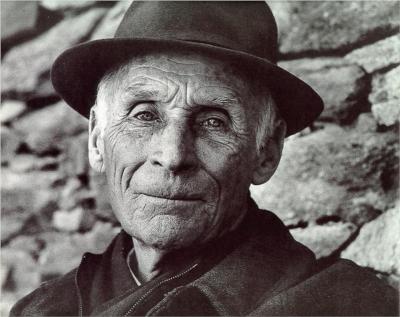
Dutch[1] abstract painter who lived in near-obscurity until championed by Samuel Beckett; known for large, drifting colour forms on ambiguous grounds.
Museums10
Countries6
Most worksStedelijk Museum Amsterdam, Amsterdam · 8 works
Loading map…
Where to see Bram van Velde
Ranked by works you can see in person.
-
8 works
Stedelijk Museum Amsterdam
Amsterdam, Netherlands
-
3 works
King Baudouin Foundation
Brussels, Belgium


-
1 works
Unterlinden Museum
Colmar, France
-
1 works
Carnegie Museum of Art
Pittsburgh, United States
-
1 works
Museo Nacional Centro de Arte Reina Sofía
Madrid, Spain
-
1 works
Musée d'Orsay
Paris, France
-
1 works
Kunstmuseum Den Haag
The Hague, Netherlands
-
1 works
Musée National d'Art Moderne
Paris, France
-
0 works
collection of the Musée d’art contemporain de Montréal
Montreal, Canada
-
0 works
Vanderbilt Museum of Art
Nashville, United States


Frequently Asked Questions
Where can I see Bram van Velde's work?
It is difficult to pinpoint exactly where Bram van Velde's work can be viewed, as gallery holdings are always subject to change. However, museum websites may offer details about current exhibitions and permanent collections. Larger institutions are more likely to hold works by a 20th-century artist like Van Velde.  Major museums that exhibit modern art include the Metropolitan Museum of Art (New York), the Museum of Modern Art (New York), the Los Angeles County Museum of Art, and the Minneapolis Institute of Arts. In Canada, the Royal Ontario Museum (Toronto) may be a resource. Several museums in France hold collections of modern art, such as the Musée d’Art Moderne de la Ville de Paris and the Musée d’Orsay (Paris).What should I know about Bram van Velde's prints?
Bram van Velde (1895[1]-1981[1]) was a Dutch[1] painter and printmaker, associated with abstract expressionism. He is known for his gestural, colourful lithographs and etchings. Van Velde's printmaking gained momentum later in his career, particularly from the 1960s onwards. He worked with various printmaking techniques, often combining them to create unique textures and effects. His prints frequently feature overlapping shapes and translucent layers of colour, reflecting the spontaneous nature of his artistic approach. Although his work was initially met with resistance, Van Velde gained recognition in the latter half of the twentieth century. He developed friendships with playwright Samuel Beckett and fellow artist Joan Miró, both of whom admired his work. His prints are now held in numerous public and private collections.Why are Bram van Velde's works important today?
Bram van Velde (1895[1]-1981[1]) developed a distinctive abstract style. His paintings are characterised by their use of colour and form to evoke emotion. Van Velde's artistic journey was marked by periods of both recognition and obscurity. He initially worked in a figurative style, but later moved towards abstraction. This shift occurred under the influence of artists like Henri Matisse. He developed a non-geometric form of abstract painting. His work gained attention in the post-war era, particularly in France. He associated with figures such as Samuel Beckett. Van Velde's art can be seen as a precursor to later developments in abstract expressionism and art informel; these movements valued spontaneity and subjective expression. His emphasis on colour and expressive brushwork influenced subsequent generations of artists interested in non-representational art. Van Velde's works continue to be exhibited in major museums and galleries internationally, securing his place in the history of 20th-century art.What techniques or materials did Bram van Velde use?
Bram van Velde's artistic practice involved a distinctive approach to materials and techniques. He typically began with a cotton duck canvas, which he primed with two coats of turps-thinned Flake White. Once dry, the surface was sanded to create a suitable ground for painting. When applying colour, van Velde mixed standard artist's oil paint with a medium composed of wax and turpentine. This medium was prepared by combining one part melted white refined beeswax with four parts pure gum spirits of turpentine. The mixture was kept warm on a hot plate to maintain its liquid state. Small amounts were then mixed with the paint using a brush immediately before application to the canvas. Van Velde applied the mixture to the canvas with a brush, working it over to ensure the medium and paint were thoroughly combined and evenly covered the desired shape. He then manipulated the paint with a large painting spatula and a small painting knife until he achieved a satisfactory result. He aimed to maintain consistent and unified surfaces within each painting, although variations could occur due to factors such as the evaporation of the medium during heating, which could make the paint gummy and softer.Who did Bram van Velde influence?
It is difficult to say with certainty who Bram van Velde influenced directly. However, one can discuss artists who worked with similar themes or subjects. Jan van de Velde II, for example, was an artist who explored the theme of ruins in the early 17th century. His work frequently depicted both real and imagined ruins, often within a Dutch[1] setting. This interest in antiquity and the visualisation of the past was a significant aspect of his artistic practice. Similarly, Lucas van Valckenborch responded to Pieter Bruegel's work, particularly in his efforts at depicting interactions between peasants and the upper classes. Roelandt Savery also engaged with Bruegel's peasant scenes, though he altered the focus to emphasise what he saw as coarse behaviour. These artists, like van Velde, engaged with representing the lives and surroundings of people in their art.Who influenced Bram van Velde?
Bram van Velde's brother, Henri van de Velde (1863-1957[1]), was an important influence. Henri entered the Antwerp Academy in 1880 and, in 1884, went to Paris to study under Carolus-Duran. On his return to Belgium, he associated with the Belgian 'Barbizon' group of Claus, Reymans, Crabeels, and Roseels; they were working around Wechel der Zande. Henri was deeply impressed by Seurat's Grande Jatte and adopted Neo-Impressionism in 1888, the year he was elected to Les XX. By around 1891, however, his interest in the decorative arts began to emerge, and after renewed contact with William Morris in 1894, he committed to this sphere. In 1895[1], he built his own house, the Villa Bloemenwerf at Uccle, which led to the development of an extensive international architectural practice, whose designs included the Kunstgewerbeschule at Weimar (1904[1]-6) and the building for the Rijksmuseum Kroller-Muller at Otterlo (1921-8).What style or movement did Bram van Velde belong to?
Bram van Velde's artistic affiliations are complex, as his career spanned several movements. Initially, his brother Henri van de Velde adopted Neo-Impressionism around 1888, being deeply impressed by Seurat's Grande Jatte. He was elected to Les XX that year. By about 1891, Henri's focus shifted towards decorative arts, and after contact with William Morris in 1894, he dedicated himself to this area. Expressionism, which emerged primarily in Germany and Austria in the early 20th century, also has some relevance. Expressionist art aimed to convey subjective emotions through expressive forms. While influenced by figures such as Van Gogh, Gauguin, and Munch, Expressionists moved even further from traditional representation. They were also affected by Matisse and the Fauves, Cubists, African and Oceanic art, and German and Russian folk art. The Fauves, active in France around 1905[1], favoured non-associative colour combinations and broad brushstrokes. These artists sought to express sensations before nature through pure colour.What was Bram van Velde known for?
There are multiple artists named Van de Velde. This can cause confusion. Esaias van de Velde (1587-1630[1]) was a Dutch[1] painter active in Haarlem. He was a central figure in the national school, which concentrated on local subject matter. These included villages, dunes, woods, meadows and canals. His genre paintings displayed power, finesse and diversity, where colouristic appearance was paramount. Figures played an important role in his work, connecting the Dutch style to 16th-century Flemish peasant paintings. He painted hunting scenes, knightly tournaments, folk feasts, ice-skating scenes, annual fairs and other images. Henri van de Velde (1863-1957[1]) was born in Antwerp. He studied at the Antwerp Academy and in Paris under Carolus-Duran. Upon returning to Belgium, he associated with the Belgian ‘Barbizon’ group. He adopted Neo-Impressionism in 1888 and was elected to Les XX. By around 1891, he developed an interest in the decorative arts. After contact with William Morris in 1894, he dedicated himself to this area. In 1895[1], he built his house, the Villa Bloemenwerf at Uccle, which led to an international architectural practice. His designs included the Kunstgewerbeschule at Weimar (1904-6) and the building for the Rijksmuseum Kroller-Muller at Otterlo (1921-8).
Sources
Where to See guide aggregates verified holdings of Bram van Velde's works across the following collections.
- [1] wikipedia Wikipedia: Bram van Velde Used for: biography.
- [2] book Victoria Charles, Baroque Art Used for: stylistic analysis.
- [3] book guggenheim-moder00artg Used for: biography.
- [4] book J Beckers;J Van der Stock;A Vogels;L Watteeuw;, Imaging Utopia Used for: biography.
- [5] book Post-impressionism : cross-currents in European painting Used for: biography.
- [6] book Post-impressionism : cross-currents in European painting Used for: biography.
Editorial overseen by Solis Prints. Sources verified 2026-08-29. Click a source for details, or hover over [N] in the page above to preview.
Editorial standardsMethodologyCorrectionsAI disclosureAbout the editorial team