

About Cesar Domela
- abstract art
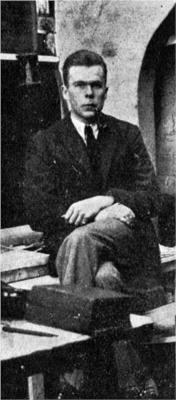
Dutch[1] Constructivist who spent six decades creating hybrid reliefs positioned between Neo-Plasticist geometry and sculpture.
Where to see Cesar Domela
Ranked by works you can see in person.
-
12 works
Kunstmuseum Den Haag
The Hague, Netherlands
-
4 works
Stedelijk Museum Amsterdam
Amsterdam, Netherlands


-
4 works
Centraal Museum
Utrecht, Netherlands
-
2 works
Musée d'art moderne de Paris
Paris, France
Also here (6)
-
1 works
Westphalian State Museum of Art and Cultural History
Münster, Germany
-
1 works
Museum Belvédère
Heerenveen, Netherlands
-
1 works
Lenbachhaus
Munich, Germany
Also here (6)
-
1 works
Rijksmuseum
Amsterdam, Netherlands
-
1 works
Musée National d'Art Moderne
Paris, France
-
0 works
Institut Valencià d'Art Modern
Valencia, Spain


View all 14 museums
-
0 works
Museum van Bommel van Dam
Venlo, Netherlands
-
0 works
National Gallery of Art
Washington D.C., United States
-
0 works
Stichting Museum Bommel Van Dam
Venlo, Netherlands
-
0 works
collection of the Musée d’art contemporain de Montréal
Montreal, Canada


Frequently Asked Questions
Where can I see Cesar Domela's work?
Cesar Domela's work can be viewed in a number of museums. These include institutions in Europe and North America. In the United States, you can find his art at the Charles Hosmer Morse Museum of American Art (Winter Park, Florida), the Los Angeles County Museum of Art (LACMA), the Metropolitan Museum of Art (New York), the Minneapolis Institute of Arts, the Museum of Modern Art (New York), the Virginia Museum of Fine Arts (Richmond), and the Wolfsonian at Florida International University (Miami Beach). In Canada, his work is held at the Royal Ontario Museum (Toronto). In the United Kingdom, see the Bakelite Museum (Williton), the Brighton Museum & Art Gallery, the Geffrye Museum (London), the Manchester Art Gallery, the National Museums of Scotland, and the Victoria & Albert Museum (London). Other European museums include the Museo Art Nouveau y Art Deco (Salamanca, Spain), the Museu Calouste Gulbenkian (Lisbon), the Museu d’Art Modern (Barcelona), the Brangwyn Museum (Brugge, Belgium), the Clockarium Museum (Brussels), the Musée d’Art et d’Industrie (Roubaix, France), the Musée de l’Ecole de Nancy (France), the Musée des Arts Décoratifs (Paris), and the Musée des Beaux-Arts (Nancy, France).What should I know about Cesar Domela's prints?
When considering Cesar Domela's prints, it is helpful to understand some basic print terminology. An "original print" is defined as an image conceived by the artist as a print and executed solely as a print. Each print in the edition is an original, printed from a plate, stone, screen, block or other matrix created for that purpose. There is no one original print from which copies are made. Each print is individually inked and pulled; it is a multi-original medium. A "reproduction" is a copy of a work of art conceived by the artist in another medium (painting, watercolour, etc.). The reproduction has usually been made by photomechanical means. Numbering and signing a reproduction does not change its essence; it is still a reproduction of a painting or watercolour, not an original print. A "vintage print" is a photograph printed around the time that the negative was taken. A "period print" is one made after shooting (an interval of up to 10 to 15 years is generally considered compatible with this term). If the time of printing is unknown or more than 15 years after shooting, the photograph is qualified as an old print, as opposed to a modern print. A "modern print" is a recently printed photograph from the original negative. A "facsimile" is a print made by rephotographing a print or by using the original negative, whose print base and processing are, to the extent possible, identical to those used for the reference print (generally, a vintage print).Why are Cesar Domela's works important today?
Cesar Domela, a Dutch[1] artist born in 1900[1], is significant because of his contribution to twentieth-century abstract art[1]. He moved through several styles, beginning with figurative work before shifting to more abstract modes. Domela's association with the De Stijl movement, which included Piet Mondrian and Theo van Doesburg, marks a period of geometric abstraction in his work. De Stijl artists sought a universal visual language, using simplified forms and primary colours. Domela's interpretation involved a move away from strict adherence to right angles, introducing diagonal lines and a greater sense of dynamism. Later, Domela incorporated collage techniques and experimented with different materials, expanding his visual vocabulary. His exploration of form, space, and material provides insight into the development of abstract art and its ongoing dialogue with the world.Who was Cesar Domela?
Cesar Domela was an artist who worked in painting and sculpture. Born in Amsterdam in 1900[1], he is known for his Neo-Plasticist reliefs, which evolved from strict geometric forms to incorporate curvilinear shapes after he moved to Paris.What techniques or materials did Cesar Domela use?
Without specific information on Cesar Domela's methods, we can consider some general points about artistic techniques. Artists make choices that exist outside the limitations of their materials. Understanding the techniques and processes used by artists is a necessary part of art history. The relationship between the qualities of medium and technique, and the aesthetic decisions made by the artist, should be understood. This ensures that thinking, writing, presentation and interpretation of art history remains connected to the work itself. Some artists used soft, fine brushes and fluid oil to create smooth surfaces. Others used coarse hog's hair brushes on canvas. Some artists used knives with flexible wooden blades. Some artists used small clay models to work out the arrangement of figures. Some artists made oil studies for their paintings; others made small-scale versions of their compositions.Who did Cesar Domela influence?
Cezanne's influence extends to a diverse range of artists and movements in the 20th century. Although he lived removed from the Parisian art centre, and his importance was recognised by a small circle of impressionist colleagues and younger painters at the time of his death in 1906[1], a retrospective at the Salon d'Automne in 1907 brought his work to the attention of a wider audience. His art stimulated the Nabis, Kandinsky and the Munich expressionists, the cubists, de Stijl, and the Russian constructivists; even the surrealists found something of interest in his work. Later abstract artists also drew conclusions from his work. Painters such as Picasso and Braque were ready to appreciate Cezanne's qualities. Others, like Delaunay, Metzinger, and Gleizes, had connections to artists familiar with Cezanne, or they associated with writers whose views predisposed them to sympathise with his art. His composition, careful arrangement of planes, and willingness to adjust forms influenced these younger painters.Who influenced Cesar Domela?
Cesar Domela, born in Amsterdam in 1900[1], was initially influenced by the expressionist Jan Sluyters. Later, around 1923[1], he encountered the work of Piet Mondrian and Theo van Doesburg. These artists were central figures in the De Stijl movement. De Stijl's geometric abstract style had a considerable impact on Domela's artistic direction. He adopted its reduced palette and non-representational forms. Unlike Mondrian, however, Domela retained the use of diagonal lines in his compositions. This distinction set him apart from the strict orthogonal approach of the better-known De Stijl painters. Domela's association with other abstract artists in Paris, such as Jean Arp and Sophie Taeuber-Arp, further shaped his artistic development. He explored collage and experimented with materials like wood, glass, and metal. These explorations moved beyond the traditional boundaries of painting. Domela's work, while rooted in De Stijl principles, evolved into a more personal form of geometric abstraction. He died in Paris in 1992[1].What is Cesar Domela's most famous work?
Cesar Domela is best known for his contributions to Neo-Plasticism, a form of abstract art[1] developed by Piet Mondrian. While he does not have one single work that overshadows all others, Composition No. 10 (1925[1]) is a significant early example of his geometric abstract style. Domela began his artistic career creating figurative works, but he shifted to abstraction around 1923 after encountering Mondrian's paintings. Composition No. 10 demonstrates Domela's early exploration of the Neo-Plastic aesthetic: the use of horizontal and vertical lines, primary colours, and non-objective forms. Throughout his career, Domela experimented with different materials and techniques, including collage and relief structures. His later works often incorporated diagonal lines and curved shapes, moving beyond the strict rules of early Neo-Plasticism. However, his earlier pieces, such as Composition No. 10, remain important examples of his engagement with, and development of, abstract art in the Netherlands. His work is held in major museum collections, including the Kröller-Müller Museum in Otterlo.
Sources
Where to See guide aggregates verified holdings of Cesar Domela's works across the following collections.
- [1] wikipedia Wikipedia: Cesar Domela Used for: biography.
- [2] book guggenheim-guhe00solo Used for: biography.
- [3] book guggenheim-twopri00weis Used for: biography.
- [4] book Masterpieces of western art : a history of art in 900 individual studies from the Gothic to the present day Used for: biography.
- [5] book 1892-1968, Panofsky, Erwin,, Tomb sculpture: four lectures on its changing aspects from ancient Egypt to Bernini Used for: stylistic analysis.
Editorial overseen by Solis Prints. Sources verified 2026-08-29. Click a source for details, or hover over [N] in the page above to preview.
Editorial standardsMethodologyCorrectionsAI disclosureAbout the editorial team