



About Carl Andre
American · 1935–2024
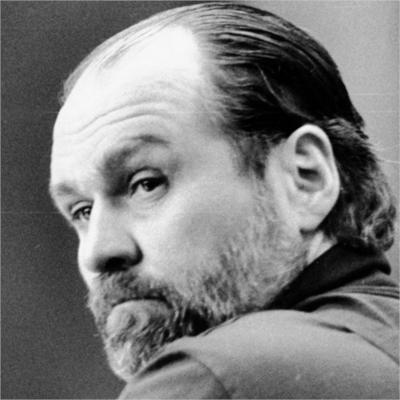
American[1] minimalist Carl Andre made floor sculptures from industrial materials, insisting on tactility over vision in works like the notorious Equivalent VIII.
Museums7
Countries3
Largest reported holdingNational Gallery of Art, Washington D.C. · 20 recorded works
Loading map…
Where to see Carl Andre
Collection holdings are reported here; current display varies. Check with each museum before visiting.
-
20 recorded works
National Gallery of Art
Washington D.C., United States
-
10 recorded works
Museum Boijmans Van Beuningen
Rotterdam, Netherlands


-
2 recorded works
Museum of Modern Art
New York City, United States
-
2 recorded works
Stedelijk Museum voor Actuele Kunst
Ghent, Belgium
-
1 recorded work
Middelheim Museum
Antwerp, Belgium
-
1 recorded work
Smithsonian American Art Museum
Washington D.C., United States
-
1 recorded work
Kröller-Müller Museum
Otterlo, Netherlands


Frequently Asked Questions
Where can I see Carl Andre's work?
Carl Andre was born in Quincy, Massachusetts, in 1935[1]. He studied art at Phillips Academy in Andover, Massachusetts, from 1951[1] to 1953. Andre's first solo exhibition occurred in 1965 at the Tibor de Nagy Gallery in New York. Later, a retrospective was held at the Guggenheim Museum in New York in 1970; another followed at the Kunsthalle Bern in 1975. During his career, Andre had solo exhibitions at the Dwan Gallery in New York and Los Angeles; Galerie Konrad Fischer, Dusseldorf; Galerie Heiner Friedrich, Munich; Wide White Space, Antwerp; and Gemeentemuseum, The Hague. He participated in group exhibitions such as Primary Structures at The Jewish Museum, New York, in 1966 and American[1] Sculpture of the Sixties at the Los Angeles County Museum of Art in 1967. In 1977, he executed Stone Field Sculpture in Hartford. A touring retrospective began at the Laguna Gloria Art Museum in Austin, Texas, in 1978.What should I know about Carl Andre's prints?
Carl Andre, born in Quincy, Massachusetts, in 1935[1], is best known as a Minimalist sculptor. However, he has also produced prints and written works, including poetry and a short novel. Andre studied art at Phillips Academy in Andover, Massachusetts, from 1951[1] to 1953. His early wood sculptures show the influence of Constantin Brancusi, and the black paintings of his friend Frank Stella. His sculpture aims to reduce the art object to its lowest level of visibility. Andre's first solo show occurred in 1965 at the Tibor de Nagy Gallery, New York. He participated, along with Dan Flavin, Sol LeWitt, and Donald Judd, in the "Primary Structures" exhibition of Minimalist sculpture at The Jewish Museum, New York, in 1966. Other solo exhibitions followed at the Dwan Gallery in New York and Los Angeles, and at the Galerie Konrad Fischer in Düsseldorf in 1967. The Guggenheim Museum, New York, and the Kunsthalle Bern presented retrospectives of Andre's work in 1970 and 1975 respectively.Why are Carl Andre's works important today?
Carl Andre (1935[1]-2024[1]) was an American[1] minimalist artist known for his arrangements of industrial materials. He often worked with metal plates, bricks, and timber. His works challenge traditional notions of sculpture. Instead of carving or modelling, Andre assembled prefabricated elements in simple, geometric configurations. One of Andre's best-known pieces is "Equivalent VIII" (1966[1]), a rectangular arrangement of 120 firebricks. The work's purchase by the Tate Gallery in 1972 caused public controversy, focusing on the definition of art and the use of public funds. Andre's emphasis on materials and their arrangement influenced subsequent generations of artists. His focus on the physical properties of objects and their relationship to space is still relevant in contemporary art. His work encourages viewers to consider the gallery space as an integral part of the artwork. By using ordinary, industrial materials, Andre questioned the value and status associated with traditional art materials like bronze or marble. His minimalist aesthetic and conceptual approach continue to be debated and reinterpreted.What techniques or materials did Carl Andre use?
Carl Andre is associated with Minimalism[1], a movement that favoured industrial materials and simple geometric forms. He often worked with unaltered, mass-produced elements. His early work involved carving wood. However, he moved away from subtractive methods and began creating sculptures by arranging bricks, metal plates, or concrete blocks on the floor. One famous example is "Equivalent VIII" (1966[1]), composed of 120 fire bricks. The work is not about the individual components, but the arrangement and the viewer's interaction with it. Andre's materials were typically purchased directly from suppliers. He selected them for their physical properties and modularity. His arrangements often responded to the specific dimensions of the exhibition space. By using industrial materials in their raw state, Andre challenged traditional notions of sculpture and authorship. He eliminated the artist's hand, focusing instead on the spatial relationships between the work and the viewer.Who did Carl Andre influence?
Carl Andre's definition of sculpture as 'FORM = STRUCTURE = PLACE' clarifies his own artistic development and indicates options available to contemporary artists. His concept of 'place' disrupted the traditional role of the art object. Andre retained sculpture's fundamental principles, such as mass, space, volume, and gravity, while ridding it of traditional form and structure. His work played a germinal role in experiments such as Earthworks and Conceptual Art. Along with Robert Morris, Dan Flavin, Sol LeWitt, and Donald Judd, Andre defined this position. Originally influenced by Frank Stella and Constantin Brancusi, from 1960[1] to 1964, Andre worked on the Pennsylvania Railway, which involved using standardised, interchangeable units. From the mid-1960s, he assembled groups of bricks, styrofoam planks, and cement blocks, extending them horizontally on the floor. The configurations of these identical shapes are determined by simple mathematical principles. Andre's work is associated with Albers, Judd, LeWitt, Long, and Serra.Who influenced Carl Andre?
Carl Andre's artistic development involved several influences. Early on, he befriended Hollis Frampton and helped him move to New York City in 1958[1]. Frampton introduced Andre to Constantin Brâncuși's work. Brâncuși's reductive forms and emphasis on the inherent qualities of materials had a great effect. Around the same time, Andre encountered the art critic Clement Greenberg, whose formalist ideas promoted abstraction and the importance of an artwork's physical properties. Andre also studied woodworking in his youth, which gave him practical knowledge of materials and construction techniques. This experience informed his later use of industrial materials, such as metal plates and wooden timbers. His move to New York exposed him to the burgeoning Minimalist movement. Artists like Donald Judd and Sol LeWitt, with their emphasis on simple geometric forms and industrial production, further shaped Andre's artistic direction. These combined influences steered Andre toward his signature style of arranging modular units on the floor, challenging traditional notions of sculpture.What is Carl Andre's most famous work?
Carl Andre is most known for his minimalist sculptures, particularly those made from arrangements of industrial materials. One of his most discussed, and controversial, works is "Equivalent VIII", created in 1966[1]. This piece consists of 120 firebricks arranged in a rectangular formation on the floor. The bricks are simply laid out; there is no mortar or adhesive holding them together. The dimensions of the rectangle are relatively low, and viewers can easily walk around or even over the work. "Equivalent VIII" gained notoriety in 1976 when it was exhibited at the Tate Gallery in London. It became a subject of public debate, largely due to the perception that the gallery had spent a significant sum of public money, £2,297, on what appeared to be ordinary building materials. The controversy surrounding the work raised questions about the definition of art, the role of the artist, and the value of minimalist sculpture. While Andre created other similar works using different materials and arrangements, "Equivalent VIII" remains his most famous, and perhaps infamous, creation.What style or movement did Carl Andre belong to?
Carl Andre is associated with the Minimalist art movement, which emerged in the United States during the 1950s. His first solo show was at the Tibor de Nagy Gallery in New York in 1965[1]. In 1966, he participated, along with Dan Flavin, Sol LeWitt, and Donald Judd, in *Primary Structures*, an exhibition of Minimalist sculpture at The Jewish Museum in New York. Minimalism[1] arose partly as a reaction against Abstract Expressionism. Minimalist artists often abandoned traditional artistic media; they favoured industrial materials and simple, repeated geometric forms. Andre often created what he called ‘floor works’. These sculptures typically used prefabricated materials arranged in simple patterns directly on the floor, rather than on plinths. This was intended to make the work part of the environment. Andre's definition of sculpture as "FORM = STRUCTURE = PLACE" is important for understanding his artistic choices. His art attacks the idea of sculpture as a precious object. The concept of place is very important to his work.
Sources
Where to See guide aggregates verified holdings of Carl Andre's works across the following collections.
- [1] wikipedia Wikipedia: Carl Andre Used for: biography.
- [2] book guggenheim-carlandre00wald Used for: biography, stylistic analysis.
- [3] book guggenheim-guggenheimintern1971solo Used for: biography.
- [4] book guggenheim-guhe00solo Used for: biography, stylistic analysis.
- [5] book guggenheim-micsinger00wald Used for: biography, stylistic analysis.
Editorial overseen by Solis Prints. Sources verified 2026-09-30. Click a source for details, or hover over [N] in the page above to preview.
Editorial standardsMethodologyCorrectionsAI disclosureAbout the editorial team