



About Charles Despiau
French · 1874–1946
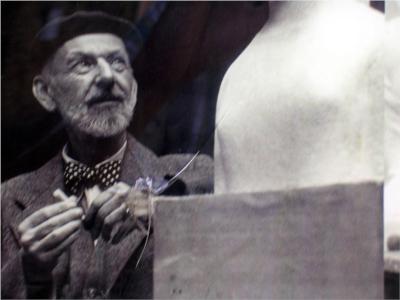
French[1] sculptor and Rodin assistant whose calm, classical portraits and nudes earned him a place in over a hundred museums worldwide.
Museums5
Countries3
Most worksNational Gallery of Art, Washington D.C. · 5 works
Loading map…
Where to see Charles Despiau
Ranked by works you can see in person.
-
5 works
National Gallery of Art
Washington D.C., United States
-
2 works
Middelheim Museum
Antwerp, Belgium


-
1 works
Royal Museum of Fine Arts Antwerp
Antwerp, Belgium
-
1 works
Musée d'art moderne de Paris
Paris, France
Also here (6)
-
1 works
Vanderbilt Museum of Art
Nashville, United States


Frequently Asked Questions
Where can I see Charles Despiau's work?
Charles Despiau's sculptures can be found in numerous public collections. The Musée Despiau-Wlérick in Mont-de-Marsan, France, holds a significant collection of his work; this museum is dedicated to Despiau and fellow sculptor Jean Wlérick. Other notable locations include the Musée d'Art Moderne in Paris, which possesses several examples of his sculpture. Outside France, The Metropolitan Museum of Art in New York City has sculptures by Despiau in its collection, as does the Museum of Fine Arts in Boston. Smaller collections can be located in museums and galleries throughout Europe and North America. Major museums often rotate their displays, so it is advisable to check their websites or catalogues in advance of a visit to confirm that works by Despiau are on view. Auction houses such as Sotheby's and Christie's also occasionally offer Despiau's sculptures for sale, providing another opportunity to view his pieces.What should I know about Charles Despiau's prints?
Charles Despiau (1874[1]-1946[1]) was a French[1] sculptor known for his simplified modelling and sensitive figure studies. He concentrated on the single female figure, often in repose, and his portrait heads show a reticence and withdrawn elegance. Despiau eliminated extraneous detail in favour of integrated volume and mass surrounded by tangible space. Despiau is considered the most immediate inheritor of the tradition of Aristide Maillol. Like Maillol, he sought a restatement of the classic ideal of sculpture. Maillol began his career as a painter. At the opposite extreme from the violent variety of Rodin, he concentrated his whole attention on a restatement of the classic ideal of sculpture, stripped of all the academic accretions of sentimental or erotic synthetic idealism, and brought down to earth in the homely actuality of his models.Why are Charles Despiau's works important today?
Charles Despiau (1874[1]-1946[1]) was a French[1] sculptor known for his sensitive figure studies and portrait heads. He is important because of his ability to achieve a sense of repose and withdrawn elegance in his work. Despiau concentrated on the single female figure, often depicted standing, sitting, or reclining. His sculptures emphasise integrated volume and mass within tangible space. His portraits are characterised by reticence and simplification, eliminating extraneous details. Despiau's style is linked to Aristide Maillol, but Despiau achieved a greater sense of withdrawn elegance. His work provides a contrast to the violent variety of Auguste Rodin. While Antoine Bourdelle sought to revitalise the classical tradition through an eclectic return to archaic and Gothic forms, Despiau's approach was more subtle and sensitive.What techniques or materials did Charles Despiau use?
Charles Despiau worked primarily with sculpture. For bronzes, the artist employed techniques such as welding, which involves joining separate cast sections. Ideally, the finishing process makes these joints invisible. X-ray fluorescence can reveal differences between the metal of the body and the weld metal, clarifying the layout of the weld seams. X-radiography shows section joints as fine, pale lines, sometimes with fluid shapes defined by the filler welding material. Despiau used hand tools such as punches, chisels, and files, often custom-made to suit his specific requirements. He used these to express a physical connection with the bronze, which he saw as an ongoing dialogue with the material. He also used electric tools like grinders and pendant drills. Despiau used chasing to refine shapes, such as around the eyes, and to sharpen forms without leaving obvious marks. He also used patinas, sometimes starting with a traditional black or brown before deliberately altering it with other applications until reaching a desired equilibrium.Who did Charles Despiau influence?
Charles Despiau's work is linked to a lineage of early modern sculptors. Aristide Maillol, who focused on the single female figure, influenced Despiau. Maillol concentrated on integrated volume and mass within tangible space. Despiau's figure studies have a similar repose and elegance. His portrait heads show a reticence of simplification in modelling, with extraneous details eliminated. Both Maillol and Antoine Bourdelle sought to revitalise classical traditions. Bourdelle's approach involved an eclectic return to archaic and early fifth-century Greek sculpture. The most immediate inheritor of Maillol's tradition was Despiau, a sensitive artist. Rodin's influence as a sculptor extended into the twentieth century, with Matisse, Maillol, and Brancusi all coming into contact with him. Despiau's simplified forms can be seen as part of a broader move towards abstraction and essential forms in early modern sculpture.Who influenced Charles Despiau?
Auguste Rodin was an important influence. Both men were sculptors working in France during the late 19th and early 20th centuries. Rodin, born in 1840, was a generation older than Despiau, who was born in 1874[1]. Rodin's approach to sculpture, with its emphasis on capturing movement and emotion, had an impact on many artists of the period. Rodin was also friendly with several of the Post-Impressionists; this put him in contact with a wide range of artistic ideas. Pierre Puvis de Chavannes, born in 1824, was a painter known for his mural and decorative work. He favoured mythological and symbolic subjects. Aristide Maillol, who began as a painter before becoming a sculptor, was initially under the influence of Puvis de Chavannes. Henri Martin, after studying at the École des Beaux-Arts, combined Neo-Impressionism with themes favoured by Puvis de Chavannes. Georges Seurat, after studying at the École des Beaux-Arts, devoted his early efforts to precise tonal drawings influenced by Ingres and Puvis de Chavannes.What is Charles Despiau's most famous work?
Charles Despiau is best known for his sculptures of women. He worked primarily in bronze, and his style is characterised by simplified forms and a focus on capturing the essence of his subjects. One of Despiau's most celebrated works is the sculpture *Assia*. This bronze bust depicts the Russian dancer Assia Granatoff, whom Despiau met in 1929[1]. The sculpture is noted for its smooth surfaces and graceful lines, which convey a sense of serenity and poise. *Assia* is considered a prime example of Despiau's ability to capture the inner character of his sitters through subtle modelling and attention to detail. Another significant work is *Eve*, created in 1925. This sculpture, also in bronze, presents a nude female figure in a contemplative pose. *Eve* demonstrates Despiau's interest in classical forms and his skill in rendering the human body with sensitivity and refinement. These sculptures, along with others such as *Madame Duthuit*, have cemented Despiau's reputation as a leading figure in 20th-century sculpture.What style or movement did Charles Despiau belong to?
Charles Despiau (1874[1]-1946[1]) was a French[1] sculptor associated with the modern classicist movement. His work moved away from the prevailing trends of Rodin's dramatic naturalism and the avant-garde experiments of Cubism and Futurism. Instead, Despiau favoured a return to simpler, more classical forms. Despiau's style emphasised volume, balance, and a sensitive treatment of surfaces. He is best known for his portrait busts and female nudes. These sculptures often possess a quiet, introspective quality. Unlike many of his contemporaries, Despiau focused on capturing the inner character of his subjects rather than pursuing radical formal innovations. Although he exhibited at the Salon d'Automne and the Salon des Indépendants, Despiau remained independent from any specific artistic group. He maintained a close working relationship with Aristide Maillol, another sculptor who shared his interest in classical ideals. Despiau's dedication to classical principles and his subtle modelling techniques set him apart from many of his contemporaries. His work represents a distinct strand within early 20th-century sculpture.
Sources
Where to See guide aggregates verified holdings of Charles Despiau's works across the following collections.
- [1] wikipedia Wikipedia: Charles Despiau Used for: biography.
- [2] book Alison West, From Pigalle to Préault Used for: biography, stylistic analysis.
- [3] book guggenheim-modernsculpturef00hirs Used for: biography, stylistic analysis.
- [4] book Palmer, Allison Lee, Historical Dictionary of Neoclassical Art and Architecture Used for: biography, stylistic analysis.
- [5] book Post-impressionism : cross-currents in European painting Used for: biography.
- [6] book Post-impressionism : cross-currents in European painting Used for: biography.
Editorial overseen by Solis Prints. Sources verified 2026-08-29. Click a source for details, or hover over [N] in the page above to preview.
Editorial standardsMethodologyCorrectionsAI disclosureAbout the editorial team