



About Carle Vernet
French · 1758–1836
- history painting
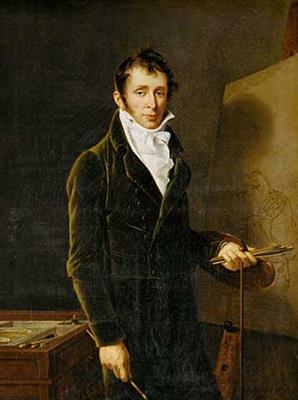
French[1] painter celebrated for Napoleonic battle scenes and equestrian studies, who also pioneered lithography in early 19th-century France.
Museums9
Countries7
Largest reported holdingNational Gallery of Art, Washington D.C. · 10 recorded works
Loading map…
Where to see Carle Vernet
Collection holdings are reported here; current display varies. Check with each museum before visiting.
-
10 recorded works
National Gallery of Art
Washington D.C., United States
-
4 recorded works
Louvre
Paris, France


-
2 recorded works
Museum of Fine Arts Ghent (MSK)
Ghent, Belgium
-
2 recorded works
Museum de Fundatie
Heino, Netherlands
-
2 recorded works
Metropolitan Museum of Art
New York City, United States
-
1 recorded work
Condé Museum
Chantilly, France
-
1 recorded work
Gemäldegalerie Berlin
Berlin, Germany
-
1 recorded work
Hunterian Museum and Art Gallery
Glasgow, United Kingdom
-
1 recorded work
Hermitage Museum
Saint Petersburg, Russia


Frequently Asked Questions
Where can I see Carle Vernet's work?
Carle Vernet's works can be viewed in several museums. These include the Musée du Louvre, Musée d’Orsay, and Musée du Petit Palais, all located in Paris. Other locations include the Musée des Beaux-Arts in Nantes, Musée des Beaux-Arts in Lille, and Musée des Beaux-Arts in Nice. These museums hold a selection of Vernet's paintings and drawings. Vernet, a French[1] painter and printmaker, is best known for his depictions of battles, horses, and scenes from daily life. His detailed compositions and energetic style made him a popular artist during the late 18th and early 19th centuries. He came from an artistic family; his father, Claude Joseph Vernet, was also a well-regarded painter.What should I know about Carle Vernet's prints?
Carle Vernet (1758[1]-1836[1]) was a French[1] painter and printmaker, son of Claude Joseph Vernet, and father of Horace Vernet. His prints, like those of many artists, exist in several states, and understanding these distinctions is key to appreciating them. Terminology includes 'vintage print' (made around the time the negative was taken), 'period print' (made within 10-15 years of the negative), 'old print' (printing time unknown or more than 15 years after shooting), and 'modern print' (recently printed from the original negative). An 'original print' is made by the artist or under their supervision. A 'facsimile' is a reproduction striving to match the original's materials and processing. Prints are often produced in limited editions, each numbered (e.g., 35/100, where 35 is the print number and 100 is the edition size). 'Artist's proofs' (A/P) may also exist, typically up to 10% of the edition. Other markings include 'T/P' for early proofs, 'V2' (or V3, etc.) for variants, 'V/E' for variable editions, and 'Hors de Commerce' for non-commercial prints. These details help collectors understand the print's history and value.Why are Carle Vernet's works important today?
Carle (or Charles-Horace) Vernet (1758[1]-1836[1]) was a French[1] painter and printmaker, best known for his military and Orientalist subjects. His importance today rests on his contribution to 19th-century painting, particularly his influence on the development of psychological interpretation within art. Vernet moved away from timeless symbolic motifs, instead favouring illustrated commentaries that resonated with public expectations. His work, such as *Jehuda and Tamar* (1840), offered a reinterpretation of literary subjects. Vernet's influence extended to action and genre painting in European academies, especially in the Dusseldorf, Frankfurt, and Munich schools. These institutions judged painters on their ability to portray emotional context and bring theatrical scenes to life. Vernet's influence helped shape Europe's image of the Orient, anticipating later Orientalist painters such as Eugène Delacroix, Charles-Gabriel Gleyre, and Jean-Léon Gérôme.Who was Carle Vernet?
What techniques or materials did Carle Vernet use?
Information regarding Carle Vernet's specific techniques and materials is scarce. However, some context can be gleaned from an examination of the practices of his contemporaries and predecessors. During the 18th and early 19th centuries, artists had a growing range of materials to choose from. The increased economic interaction between France and England meant a greater sharing of information all over Europe. Diderot's *Encyclopédie*, published between 1751 and 1772[1], was a landmark in the recording of knowledge regarding artistic techniques. Artists such as J.M.W. Turner, a near contemporary of Vernet, initially worked as a watercolourist before using oil paint. Turner developed techniques in watercolour that he later employed in oil. These included transparent washes over white paper, reserving highlights, and mixing greens by overlaying washes of brown and blue. Turner was known to have experimented with nearly all materials and methods, utilising new application techniques and pigments in both media.Who did Carle Vernet influence?
Carle Vernet's work influenced many artists. During the years immediately after his death, hardly a single important painter escaped his influence. Rubens, Velàzquez and Pietro da Cortona all echoed his compositions or copied his devices and traits. Within a generation, entire schools of so-called Caravaggisti established themselves in both Italy and the Netherlands. Partly perhaps because of the location of the French[1] Academy in Rome, at the top of the Spanish Steps, and within easy walking distance of so many of his most important altarpieces, he would have an especially powerful impact on French art. His influence can be detected in the work of such widely differing French painters as Valentin de Boulogne and Georges de La Tour. There was a particularly strong resurgence of interest in his art during the Neoclassical and Romantic periods. In England, Joseph Wright of Derby’s Experiment on a Bird in the Air Pump of 1768[1] transformed the scientific demonstration of the effects of a vacuum on a living creature into a hushed modern version of a miracle as painted by Caravaggio. In France, the self-appointed painter to the Revolution, Jacques-Louis David, painted the dead Marat slumped in his bath as if he were one of Caravaggio’s spotlit martyrs, and in 1819 Theodore Géricault conceived arguably the first great masterpiece of French Romanticism, The Raft of the Medusa, as a modern, secularized version of an altarpiece by Caravaggio.Who influenced Carle Vernet?
Carle Vernet (1758[1]-1836[1]) was a French[1] painter and printmaker, known for his depictions of battles, hunts, and horses. Although sources do not directly address Vernet's influences, some context can be inferred from the period. Turner, a later artist, was taught to follow the "Rules of Art, as established by the practice of the great Masters" by Sir Joshua Reynolds (president of the Royal Academy). Reynolds suggested that painters should study the Dutch school to learn the fundamentals, and then travel to Italy for higher knowledge. Dutch painters like Jan van Goyen (1596-1656[1]), Willem van de Velde the Elder (1611-1693) and Younger (1633-1707), Aelbert Cuyp (1620-1691), and Jacob van Ruisdael (1628/29-1682) were important. Michel's work combined Rembrandt’s impasto with Ruisdael’s brushstroke; he also drew from Salomon van Ruysdael and Jan van Goyen. Hubert Robert was a copyist of Ruisdael’s "Ray of Sunlight". Boudin and Jongkind, Normandy painters, were direct influences on the Impressionists.What is Carle Vernet's most famous work?
It is difficult to name one single work as Carle Vernet's most famous, as he produced many paintings and prints across a range of genres. He came from an artistic family; his father Claude Joseph Vernet was a painter, and his son Horace Vernet also became a well-known artist. Carle Vernet is particularly known for his depictions of horses, hunting scenes, and military subjects. He gained considerable recognition during his lifetime, and his works were popular among the French[1] aristocracy and military elite. Without more information, it is not possible to say which work is the most famous today. He was active during a turbulent period of French history, which included the French Revolution and the Napoleonic era; this is reflected in his choice of subject matter.
Sources
Where to See guide aggregates verified holdings of Carle Vernet's works across the following collections.
- [1] wikipedia Wikipedia: Carle Vernet Used for: biography.
- [2] book Jennifer D. Milam, Historical Dictionary of Rococo Art Used for: biography, stylistic analysis.
- [3] book Neoclassicism and romanticism : architecture, sculpture, painting, drawings, 1750-1848 Used for: biography.
Editorial overseen by Solis Prints. Sources verified 2026-09-30. Click a source for details, or hover over [N] in the page above to preview.
Editorial standardsMethodologyCorrectionsAI disclosureAbout the editorial team