



About Constant Permeke
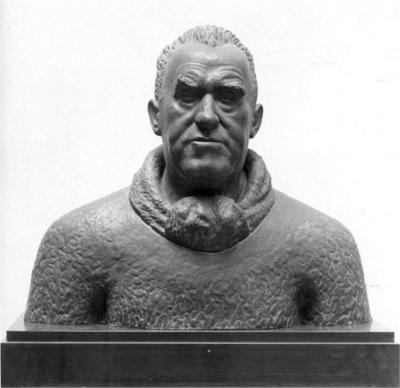
Where to see Constant Permeke
Ranked by works you can see in person.
-
69 works
Mu.ZEE - Kunstmuseum aan Zee
Ostend, Belgium
-
 22 works
Royal Museum of Fine Arts Antwerp
Antwerp, Belgium

-
 8 works
Museum of Fine Arts Ghent (MSK)
Ghent, Belgium
-
6 works
Museum de Fundatie
Heino, Netherlands
-
5 works
Kunstmuseum Den Haag
The Hague, Netherlands
-
4 works
Groeningemuseum
Bruges, Belgium
-
 4 works
Museum Boijmans Van Beuningen
Rotterdam, Netherlands
-
 4 works
Royal Library of Belgium
Brussels, Belgium
-
3 works
Van Abbemuseum
Eindhoven, Netherlands
-
3 works
Stedelijk Museum Amsterdam
Amsterdam, Netherlands


Own a piece of it
Constant Permeke prints
Hand-finished archival prints from Constant Permeke's body of work.


View all 21 museums
-
3 works
Museum Belvédère
Heerenveen, Netherlands
-
2 works
Noordbrabants Museum
s-Hertogenbosch, Netherlands
-
2 works
Centraal Museum
Utrecht, Netherlands
-
1 works
National Galleries Scotland
Edinburgh, United Kingdom
-
 0 works
Middelheim Museum
Antwerp, Belgium
-
1 works
Museum of Grenoble
Grenoble, France
-
1 works
Aberdeen Archives, Gallery and Museums collections
Aberdeen, United Kingdom
-
1 works
National Trust
Swindon, United Kingdom
-
1 works
Musée National d'Art Moderne
Paris, France
-
0 works
Kröller-Müller Museum
Otterlo, Netherlands
-
1 works
Auckland Art Gallery Toi o Tāmaki
Auckland, New Zealand


Can't travel? Bring Constant Permeke home.
See all Constant Permeke prints →Frequently Asked Questions
Where can I see Constant Permeke's work?
Constant Permeke's work can be seen in several museums. In Belgium, the Koninklijk Museum voor Schone Kunsten in Antwerp holds examples. The Musées Royaux des Beaux-Arts de Belgique in Brussels also has works. Other options are the Brangwyn Museum in Brugge and the Clockarium Museum in Brussels. Elsewhere in Europe, the Musée des Beaux-Arts in Nancy, France, may have pieces. Paris has several museums that could include Permeke; these are the Musée des Arts Décoratifs, Musée d’Art Moderne, Musée de l’Orangerie, and Musée d’Orsay. Outside Europe, the Los Angeles County Museum of Art (LACMA), the Metropolitan Museum of Art in New York, and the Minneapolis Institute of Arts are possible locations. The Royal Ontario Museum in Toronto also holds relevant works.What should I know about Constant Permeke's prints?
Constant Permeke (1886[8]-1952[8]) was a Belgian[8] painter and sculptor, and one of the leading figures in Flemish Expressionism[8]. While he is best known for his paintings, Permeke also produced a number of prints, mainly woodcuts and lithographs. Permeke's prints share many stylistic elements with his paintings. They often feature heavy, simplified forms and a strong emphasis on the human figure, particularly peasants and working-class people. His prints often depict scenes of rural life, reflecting his interest in the daily lives and struggles of ordinary people. His woodcuts are characterised by bold lines and a rough, textured surface, achieved by carving directly into the woodblock. His lithographs display a similar directness and simplicity, with a focus on capturing the essential forms and emotions of his subjects. Permeke's prints are an important part of his overall artistic output, offering a more accessible and affordable way to experience his distinctive artistic vision.Why are Constant Permeke's works important today?
Constant Permeke (1886[8]-1952[8]) was a Belgian[8] painter and sculptor regarded as a leading figure in Flemish Expressionism[8]. His art remains significant due to his distinctive approach to form, colour, and subject matter. Permeke's works often depict rural life, with a focus on farmers and fishermen. These figures are rendered with a heavy, monumental quality, reflecting the artist's interest in the physical and emotional weight of their existence. His use of simplified forms and earthy tones further emphasises the connection between people and the land. Although Permeke was working during the rise of Cubism and other modernist movements, he maintained a unique style. He was less interested in theoretical abstraction; instead, he focused on direct emotional expression through his art. This emphasis on feeling, combined with his powerful imagery, continues to resonate with viewers today. His art offers a counterpoint to more intellectual forms of modernism, reminding us of the enduring importance of human experience.What techniques or materials did Constant Permeke use?
Constant Permeke's practice included painting and sculpture. Permeke's paintings often feature thick layers of impasto, a technique where paint is applied thickly to a surface. This creates texture and dimension. In painting, Permeke used oil paint. Oil paint allowed him to build up layers and create depth. He also worked with watercolour. Permeke's colour choices tended toward earth tones, reflecting the somber themes he explored. These included the hardships of peasant life and the power of nature. Permeke also produced sculptures, often using materials such as plaster, wood, and bronze. His sculptures share similar themes to his paintings, with a focus on the human figure and its relationship to the earth.Who did Constant Permeke influence?
Painters and writers at the end of the nineteenth century created an artistic ancestry for themselves. Rather than appearing solely avant-garde, they traced connections back to artists who employed similar elements or styles. They forged artistic roots, orienting themselves in relation to what was already considered modern. The result was a lineage of modern artists and a tradition of modern painting. Manet found his personal aesthetic through engagement with Hals’s manner. Over time, Van Gogh himself ascended to these ranks, in part through his deliberate engagement with the art of Hals and Manet. Thus, a lineage of painters was formed, each building on the accomplishments of the other in an almost self-consciously dialectical and evolutionary sense. This lineage of self-consciously modern artists was defined and proclaimed through stylistic associations. As various modern painters engaged with Impressionism were characterised as artistic descendants of him, Hals, by extension, came to be discussed in Impressionist terms. Throughout the twentieth century, writers on Hals routinely focused on the elements that Impressionist artists such as Manet had appropriated and that critics had labelled as Impressionistic.Who influenced Constant Permeke?
Constant Permeke's early work shows the influence of James Ensor, a Belgian[8] painter, and the artistic environment of Laethem-Saint-Martin. Later, Permeke encountered the work of Henri Matisse and other Fauvist painters. Permeke's exposure to French modernism occurred during his time in Paris before the First World War. He developed an appreciation for artists such as Paul Cézanne, whose emphasis on structure had an impact. Permeke's style moved away from pure representation towards a more expressive form. During the First World War, Permeke was injured and evacuated to England. There, he encountered Expressionism[8]; this encounter affected his artistic direction. His later work displays a concern with the human figure and the realities of peasant life. Permeke's style became increasingly simplified, with heavy forms and sombre colours.What is Constant Permeke's most famous work?
It is difficult to single out one definitive piece as Constant Permeke's most famous. His body of work includes paintings, drawings, and sculptures, and he gained recognition for his distinctive style and subject matter. Permeke is particularly known for his portrayals of rural life and the working class in Belgium. He often depicted farmers, fishermen, and their families, capturing their connection to the land and sea. These works often show a sympathy for his subjects, and a concern with the realities of manual labour. Some of his well-known paintings include *The Harvester*, *The Ostend Fisherman*, and *The Couple*. These pieces are typical of his style, with their simplified forms, heavy contours, and earthy colour palettes. Permeke's sculptures, often in bronze or wood, also reflect his interest in the human figure and his ability to convey emotion through form.What style or movement did Constant Permeke belong to?
Constant Permeke is associated with Expressionism[8], an early 20th-century artistic movement, although his work also shows the influence of other styles. Expressionism prioritised the communication of emotional experience, often at the expense of formal compositional qualities. Permeke's art shares characteristics with German Expressionism, which valued the emotional impact of colour over its realistic qualities. German Expressionists aimed to capture the essence of things, using dynamic brushwork and emphasising the materiality of paint. Expressionism encompassed a broad attitude to life, reflecting artists' emotions and their relationship to the world. Permeke is sometimes linked to Flemish Expressionism, a regional variation. His simplified forms and focus on rural subjects align with some aspects of this style. However, it is important to note that Expressionism was not a rigidly defined style; the artists associated with it displayed a range of individual approaches.
Sources
Where to See guide aggregates verified holdings of Constant Permeke's works across the following collections.
- [1] museum Royal Museum of Fine Arts Antwerp Used for: museum holdings.
- [2] museum Van Abbemuseum Used for: museum holdings.
- [3] museum Middelheim Museum Used for: museum holdings.
- [4] museum Museum Boijmans Van Beuningen Used for: museum holdings.
- [5] museum Museum of Fine Arts Ghent (MSK) Used for: museum holdings.
- [6] museum Aberdeen Archives, Gallery and Museums collections Used for: museum holdings.
- [7] wikidata Wikidata: Q381911 Used for: identifiers.
- [8] wikipedia Wikipedia: Constant Permeke Used for: biography.
- [9] book Alhadeff, Robert(TR), Belgian Francophone Library, Volume 21 : Ãmile Verhaeren, Essays on Northern Renaissance Painting : Rembrandt, Rubens, Grunewald and Others Used for: biography.
- [10] book Aubert, Nathalie; Fraiture, Pierre-Philippe; McGuiness, Patrick, From Art Nouveau to Surrealism Used for: biography.
- [11] book guggenheim-guggenhe02solo Used for: biography.
- [12] book guggenheim-paintingsfromare00solo Used for: biography.
- [13] book Masterpieces of western art : a history of art in 900 individual studies from the Gothic to the present day Used for: biography.
Editorial overseen by Solis Prints. Sources verified 2026-08-29. Click a source for details, or hover over [N] in the page above to preview.
Editorial standardsMethodologyCorrectionsAI disclosureAbout the editorial team