



About David Johnson
- Hudson River school
- Luminism
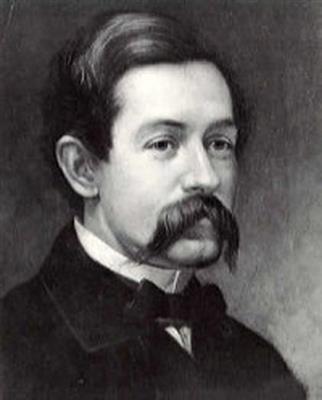
Second-generation Hudson River School painter who helped develop Luminism[1], known for small-format, precisely observed landscapes of upstate New York.
Where to see David Johnson
Ranked by works you can see in person.
-
3 works
National Gallery of Art
Washington D.C., United States
-
3 works
Pennsylvania Academy of the Fine Arts
Philadelphia, United States


-
3 works
Metropolitan Museum of Art
New York City, United States
-
2 works
New York Historical
New York City, United States
-
2 works
Fine Arts Museums of San Francisco
San Francisco, United States
-
1 works
New Britain Museum of American Art
New Britain, United States
-
1 works
Amon Carter Museum of American Art
Fort Worth, United States
-
1 works
Minneapolis Institute of Art
Minneapolis, United States
-
1 works
Vanderbilt Museum of Art
Nashville, United States
-
1 works
Smithsonian American Art Museum
Washington D.C., United States


Own a piece of it
David Johnson prints
Hand-finished archival prints from David Johnson's body of work.
 Catnip Island, Near Greenwich, CT - David Johnson
From £37.00
Catnip Island, Near Greenwich, CT - David Johnson
From £37.00
 Phlox - David Johnson
From £28.00
Phlox - David Johnson
From £28.00
 Pear Blossoms - David Johnson
From £28.00
Pear Blossoms - David Johnson
From £28.00
 West Cornwall, Connecticut - David Johnson
From £28.00
West Cornwall, Connecticut - David Johnson
From £28.00
 At Larchmont Manor, Long Island Sound, New York - David Johnson
From £28.00
At Larchmont Manor, Long Island Sound, New York - David Johnson
From £28.00
 Mount Chocorua, New Hampshire - David Johnson
From £28.00
Mount Chocorua, New Hampshire - David Johnson
From £28.00
 Eagle Cliff, Franconia Notch, New Hampshire - David Johnson
From £28.00
Eagle Cliff, Franconia Notch, New Hampshire - David Johnson
From £28.00
 Croquet on the Lawn - David Johnson
From £37.00
Croquet on the Lawn - David Johnson
From £37.00
View all 12 museums
-
1 works
Saint Louis Art Museum
St. Louis, United States
-
0 works
Honolulu Museum of Art
Honolulu, United States


Can't travel? Bring David Johnson home.
See all David Johnson prints →Frequently Asked Questions
Where can I see David Johnson's work?
To view works, attributed to David Johnson, several museums have collections. In the United States, these include: the Charles Hosmer Morse Museum of American[1] Art in Winter Park, Florida; the Los Angeles County Museum of Art (LACMA); the Metropolitan Museum of Art in New York; the Minneapolis Institute of Arts; the Museum of Modern Art in New York; the Virginia Museum of Fine Arts in Richmond; and the Wolfsonian at Florida International University in Miami Beach. In the United Kingdom, you can find works at: the Bakelite Museum in Williton; the Brighton Museum & Art Gallery; the Geffrye Museum in London; the Manchester Art Gallery; the National Museums of Scotland, Royal Museum in Edinburgh; and the Victoria & Albert Museum in London. The Royal Ontario Museum in Toronto, Canada also holds relevant pieces.What should I know about David Johnson's prints?
When considering David Johnson's prints, bear in mind some basic principles. An original print is conceived as a print, made solely as a print, and usually part of a numbered and signed edition. Each print in the edition is an original, made from a plate, stone, screen, or block created for that purpose. There is no single original from which copies are made. The artist decides the number of prints in the edition. Reproductions, on the other hand, are copies of artworks originally created in another medium, such as painting. Numbering and signing a reproduction does not make it an original print. Prints are often sold as limited editions, which means the artist has decided to produce only a specific number of impressions. This decision is the artist's choice, not a technical requirement. Each print in a limited edition is typically marked with two numbers: the print number and the total edition number (for example, 12/25). The title of the print is written in the middle of the bottom margin, and the signature is on the right.Why are David Johnson's works important today?
David Johnson (1827[1]-1908[1]) was an American[1] painter associated with the second generation of the Hudson River School. He is known for his depictions of the American countryside. Johnson's works offer insight into the artistic and cultural values of 19th-century America. Johnson's meticulous technique and attention to detail are noteworthy. He carefully observed nature, striving for accuracy in his representations of trees, rocks, and other natural elements. This realism provides a valuable record of the American environment during his lifetime. His paintings often evoke a sense of tranquility and harmony, reflecting the Romantic sensibilities of the period. Although Johnson's reputation declined somewhat in the late 19th century as tastes shifted toward more modern styles, there has been a renewed interest in his work in recent decades. Art historians and collectors now recognise his contribution to American art history. His paintings are included in the collections of major museums, such as the Metropolitan Museum of Art in New York. Johnson's art provides a window into the past, allowing viewers to appreciate the beauty and grandeur of the American landscape as it was seen by artists of the Hudson River School.What techniques or materials did David Johnson use?
David Johnson's artistic practice involved a range of materials and techniques, often rooted in his early experiences with industrial processes. He had experience working with metal before he formally studied painting. Johnson's move into sculpture involved lead, brass, and aluminium, sometimes combined with stone and coral. He created his first iron sculptures in 1933, primarily using gas welding techniques. Arc welding followed in 1939. He likened his method of shaping material to locomotive construction, using factory equipment to achieve functional forms. Johnson also used steel, which he manipulated in various ways. It could be stainless, painted, lacquered, waxed, or electroplated. He employed cutting, patterning, and welding techniques, sometimes grinding down seams to eliminate evidence of the joins. Beyond metalwork, Johnson had a "romance" with house paint, using it from a young age. He favoured house painter's brushes and saw each colour as a found object. He often mixed colours and trusted the immediacy and directness of house paint.Who did David Johnson influence?
David Johnson's influence is most apparent in the work of American[1] painters who followed him. Johnson is associated with the second generation of Hudson River School artists. These painters moved away from dramatic, sublime scenes. They favoured close observation and realistic depictions. As a leading figure in this movement, Johnson helped to promote a style known as Luminism[1]. Luminist paintings often feature calm, reflective water and soft, diffused light. His meticulous technique and focus on detail influenced many artists. Later painters, such as John Frederick Kensett, adopted similar techniques. Kensett's work shares Johnson's interest in quiet, contemplative scenes. Other artists who show Johnson's influence include Sanford Robinson Gifford and Worthington Whittredge. These painters also explored Luminist aesthetics in their work. Johnson's impact can be seen in their shared emphasis on naturalism and atmospheric effects.Who influenced David Johnson?
David Johnson (1827[1]-1908[1]) was an American[1] second-generation Hudson River School painter. He is associated with the luminist style, characterised by soft light and aerial perspective. As a young artist, Johnson studied briefly with Jasper Cropsey, a leading Hudson River School artist. Cropsey's influence can be seen in Johnson's early works, which share a similar attention to detail and a romantic appreciation for nature. Johnson also admired the work of Asher B. Durand, another major figure in the Hudson River School. Durand's emphasis on direct observation and truthful representation of nature resonated with Johnson, who strove to capture the specific qualities of the American countryside. Johnson, in particular, adopted Durand's compositional techniques, such as the use of a foreground tree to frame the view. Some scholars suggest that Johnson was also influenced by the Barbizon School, a group of French painters who emphasised direct painting from nature. While Johnson's work shares some similarities with the Barbizon School, his style remained rooted in the American landscape tradition.What is David Johnson's most famous work?
David Johnson (1827[1]-1908[1]) is best known for his contributions to American[1] landscape painting during the mid-19th century. He is associated with the Hudson River School, and later with the related movement known as Luminism[1]. Johnson's artistic output includes many paintings of the American northeast. Among these, *A Brook Study* (1862[1]) is a characteristic example of his early style. It demonstrates a careful attention to detail and a naturalistic colour palette. *Eagle Cliff, Franconia Notch, New Hampshire* (1864) is another well-known work from this period. Later in his career, Johnson adopted a looser, more atmospheric style. This change is apparent in paintings such as *View of the Hudson, Tappan Zee* (1876). Although he produced many notable works, Johnson did not create one single painting that overshadows all others in terms of fame. Instead, his reputation rests on the collective quality and appeal of his varied output. He is remembered as a skilled painter who captured the beauty of the American countryside.What style or movement did David Johnson belong to?
David Johnson is associated with the Hudson River School, and sometimes with Luminism[1], which developed out of it. The Hudson River School was a group of artists who aimed to glorify American[1] scenery, particularly the Hudson River Valley and the mountains of New York, Vermont, and New Hampshire. The second generation of Hudson River School artists is sometimes called Luminists. These artists, including Albert Bierstadt, Frederic Edwin Church, and John Frederick Kensett, among others, adopted the style of earlier members, but not their message. Their paintings often presented an idealised vision of America. Luminism emphasised dramatic natural light and vast space. It was in tune with the Transcendental philosophy of Ralph Waldo Emerson and Henry David Thoreau, which stressed the spiritual qualities of nature and a sense of divine presence within it. Luminist painters often excluded human figures from their compositions, so viewers could contemplate nature directly.
Sources
Where to See guide aggregates verified holdings of David Johnson's works across the following collections.
- [1] wikipedia Wikipedia: David Johnson Used for: biography.
- [2] book Palmer, Allison Lee, Historical Dictionary of Neoclassical Art and Architecture Used for: biography.
- [3] book Milam, Jennifer Dawn, Historical Dictionary of Rococo Art Used for: biography.
- [4] book Masterpieces of western art : a history of art in 900 individual studies from the Gothic to the present day Used for: biography.
Editorial overseen by Solis Prints. Sources verified 2026-08-29. Click a source for details, or hover over [N] in the page above to preview.
Editorial standardsMethodologyCorrectionsAI disclosureAbout the editorial team