



About Hans von Aachen
Court painter and diplomat to Emperor Rudolf II, Hans von Aachen made intimate mythological and allegorical cabinet paintings on copper.
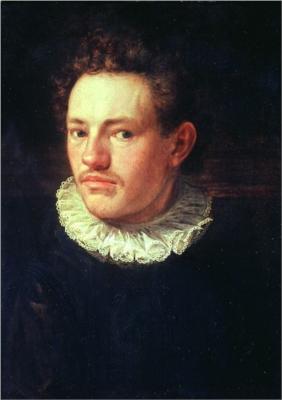
Where to see Hans von Aachen
Ranked by works you can see in person.
-
25 works
Kunsthistorisches Museum
Vienna, Austria
-
3 works
Hermitage Museum
Saint Petersburg, Russia


-
2 works
National Gallery Prague
Prague, Czech Republic
-
2 works
Wallraf–Richartz Museum
Cologne, Germany
-
2 works
Nationalmuseum
Stockholm, Sweden
-
1 works
Munich Central Collecting Point
Munich, Germany
Also here (6)
-
1 works
Germanisches Nationalmuseum
Nuremberg, Germany
-
1 works
Louvre
Paris, France
-
1 works
Westphalian State Museum of Art and Cultural History
Münster, Germany
-
1 works
Museum of Fine Arts Boston
Boston, United States


View all 19 museums
-
1 works
Gemäldegalerie Berlin
Berlin, Germany
-
1 works
Glasgow Museums Resource Centre
Glasgow, United Kingdom
-
1 works
National Gallery
London, United Kingdom
-
1 works
Brighton Museum & Art Gallery
Brighton and Hove, United Kingdom
-
1 works
Detroit Institute of Arts
Detroit, United States
-
1 works
Busch–Reisinger Museum
Cambridge, United States
-
1 works
National Museum in Warsaw
Warsaw, Poland
-
0 works
Groeningemuseum
Bruges, Belgium
-
0 works
National Gallery of Art
Washington D.C., United States


Frequently Asked Questions
Where can I see Hans von Aachen's work?
Works by Hans von Aachen can be found in several European museums and religious institutions. These include the Staatliche Museen zu Berlin, Kunstgewerbemuseum in Berlin, the Herzog August Bibliothek in Wolfenbüttel, and the Hessisches Landesmuseum in Darmstadt. His art is also held at the Kestner-Museum in Hannover. Additionally, a piece can be seen at the Pfarre St Johann-Baptist (formerly the Abtei Burtscheid) in Aachen-Burtscheid. The Kaiser Friedrich Museum in Berlin also possesses examples of his work. Other cities where von Aachen's art can be viewed include Antwerp and Amsterdam. Antwerp's Musée Royal des Beaux-Arts and Mayer van den Bergh Museum hold relevant collections. Amsterdam's Rijksmuseum is another location. Before planning a visit, it is advisable to check with the museum or institution directly for current exhibitions and availability.What should I know about Hans von Aachen's prints?
Hans von Aachen (1552[1]-1615[1]) was a German painter working in a Northern Mannerist style. Although he is better known as a painter, he also produced prints. Printmaking in the Netherlands and Germany during von Aachen's era was a well-established industry; several publications catalogue early examples of Dutch and Flemish etchings, engravings, and woodcuts. Printmakers such as Monogrammist AC, active in the early sixteenth century, created engravings of mythological subjects. Similarly, Albrecht Altdorfer (c.1480-1538[1]) produced woodcuts and engravings, including his series on the Apocalypse. These prints were often collected into bound books. Bibliographies of Northern European art often include prints and printed books, recognising the importance of printed images during this period. Studying prints from this era provides insight into the artistic and cultural context in which artists like Hans von Aachen worked.Why are Hans von Aachen's works important today?
Hans von Aachen (1552[1]-1615[1]) was a German painter working in a late-Mannerist style. He is important as an example of an artist who achieved international success in his own lifetime, and as a recorder of the personalities of the Habsburg elite. Aachen's career took him across Europe. He was born in Cologne, and he later worked in Munich, Venice, and Rome. His exposure to Italian art had a formative effect on his style. He eventually settled in Prague, where he became court painter to Rudolf II, Holy Roman Emperor, in 1592[1]. Aachen's portraits are valued for their detail and colour. His paintings provide insights into the appearance of prominent figures of the period. Rudolf II, in particular, was a significant patron of the arts and sciences; Aachen's association with him connects the artist to a broader cultural milieu. Aachen also produced allegorical and mythological paintings, often featuring sensual nudes. These works show the influence of Venetian painting and are examples of the Mannerist aesthetic, with its emphasis on elegance and artifice. His drawings are also collected.What techniques or materials did Hans von Aachen use?
Hans von Aachen's practice involved both painting and drawing. While information on his specific studio techniques is limited, the methods of his era are well documented. Glass artists of the time often adopted techniques from oil painting. The support (glass) was prepared and treated similarly to wood or canvas. They employed light washes and opaque contours, using brushes to apply colour. The artist could then scratch out the lights to create tonal variation. The artist would build up layers of paint, alternating watery and oily binders to prevent detachment. The paints themselves consisted of ground glass mixed with metal oxides for colour. These paints dried quickly, demanding swift, accurate brushwork. Additives like egg, honey, or syrup could be mixed in to improve workability and create a softer appearance. Sanguine tones, ranging from brown to red, were used for shading and creating realistic flesh tones. The artist would adjust the thickness of the glass to create an illusion of depth.Who did Hans von Aachen influence?
Hans von Aachen's influence can be traced through various artistic circles. Joachim von Sandrart, a painter and art theorist, may have been aware of Samuel van Hoogstraten's reputation in Vienna. Sandrart refers to Van Hoogstraten in his treatise as a pupil of Rembrandt and a skilled painter. Van Hoogstraten, in turn, venerated Sandrart and his efforts to produce a major treatise on art theory, the Teutsche Academie, published in 1675-1679[1]. Additionally, there was a tight network of artistic relationships between the Brueghel family in Antwerp and artistic circles in Frankenthal, Frankfurt, and Nuremberg. Personal contacts among Flemish refugees and their families maintained a close relationship between these regions into the seventeenth century. Jan Brueghel the Elder met other Dutch painters, including Pieter Schoubroeck, in Rome in the mid-1590s. An anonymous painter of Landscape with Large Military Camp (circa 1603[1]) showed dependence on the works of Schoubroeck and familiarity with the crowded scenes painted by Brueghel.Who influenced Hans von Aachen?
Hans von Aachen's artistic development was shaped by a range of influences. Giuseppe Arcimboldo, known for his portraits composed of objects, plants, and animals, worked as a court painter alongside von Aachen in Prague. Arcimboldo's novel approach to portraiture, still lifes, and allegories left its mark on the artistic environment. Von Aachen's time in Italy exposed him to Italian art. Georg Pencz, associated with Dürer, travelled to Italy, and his work reflected Italian influences, such as those of Bronzino. The organisation and placement of figures in Pencz's portraits recall Bronzino's style. These encounters with Italian artistic styles contributed to the development of von Aachen's Mannerist style, blending northern and southern European artistic elements.What is Hans von Aachen's most famous work?
It is difficult to identify a single "most famous" work by Hans von Aachen, as his artistic output spanned various subjects and styles. He is known for his allegorical compositions, portraits, and religious scenes. Some of his well-known individual works include *The Battle of Issus*, *The Archdukes Albert and Isabella before Castle Mariemont*, and *The Continence of Scipio*. He also produced a series of allegories, such as *Allegory of Air* and *Allegory of Fire*. Von Aachen frequently collaborated with other artists, including Jan Brueghel the Elder. Together, they created works such as *The Garden of Eden with the Fall of Man*, *The Entry of the Animals into Noah's Ark*, and several allegories relating to the five senses. These collaborations demonstrate his versatility and ability to work within different artistic contexts.
Sources
Where to See guide aggregates verified holdings of Hans von Aachen's works across the following collections.
- [1] wikipedia Wikipedia: Hans von Aachen Used for: biography.
- [2] book Lassaigne, Jacques, 1910-, Flemish painting Used for: biography.
- [3] book Masterpieces of western art : a history of art in 900 individual studies from the Gothic to the present day Used for: biography.
Editorial overseen by Solis Prints. Sources verified 2026-08-29. Click a source for details, or hover over [N] in the page above to preview.
Editorial standardsMethodologyCorrectionsAI disclosureAbout the editorial team