

Fine Art Poster
From $29
A giclée print on 200gsm matte fine art paper, using a twelve-colour process for accurate, fade-resistant colour. Supplied unframed, delivered flat or rolled.



Archival giclée
Frames arrive ready to hang
Secure checkout
Made to order
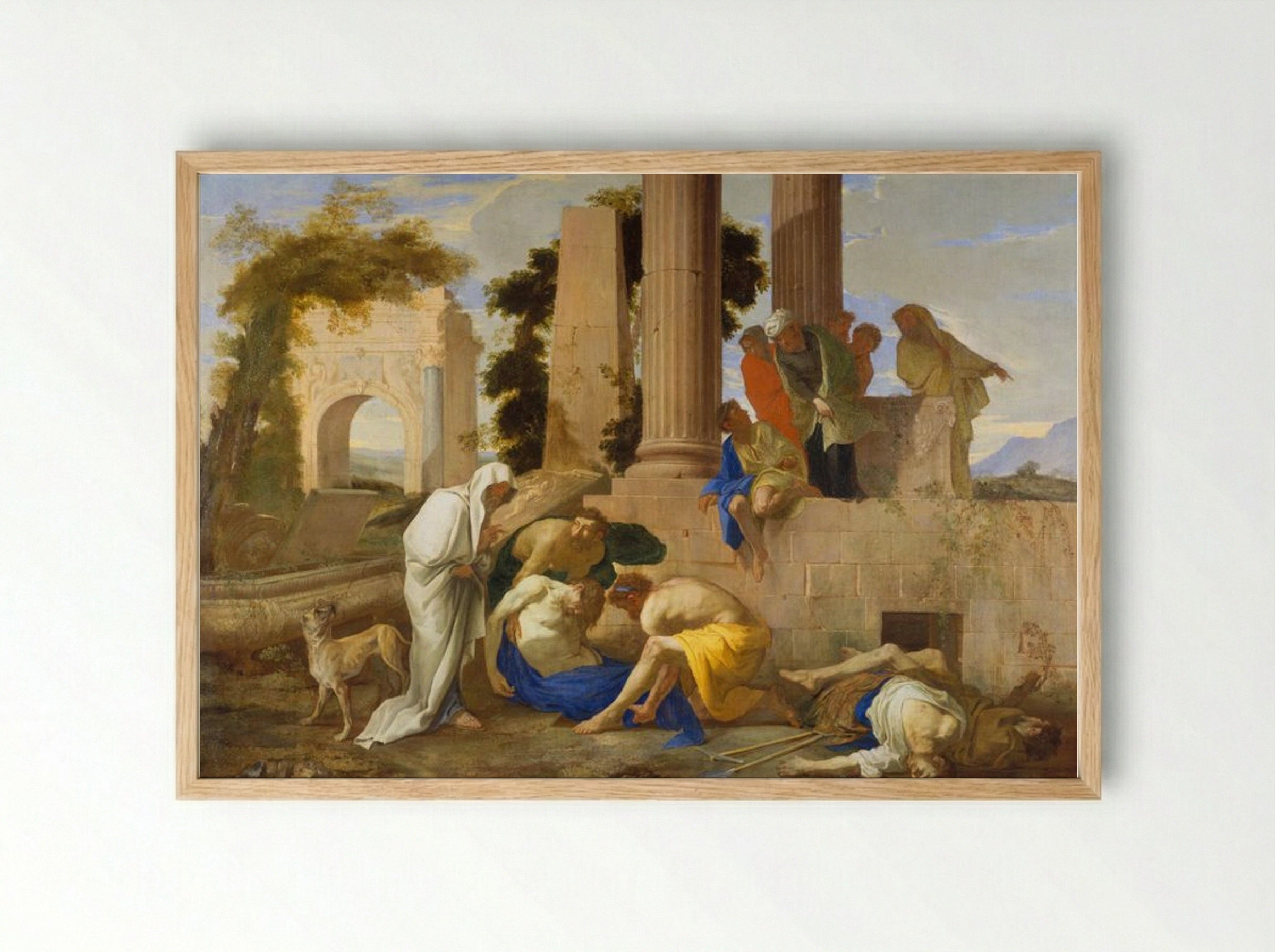
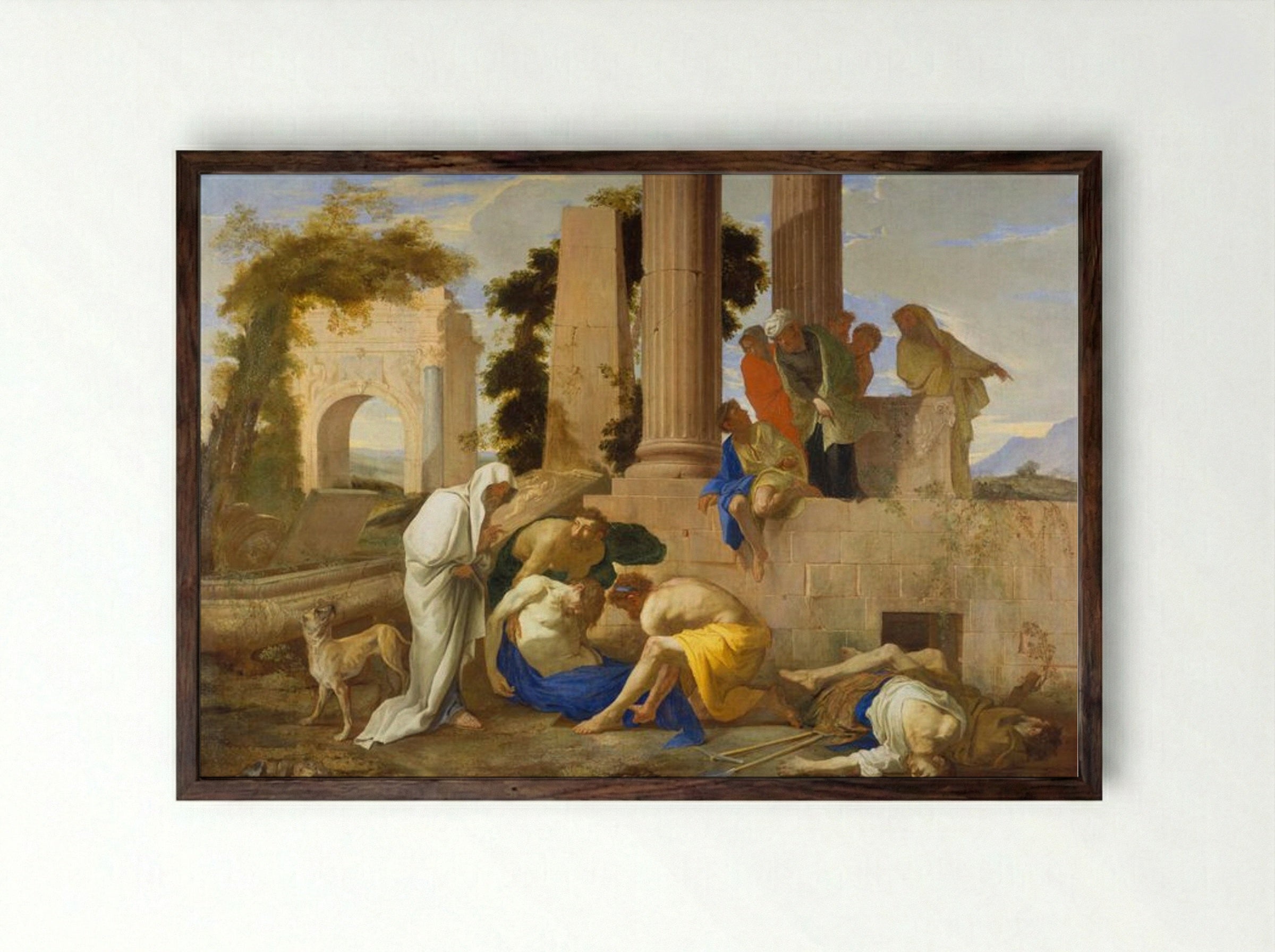
Nicolas Poussin's 'Tobit Burying the Dead' captures a scene of quiet defiance and human compassion amidst classical ruins. This fine art print brings a touch of historical gravitas and artistic mastery to any space.
Nicolas Poussin's 'Tobit Burying the Dead' is a poignant depiction of a scene from the Book of Tobit, rendered with the artist's characteristic classical restraint and compositional clarity. Painted circa 1655-1660, this oil on canvas exemplifies Poussin's mature style, blending narrative drama with a serene, almost architectural arrangement of figures and landscape. The scene unfolds amidst classical ruins, with Tobit, identifiable by his white robes, attending to the burial of the dead, a charitable act forbidden by the ruling authorities. The figures are carefully posed, their expressions conveying a range of emotions from grief to quiet resolve. Poussin's masterful use of colour and light enhances the emotional impact of the scene, creating a sense of solemnity and timelessness. As a fine art print, this work brings a touch of historical gravitas and artistic mastery to any space. Its balanced composition and muted colour palette make it a versatile addition to both modern and traditional interiors, inviting contemplation and offering a glimpse into the moral and artistic values of the 17th century.
Because every print is made to order, we don't offer change-of-mind returns, refunds or exchanges. If your order arrives faulty, damaged or incorrect, we'll replace it free of charge — just contact us within 48 hours of delivery. See our refunds page for full details.
We ship worldwide, printing at the production hub nearest to your delivery address. Delivery times and costs vary by destination — you'll see the options available to you at checkout.
Each print is produced to order using 12-colour giclée printing on FSC-certified archival paper. Designed in Britain and printed at your nearest production hub to reduce waste and speed up delivery.

Artist Biography
Our Features
Designed for Lasting Impact
Every Solis piece is made to order with archival, gallery-quality materials built to last.
To keep your artwork looking its best:
Museum-grade giclée on FSC-certified archival matte paper, with framed and canvas options.
Made to order
Every piece is printed to order. These are the five finishes, and what makes each one different.
From $29
A giclée print on 200gsm matte fine art paper, using a twelve-colour process for accurate, fade-resistant colour. Supplied unframed, delivered flat or rolled.

From $89
The same fine art print in a solid wood frame with UV-protective acrylic glaze and rigid backing. Five frame colours. Arrives ready to hang.

From $169
A deeper solid wood frame: 33mm deep with a 20mm face and Perspex glaze. The print sits unmounted for a clean gallery presentation. Black, white or natural.

From $59
Hand-stretched canvas with neat gallery-wrapped edges, giving the artwork surface texture and depth. Arrives ready to hang.

From $175
Stretched canvas set in a floating wood frame, our most substantial finish. Arrives ready to hang.
Why Choose Us ?
Damage-free delivery guarantee
Fast Shipping
Museum-Quality Materials
Artist Biography
Nicolas Poussin
You May Also Like
Cookies show us which prints people love, so we hang the right art. Help us fill it?
Essential cookies only if you prefer · Privacy Policy