



About Aaron Siskind
American · 1903–1991
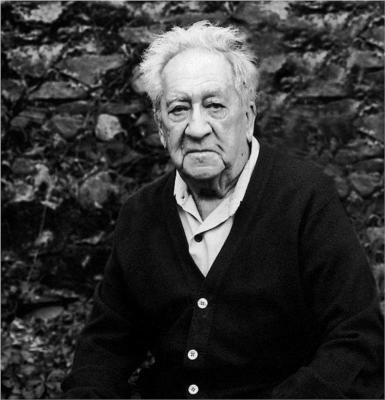
American[1] photographer whose close-up studies of worn surfaces and torn posters became a touchstone for Abstract Expressionist painters and critics in postwar New York.
Museums3
Countries2
Largest reported holdingNational Gallery of Art, Washington D.C. · 40 recorded works
Loading map…
Where to see Aaron Siskind
Collection holdings are reported here; current display varies. Check with each museum before visiting.
-
40 recorded works
National Gallery of Art
Washington D.C., United States
-
1 recorded work
Cleveland Museum of Art
Cleveland, United States


-
1 recorded work
collection of the Musée d’art contemporain de Montréal
Montreal, Canada
Frequently Asked Questions
Where can I see Aaron Siskind's work?
You can view Aaron Siskind's photography in several prominent collections. In New York City, visit the Metropolitan Museum of Art, the Museum of Modern Art, the Solomon R. Guggenheim Museum, or the Whitney Museum of American[1] Art. Other locations include the Yale University Art Gallery in New Haven, the Philadelphia Museum of Art, and the Carnegie Museum of Art in Pittsburgh. You can also find his work at the National Gallery of Art and the National Museum of American Art in Washington, DC. These museums offer opportunities to study Siskind's contributions to photography, particularly his abstract expressionist style. Each institution provides a unique context for appreciating his work, alongside other significant artists and movements.What should I know about Aaron Siskind's prints?
Aaron Siskind (1903[1]-1991[1]) was an American[1] photographer whose work found an audience among Abstract Expressionist painters, even before photography was widely accepted in galleries. He was associated with the Charles Egan Gallery, where artists such as de Kooning, Joseph Cornell, Franz Kline, and Philip Guston also exhibited. Siskind's photography often captured weathered surfaces and signage. He transformed these everyday scenes into abstract compositions. Critics such as Elaine de Kooning, Harold Rosenberg, and Thomas Hess, more accustomed to writing about painting, responded favourably to his approach. Siskind aimed to create photographs that were self-contained objects, defined by order, distinct from the changing and disordered world. The Center for Creative Photography holds a significant collection of Siskind's work, including over 870 fine prints. The Aaron Siskind Archive contains his personal papers, photographs, audiovisual materials, and memorabilia from approximately 1925[1] to 1991. These materials offer insight into his career, correspondence, and involvement with organisations such as the Photo League.What techniques or materials did Aaron Siskind use?
Aaron Siskind, born in 1903[1], began using a camera in the early 1930s. Initially, he worked as a documentary photographer in New York City. He joined the Film and Photo League in 1932[1], attending lectures and discussions. Siskind's photography moved towards abstraction. His work often featured weathered surfaces and signage, finding an abstract play of forms in everyday scenes. These images resonated with Abstract Expressionist painters. Siskind aimed to create photographs that were new objects, complete and self-contained. He saw photography as a visual language capable of conveying metaphors and symbols. He drew inspiration from writers such as Marcel Proust, James Joyce, T. S. Eliot, and William Blake. In 1954, Siskind produced *Terrors and Pleasures of Levitation*, a series inspired by divers in Lake Michigan. He captured their bodies in mid-air, exploring themes of freedom and lightness. Siskind explored genres from architectural photography to still life, from social documentary to abstraction.What is Aaron Siskind's most famous work?
It is difficult to name one single work as Aaron Siskind's "most famous". He produced a large body of photographs, and his reputation rests on several series made over decades. Siskind began as a social documentary photographer in the 1930s, working with the New York Photo League. His series Harlem Document (1932[1]-1940[1]) is an important example of this early work. Around 1940, Siskind's style shifted towards abstraction. He began making close-up photographs of details such as peeling paint, graffiti, and torn posters on walls. These photographs, often devoid of context, transform the surfaces into abstract compositions. Siskind continued to explore this style in series such as Pleasures and Terrors of Levitation (1954-1961) and Homage to Franz Kline (1970s). These later works further detached the image from its source, emphasising form and texture.What style or movement did Aaron Siskind belong to?
Aaron Siskind (1903[1]-1991[1]) was an American[1] photographer whose work has connections with both Abstract Expressionism and Surrealism. Although Siskind began his career as a documentary photographer in New York in the 1930s, he became more interested in photography as a visual language, one that could express metaphors and dreams. Siskind's approach has sometimes perplexed critics, who have interpreted his photographs as the work of an Abstract Expressionist painter, rather than examining his particular photographic style. Siskind found inspiration and encouragement from the Abstract Expressionist community in New York in the 1940s. However, it is somewhat limiting to view his pictures as simple abstractions of real-world objects. Siskind's main interest was not abstraction; he wanted to find a poetic language that could connect experience and memory, sight and surprise. He wanted to connect ordinary objects with unknown symbols. His work was exhibited at the Charles Egan Gallery, where Abstract Expressionist painters such as de Kooning, Joseph Cornell, Franz Kline, and Philip Guston were represented.What is Aaron Siskind known for?
Aaron Siskind is known for his photography that shifted from social documentation to abstract images of everyday surfaces. His work was exhibited alongside Abstract Expressionist painters and was taken seriously by art critics such as Harold Rosenberg.What was Aaron Siskind's art style?
Aaron Siskind's art style evolved from social documentary photography to abstract photography. He captured images of peeling paint, torn posters, and weathered walls, presenting them as flat, self-contained objects, distinct from the everyday world.
Sources
Where to See guide aggregates verified holdings of Aaron Siskind's works across the following collections.
- [1] wikipedia Wikipedia: Aaron Siskind Used for: biography.
- [2] book guggenheim-arshi00wald Used for: biography.
- [3] book guggenheim-onehundredpainti00thom Used for: biography.
- [4] book guggenheim-secondenlargedca1937gugg Used for: biography.
Editorial overseen by Solis Prints. Sources verified 2026-10-14. Click a source for details, or hover over [N] in the page above to preview.
Editorial standardsMethodologyCorrectionsAI disclosureAbout the editorial team