



About Dorothea Tanning
a Surrealist painter who married Max Ernst in a double wedding with Man Ray, then became a published poet at ninety-four and died at a hundred and one
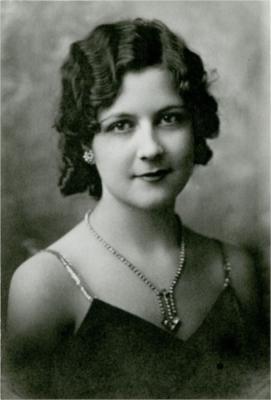
Where to see Dorothea Tanning
Ranked by works you can see in person.
-
3 works
Israel Museum
Jerusalem, Israel
-
3 works
Tate
London, United Kingdom


-
2 works
Whitney Museum of American Art
New York City, United States
-
2 works
Miyazaki Prefectural Art Museum
Miyazaki, Japan
Also here (4)
-
1 works
San Francisco Museum of Modern Art
San Francisco, United States
-
1 works
National Galleries Scotland
Edinburgh, United Kingdom
-
1 works
Musée d'art moderne de Paris
Paris, France
Also here (6)
-
 1 works
Neue Nationalgalerie
Berlin, Germany
-
1 works
Pennsylvania Academy of the Fine Arts
Philadelphia, United States
-
1 works
Museum of Modern Art
New York City, United States


Own a piece of it
Dorothea Tanning prints
Hand-finished archival prints from Dorothea Tanning's body of work.
 Eine Kleine Nachtmusik - Dorothea Tanning
From £28.00
Eine Kleine Nachtmusik - Dorothea Tanning
From £28.00
 Endgame - Dorothea Tanning
From £37.00
Endgame - Dorothea Tanning
From £37.00
 Voltagem - Dorothea Tanning
From £30.00
Voltagem - Dorothea Tanning
From £30.00
 Dream of Luxury - Dorothea Tanning
From £37.00
Dream of Luxury - Dorothea Tanning
From £37.00
 Tango Lives - Dorothea Tanning
From £37.00
Tango Lives - Dorothea Tanning
From £37.00
 Dionysos SOS - Dorothea Tanning
From £37.00
Dionysos SOS - Dorothea Tanning
From £37.00
 Woman Artist, Nude, Standing - Dorothea Tanning
From £37.00
Woman Artist, Nude, Standing - Dorothea Tanning
From £37.00
 Blue Mom - Dorothea Tanning
From £37.00
Blue Mom - Dorothea Tanning
From £37.00
View all 19 museums
-
1 works
Fundació Joan Miró
Barcelona, Spain
Also here (2)
-
1 works
Minneapolis Institute of Art
Minneapolis, United States
-
1 works
Metropolitan Museum of Art
New York City, United States
-
1 works
Musée National d'Art Moderne
Paris, France
-
 1 works
Crystal Bridges Museum of American Art
Bentonville, United States
-
 1 works
Philadelphia Museum of Art
Philadelphia, United States
-
1 works
Yale University Art Gallery
New Haven, United States
-
0 works
National Gallery of Art
Washington D.C., United States
-
0 works
Vanderbilt Museum of Art
Nashville, United States


Can't travel? Bring Dorothea Tanning home.
See all Dorothea Tanning prints →Frequently Asked Questions
Where can I see Dorothea Tanning's work?
Dorothea Tanning's work can be viewed in several museums and public collections worldwide. In the United States, her art can be found at the Art Institute of Chicago, the Cincinnati Art Museum, the Cleveland Museum of Art, the Metropolitan Museum of Art in New York, the Museum of Modern Art in New York, and the Solomon R. Guggenheim Museum, also in New York. Additionally, the Busch-Reisinger Museum at Harvard University and the Museum of Art at the Carnegie Institute in Pittsburgh hold pieces by her. In Europe, Tanning's work is held by the Musée National d'Art Moderne, Centre Georges Pompidou, in Paris, and the Museum am Ostwall in Dortmund. Other locations include the Aarhus Kunstmuseum in Denmark, the Amos Andersonin Taidemuseo in Helsinki, the Louisiana Museum of Modern Art in Humlebaek, Denmark, and the Moderna Museet in Stockholm.Where did Dorothea Tanning live?
Dorothea Tanning attended art school in Chicago before moving to New York in the 1930s.What should I know about Dorothea Tanning's prints?
Dorothea Tanning (born 1910) was an American artist associated with Surrealism. She also designed sets and costumes for George Balanchine's ballets Night Shadow and Bayou. Tanning's early work was influenced by Aubrey Beardsley, and the 1936 "Fantastic Art, Dada, Surrealism" exhibition inspired her to give visual form to her childhood fantasies. Light and shadow were important to her atmospheric effects, reminiscent of Gothic novels. She participated in the "Exhibition by 31 Women" at Peggy Guggenheim's Art of This Century gallery. There, she met Max Ernst; they married in 1946 and settled in Arizona. From 1943 to 1952, Tanning invented dreamlike situations in her art. Her painting became more evanescent, with plots of desire suggested in hazy variations. Around 1971, she created peculiar objects out of quilted fabric, expressing hard and soft aspects of her obsessions.Why are Dorothea Tanning's works important today?
Dorothea Tanning's art remains significant due to her unique approach to Surrealism. She combined literary interests, the gothic, and personal experiences in her paintings, sculptures, and writings. Tanning's works often explored themes of identity, sexuality, and the subconscious, challenging conventional artistic boundaries. Her early exposure to literature in Galesburg Public Library shaped her artistic vision. She incorporated literary references and narratives into her visual art, creating a dialogue between words and images. Tanning's engagement with Surrealism allowed her to express her inner world and question societal norms. Her later writings, including her novel *Chasm: A Weekend*, further demonstrate her interdisciplinary approach. Tanning's art continues to resonate with contemporary audiences because of its exploration of complex psychological states and its challenge to traditional artistic categories. Her work encourages viewers to question their perceptions of reality and to embrace the power of imagination.Who is Dorothea Tanning?
Dorothea Tanning was born in Galesburg, Illinois, and attended art school in Chicago before moving to New York in the 1930s. The 1936 “Fantastic Art, Dada and Surrealism” show at the Museum of Modern Art sparked her interest in surrealism.Was Dorothea Tanning a feminist?
Dorothea Tanning stated that there is no such thing as a woman artist, just as there is no such thing as a man artist.Dorothea Tanning famous paintings?
One of Dorothea Tanning's paintings is titled Dream Garden.What techniques or materials did Dorothea Tanning use?
Dorothea Tanning's artistic practice encompassed a range of materials and techniques. She prepared her surfaces to be as smooth as polished ivory, favouring resistant surfaces like walls or panels over canvas on an easel. Tanning employed both opaque and transparent pigments, using a medium and a surfacing wax, both of which she noted had a pleasant smell. She began with a full-sized detailed drawing, which she then traced onto her prepared surface. Opaque colours were applied smoothly, followed by glazes of transparent colours. Tanning aimed for sculptural results in her paintings, viewing drawing and painting as branches of sculpture. She considered drawing to be two-dimensional sculpture, and painting to be two-dimensional coloured sculpture. This meticulous and time-consuming method required many consecutive hours of work.
Sources
Where to See guide aggregates verified holdings of Dorothea Tanning's works across the following collections.
- [1] museum National Galleries Scotland Used for: museum holdings.
- [2] museum Neue Nationalgalerie Used for: museum holdings.
- [3] museum Whitney Museum of American Art Used for: museum holdings.
- [4] museum National Gallery of Art Used for: museum holdings.
- [5] museum Pennsylvania Academy of the Fine Arts Used for: museum holdings.
- [6] museum Miyazaki Prefectural Art Museum Used for: museum holdings.
- [7] book guggenheim-twopri00weis Used for: biography.
- [8] book Charlene Spretnak (auth.), The Spiritual Dynamic in Modern Art _ Art History Reconsidered, 1800 to the Present Used for: biography.
Editorial overseen by Solis Prints. Sources verified 2026-09-16. Click a source for details, or hover over [N] in the page above to preview.
Editorial standardsMethodologyCorrectionsAI disclosureAbout the editorial team