



About Emanuel Leutze
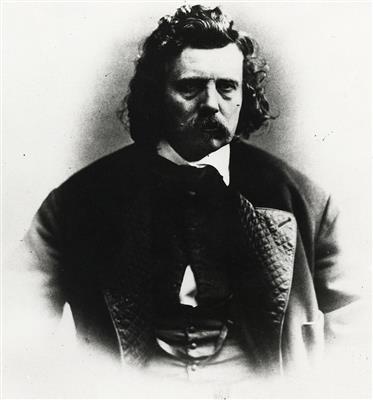
Museums10
Countries3
Largest reported holdingSmithsonian American Art Museum, Washington D.C. · 5 recorded works
Loading map…
Where to see Emanuel Leutze
Collection holdings are reported here; current display varies. Check with each museum before visiting.
-
5 recorded works
Smithsonian American Art Museum
Washington D.C., United States
-
3 recorded works
New York Historical
New York City, United States


-
3 recorded works
Metropolitan Museum of Art
New York City, United States
-
2 recorded works
Pennsylvania Academy of the Fine Arts
Philadelphia, United States
-
2 recorded works
Gilcrease Museum
Tulsa, United States
-
1 recorded work
National Gallery of Art
Washington D.C., United States
-
1 recorded work
Alte Nationalgalerie
Berlin, Germany
-
 1 recorded work
Williamson Art Gallery and Museum
Birkenhead, United Kingdom
-
1 recorded work
Los Angeles County Museum of Art
Los Angeles, United States
-
1 recorded work
Kunsthalle Bremen
Bremen, Germany


Frequently Asked Questions
Where can I see Emanuel Leutze's work?
To view Emanuel Leutze's work, visit institutions that hold significant collections of American[3] art. The Metropolitan Museum of Art in New York City owns Leutze's *Washington*, as does the National Museum of American Art in Washington, DC. The Pennsylvania Academy of the Fine Arts in Philadelphia possesses West's *William Penn's Treaty with the Indians*. The Philadelphia Museum of Art features works by Thomas Eakins, Benjamin West, and Henri Rousseau. Other locations with relevant holdings include the Carnegie Museum of Art in Pittsburgh, which has works by George Catlin. The Corcoran Gallery of Art in Washington, DC, holds pieces by George Bellows. The National Gallery of Art, also in Washington, DC, displays art by Frankenthaler and Homer. The Phillips Collection in Washington, DC, includes works by Bonnard and Braque.What should I know about Emanuel Leutze's prints?
Emanuel Leutze (1816[3]-1868[3]) was a German-American[3] history painter best known for his large-scale historical works. Though he is primarily known for paintings, prints were made of some of his more popular works, such as "Washington Crossing the Delaware" (1851[3]). These prints allowed for wider distribution and appreciation of his art. Prints connected to Leutze's paintings vary in technique, including engravings and lithographs. The prints were often produced by other artisans, who translated Leutze's paintings into reproducible formats. The Kennedy Galleries in New York have handled similar prints, such as "The Philadelphia Ledger". Some prints were full-scale colour reproductions; for example, the Niagara Lithograph Company published "Music and Literature" in colour in 1949.Why are Emanuel Leutze's works important today?
Emanuel Leutze (1816[3]-1868[3]) is remembered for his history paintings, particularly those dealing with the American[3] Revolution. Born in Germany, Leutze emigrated to the United States as a child, then returned to Germany for his artistic training at the Düsseldorf Academy. Leutze aimed to promote liberal and democratic ideals through his art. He often chose subjects that depicted moments of courage and determination in the face of tyranny. His most famous work, *Washington Crossing the Delaware* (1851[3]), idealises a key moment in the American War of Independence. The painting’s heroic depiction of George Washington helped to solidify his image as a leader and symbol of American freedom. While praised for its patriotic sentiment, *Washington Crossing the Delaware* has also been criticised for historical inaccuracies. The boat is too small for the number of figures shown, and the Delaware River does not contain ice floes of that size. These inaccuracies do not diminish the painting's power as a work of propaganda. Leutze's work provides insight into the artistic and political climate of the 19th century, specifically the transatlantic dialogue concerning republicanism and revolution.What techniques or materials did Emanuel Leutze use?
Emanuel Leutze was a history painter who worked primarily in oils. He is known for large-scale canvases, such as "Washington Crossing the Delaware" (1851[3]). Like many academic painters of his era, Leutze employed traditional methods. He began with sketches and studies, often of individual figures or compositional elements. These preparatory works allowed him to work out details of form, light, and shadow before beginning the final painting. Leutze's technique involved layering paint to build up form and create depth. He used a combination of direct painting (alla prima) and glazing to achieve varied effects. Direct painting allowed him to quickly establish areas of colour and tone, while glazing, the application of thin, transparent layers of paint, added luminosity and subtle colour variations. He paid careful attention to detail, particularly in the rendering of faces, costumes, and textures. His brushwork varies from smooth blending to more visible strokes, depending on the desired effect.Who did Emanuel Leutze influence?
Emanuel Leutze's influence is most apparent in the work of history painters who followed him in the United States and Germany. His dramatic, narrative style and his focus on patriotic and historical subjects resonated with many artists. Leutze taught at the Düsseldorf Academy, where he impacted a generation of American[3] artists studying abroad, including Worthington Whittredge, Albert Bierstadt, and Eastman Johnson. These artists absorbed Leutze's academic training and his approach to history painting, though they later developed their own individual styles. Whittredge became known for his American scenes. Bierstadt adapted Leutze's dramatic compositional techniques to large-scale depictions of the American West. Johnson became a genre painter, documenting everyday American life. Leutze's work also affected later German history painters, who adopted his theatrical compositions and his emphasis on nationalistic themes. His painting *Washington Crossing the Delaware* (1851[3]) became an iconic image in the United States, shaping the visual representation of American history for subsequent generations.What is Emanuel Leutze's most famous work?
Emanuel Leutze is best known for *Washington Crossing the Delaware*, painted in 1851[3]. This oil on canvas depicts George Washington's surprise attack on Hessian forces at Trenton, New Jersey, on the morning of 26 December 1776, during the American[3] Revolutionary War. Leutze began the painting in Düsseldorf, Germany. He returned to the subject later in a smaller 1854 version. The original 1851 painting was initially placed on display in Düsseldorf. During a 1942 bombing raid in the Second World War, the original was destroyed. Before its destruction, it was part of the collection at the Kunsthalle Bremen[2]. The later version of *Washington Crossing the Delaware* (1854) is the one now most familiar to audiences. It is on display at the Metropolitan Museum of Art in New York.What style or movement did Emanuel Leutze belong to?
Emanuel Leutze belonged to the Romantic movement. Romanticism[3], which flourished roughly from 1800 to 1850[3], was known as the Age of Sensibility. Writers and artists working in the Romantic style chose emotion and intuition over rational objectivity. As Caspar David Friedrich wrote, the artist should paint not only what he sees before him, but also what he sees within himself. Romanticism took its name from renewed interest in medieval tales. These 'romances' spurred an interest in 'Gothic' horror stories, as well as Gothic revival architecture. Another aspect was the cult of nature. Artists such as Turner and Constable elevated the status of depictions of the natural world by giving natural scenes heroic overtones. Man and nature were seen as touched by the supernatural; one could tap into this inner divinity by relying on instinct.What was Emanuel Leutze known for?
Emanuel Leutze is known for history paintings, especially those dealing with American[3] subjects. Born in Germany, he spent his childhood in the United States, then returned to Europe for artistic training at the Düsseldorf Academy. He is associated with the Düsseldorf school of painting, known for its detailed realism and narrative content. Leutze returned to the United States in 1841[3], opening a studio in New York City. Leutze painted scenes from American history, often with a focus on westward expansion and national identity. His most famous work is the monumental painting *Westward the Course of Empire Takes Its Way*, completed in 1861. This mural depicts settlers heading west, guided by scouts towards a supposed promised land. The painting seems to borrow its name and subvert the message of Thomas Cole's *The Course of Empire* series. Leutze's work promotes a vision of American progress and manifest destiny.
Sources
Where to See guide aggregates verified holdings of Emanuel Leutze's works across the following collections.
- [1] museum Williamson Art Gallery and Museum Used for: museum holdings.
- [2] museum Kunsthalle Bremen Used for: museum holdings.
- [3] wikipedia Wikipedia: Emanuel Leutze Used for: biography.
- [4] book Howard Simon, 500 Years of Illustration Used for: biography.
- [5] book Jesse Bryant Wilder, Art History For Dummies Used for: stylistic analysis.
- [6] book Allison Lee Palmer, Historical Dictionary of Neoclassical Art and Architecture Used for: biography, stylistic analysis.
- [7] book Palmer, Allison Lee, Historical Dictionary of Neoclassical Art and Architecture Used for: biography, stylistic analysis.
- [8] book Margaret Lamar Stearns (editor), Illustrated Catalogue of the Willitts J. Hole Art Collection _ Old Masters Collected by the Late Willitts J. Hole and Given to the University of California, Los Angeles, by Samuel K. and Agnes Hole Rindge Used for: biography.
- [9] book Carol Strickland and John Boswell, The Annotated Mona Lisa Used for: biography.
Editorial overseen by Solis Prints. Sources verified 2026-09-30. Click a source for details, or hover over [N] in the page above to preview.
Editorial standardsMethodologyCorrectionsAI disclosureAbout the editorial team