



About Carl Blechen
- landscape painting
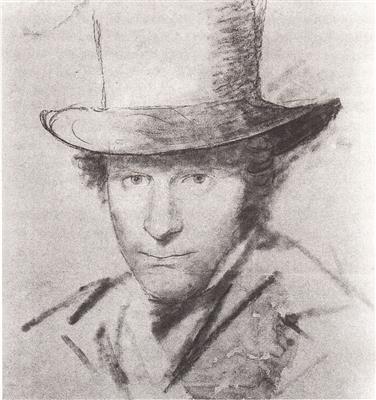
German[2] painter Carl Blechen translated Romantic landscape into atmospheric studies of light, bridging Friedrich's spiritualism and the naturalism that followed.
Where to see Carl Blechen
Ranked by works you can see in person.
-
36 works
Alte Nationalgalerie
Berlin, Germany
-
15 works
Munich Central Collecting Point
Munich, Germany
Also here (6)

-
12 works
Führermuseum
Linz, Austria
Also here (6)
-
3 works
Landesmuseum Hannover
Hanover, Germany
-
3 works
Hamburger Kunsthalle
Hamburg, Germany
-
3 works
Belvedere
Vienna, Austria
-
2 works
Städel Museum
Frankfurt, Germany
-
2 works
Wallraf–Richartz Museum
Cologne, Germany
-
 2 works
Kunsthalle Bremen
Bremen, Germany
-
2 works
National Gallery of Canada
Ottawa, Canada


View all 20 museums
-
1 works
Museum Georg Schäfer
Schweinfurt, Germany
-
1 works
Westphalian State Museum of Art and Cultural History
Münster, Germany
-
1 works
National Gallery
London, United Kingdom
-
1 works
Staatsgalerie Stuttgart
Stuttgart, Germany
-
1 works
Museum Behnhaus Drägerhaus
Lübeck, Germany
-
1 works
Staatliche Graphische Sammlung München
Munich, Germany
Also here (4)
-
1 works
Art Institute of Chicago
Chicago, United States
-
1 works
Detroit Institute of Arts
Detroit, United States
-
1 works
Metropolitan Museum of Art
New York City, United States
-
0 works
National Gallery of Art
Washington D.C., United States


Frequently Asked Questions
Where can I see Carl Blechen's work?
Carl Blechen's work can be viewed in several European and North American museums. In Germany, you can find his paintings at the Nationalgalerie and the Brücke Museum in Berlin; the Kunsthalle in Bremen; the Ludwig Museum and Wallraf-Richartz Museum in Cologne; the Folkwang Museum in Essen; the Kunsthalle in Hamburg; the Niedersächsisches Landesmuseum in Hanover; the Städtische Kunsthalle in Mannheim; the Bayerische Staatsgemäldesammlungen in Munich; and the Von der Heydt Museum in Wuppertal. Outside of Germany, Blechen's art is held by the Kunstmuseum in Basel, the Museum of Fine Arts in Boston, the Art Institute of Chicago, the Detroit Institute of Arts, the Minneapolis Institute of Arts, the Museum of Modern Art in New York, and the National Gallery of Art in Washington, DC.What should I know about Carl Blechen's prints?
Carl Blechen's prints, while not as numerous as his paintings, offer a glimpse into his artistic range. Although he is better known for his oil paintings and drawings, Blechen also explored printmaking techniques, including etching and lithography. Prints were becoming more accessible and affordable during Blechen's time. The rise of printmaking allowed artists to reach a wider audience, and Blechen likely saw this as an opportunity to disseminate his work and ideas. The graphic arts in Germany experienced a resurgence in the early 20th century, with Expressionist groups like Die Brücke reviving woodcuts and other techniques. Though Blechen predates this movement, his prints can be appreciated in the context of this broader interest in graphic media. Collectors of prints often value the artistic content and the artist's intention, rather than focusing solely on rarity or technical details.Why are Carl Blechen's works important today?
Carl Blechen, a 19th-century German[2] painter, is significant for his move away from the mysticism of Romanticism towards a more naturalistic style. While a contemporary of Caspar David Friedrich, Blechen rejected Friedrich's symbolic view of nature. Instead, Blechen sought physical explanations for natural phenomena, demystifying pictorial elements and focusing on the "wonderful" aesthetics of nature itself. Blechen's travels in Italy after 1828[2] influenced his movement towards naturalism. His paintings from this period sometimes have a theatrical quality, but this comes from the drama of nature, such as a coming thunderstorm. His approach to painting natural phenomena directly onto canvas, rather than relying on studio drawings, aligns him with the French *paysage intime* and positions him as a forerunner of Naturalism in Germany. Blechen's work has been compared to that of Jacob van Ruisdael, particularly in his use of colour and depiction of light through heavy skies. His ability to blend fantasy and truth, lyricism and realism, makes him an important figure in the development of European painting.What techniques or materials did Carl Blechen use?
Carl Blechen (1798[2]-1840[2]) was a German[2] painter, printmaker, and draughtsman. He is best known for his atmospheric paintings and drawings. Blechen began his artistic training at the Berlin Academy in 1822[2]. Initially, he focused on theatrical design. He studied with Karl Wilhelm Gropius, a painter of architectural views and stage sets. This training influenced his approach to composition and perspective. Blechen primarily worked in oil paint and watercolour. He often created preparatory sketches in pencil or pen and ink. His oil paintings are characterised by a careful attention to light and shadow. He built up layers of thin glazes to create a luminous effect. His brushwork varies from smooth and blended passages to more textured, impasto-like strokes. Blechen's watercolours demonstrate his skill in capturing fleeting atmospheric conditions. He used a variety of techniques, including washes, dry brushwork, and scratching into the paper to create texture. His prints, mainly etchings, show a similar interest in light and atmosphere. He manipulated the etching process to achieve a range of tonal effects.Who did Carl Blechen influence?
Carl Blechen's art affected later painters, particularly those interested in Dutch art. He and Johann Wilhelm Schirmer, of the Düsseldorf Academy, were close to the Dutch masters in style. Schirmer was even called the "new Ruisdael". Blechen's general colour range, and the way he bathed scenes in light from a heavy sky, recall the style of Jacob Isaacksz. van Ruisdael. Schirmer's colour range and tree depictions also show Ruisdael's influence. Arnold Böcklin, who studied with Schirmer, learned to admire the Dutch master. Böcklin, along with Caspar Scheuren and Alexandre Calame, appreciated Ruisdael's use of ruins and monasteries in his compositions. Blechen, who died shortly after Caspar David Friedrich, has been compared to Camille Corot. He has also been compared to Caspar David Friedrich, though Blechen rejected Friedrich's mysticism.Who influenced Carl Blechen?
Carl Blechen (1798[2]-1840[2]) was a German[2] painter, printmaker and draughtsman. He is best known for his atmospheric, sometimes melancholic, paintings. Blechen's early artistic education included studies at the Berlin Academy from 1822[2]. There, he was exposed to the prevailing academic styles. His early work shows the influence of artists such as Caspar David Friedrich. Friedrich's Romantic approach to nature, with its emphasis on emotion and symbolism, can be seen in Blechen's earlier works. A trip to Italy in 1828-29 proved formative. There, he encountered a different artistic tradition. He was particularly drawn to the work of French painter Nicolas Poussin (1594-1665[2]). Poussin's classical compositions and use of light had a marked effect on Blechen's style. Blechen's Italian period saw a shift towards brighter colours and a greater interest in depicting the effects of light and atmosphere. Later in his career, Blechen's work also reflected the influence of Dutch Masters. Their attention to detail and realistic depictions of everyday life are evident in his later paintings.What is Carl Blechen's most famous work?
Blechen is best known for his atmospheric paintings, particularly those produced during his travels in Italy. Although he created many notable works, *The Palm House in Potsdam* (1832[2]-33) is often considered his most famous. This painting depicts the interior of the greenhouse at the Pfaueninsel (Peacock Island) near Potsdam. It is celebrated for its innovative use of light and shadow, creating a dramatic and almost theatrical space. The play of sunlight through the glass panes and the dense foliage captures the exotic atmosphere of the palm house. Blechen's approach was unusual for his time. He moved away from traditional, idealised depictions of nature, instead focusing on the raw, untamed aspects of the natural world. *The Palm House in Potsdam* demonstrates this shift. It shows his interest in capturing the immediate sensory experience of a place, rather than presenting a carefully constructed, romanticised view. The painting is held at the Alte Nationalgalerie, Berlin.What style or movement did Carl Blechen belong to?
Carl Blechen, born in 1798[2], is usually associated with the Romantic movement, although some scholars note his move toward naturalism late in his career. Blechen, 24 years younger than Caspar David Friedrich, initially employed abstract colour symbolism. However, he rejected Friedrich's mysticism, seeking physical explanations for nature's moods. Unlike Friedrich, Blechen did not suggest hidden mystery; instead, he aimed to reveal the "wonderful" aesthetics of nature. He demystified symbolic pictorial elements, presenting simple answers rather than open questions. After travels in Italy around 1828[2]-1829[2], Blechen's work began to verge on naturalism. His dramatic effects stemmed from nature itself, such as a coming thunderstorm. Some art historians draw parallels between Blechen and Camille Corot, noting Blechen's proximity to the French artist's approach to the natural world. Blechen aimed to record natural phenomena directly onto canvas in the open air, which prepared the way for naturalism in German[2] painting.
Sources
Where to See guide aggregates verified holdings of Carl Blechen's works across the following collections.
- [1] museum Kunsthalle Bremen Used for: museum holdings.
- [2] wikipedia Wikipedia: Carl Blechen Used for: biography.
- [3] book Susie Hodge, Art Used for: biography.
- [4] book Rosales Rodríguez, Agnieszka,Michałowicz, Klaudyna, In the Footsteps of the Old Masters Used for: biography, stylistic analysis.
- [5] book Masterpieces of western art : a history of art in 900 individual studies from the Gothic to the present day Used for: biography, stylistic analysis.
- [6] book Neoclassicism and romanticism : architecture, sculpture, painting, drawings, 1750-1848 Used for: biography, stylistic analysis.
Editorial overseen by Solis Prints. Sources verified 2026-08-29. Click a source for details, or hover over [N] in the page above to preview.
Editorial standardsMethodologyCorrectionsAI disclosureAbout the editorial team