



About Adolph Menzel
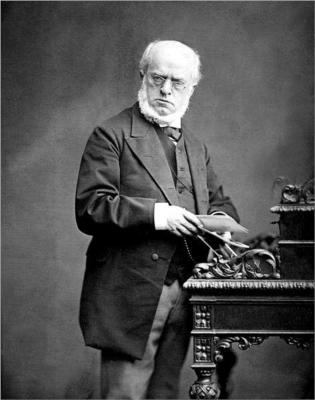
Where to see Adolph Menzel
Ranked by works you can see in person.
-
68 works
Alte Nationalgalerie
Berlin, Germany
-
13 works
Munich Central Collecting Point
Munich, Germany
Also here (6)

-
12 works
Führermuseum
Linz, Austria
Also here (6)
-
6 works
Hamburger Kunsthalle
Hamburg, Germany
-
4 works
Museum Georg Schäfer
Schweinfurt, Germany
-
4 works
Kupferstichkabinett Berlin
Berlin, Germany
-
3 works
Staatliche Kunstsammlungen Dresden
Dresden, Germany
-
3 works
National Museum in Warsaw
Warsaw, Poland
-
2 works
Pushkin Museum of Fine Arts
Moscow, Russia
-
2 works
Wallraf–Richartz Museum
Cologne, Germany


View all 31 museums
-
2 works
National Gallery
London, United Kingdom
-
2 works
Staatliche Kunsthalle Karlsruhe
Karlsruhe, Germany
-
2 works
Belvedere
Vienna, Austria
-
1 works
Hungarian National Gallery
Budapest, Hungary
Also here (6)
Bertalan SzekelyVilmos Aba-NovakEndre BalintAladar Korosfoi-KrieschEgry JózsefAugust von Pettenkofen -
1 works
Städel Museum
Frankfurt, Germany
-
1 works
Germanisches Nationalmuseum
Nuremberg, Germany
-
1 works
Museum Kunstpalast
Düsseldorf, Germany
-
1 works
Staatsgalerie Stuttgart
Stuttgart, Germany
-
1 works
Pomeranian State Museum
Greifswald, Germany
-
1 works
Rijksmuseum
Amsterdam, Netherlands
-
1 works
Art Institute of Chicago
Chicago, United States
-
1 works
Detroit Institute of Arts
Detroit, United States
-
1 works
Kunst Museum Winterthur | Reinhart am Stadtgarten
Winterthur, Switzerland
-
1 works
Metropolitan Museum of Art
New York City, United States
-
1 works
Museum Folkwang
Essen, Germany
-
0 works
Museum Boijmans Van Beuningen
Rotterdam, Netherlands
-
0 works
National Gallery of Art
Washington D.C., United States
-
0 works
Nationalmuseum
Stockholm, Sweden
-
0 works
Musée d'Orsay
Paris, France
-
0 works
Los Angeles County Museum of Art
Los Angeles, United States
-
0 works
Albertina
Vienna, Austria


Frequently Asked Questions
Where can I see Adolph Menzel's work?
You can find works by Adolph Menzel in numerous museum collections. Many are located in Germany, including the Nationalgalerie, Kupferstichkabinett, and the Bröhan-Museum in Berlin. Other German[1] cities with Menzel works include the Kunsthalle in Bremen; the Ludwig Museum and Wallraf-Richartz Museum in Cologne; the Folkwang Museum in Essen; the Kunsthalle in Hamburg; the Sprengel Museum and Niedersächsisches Landesmuseum in Hanover; the Städtische Kunsthalle in Mannheim; the Bayerische Staatsbibliothek and Staatliche Graphische Sammlung in Munich; and the Von der Heydt Museum in Wuppertal. Menzel's art can also be seen outside of Germany. These locations include the Kunstmuseum in Basel; the Museum of Fine Arts in Boston; the Art Institute of Chicago; the Detroit Institute of Arts; the Minneapolis Institute of Arts; the Saint Louis Art Museum; the University of Michigan Museum of Art in Ann Arbor; the North Carolina Museum of Art in Raleigh; the National Gallery of Art and the Library of Congress in Washington, D.C.; and the Museum of Modern Art and the Pierpont Morgan Library in New York.What should I know about Adolph Menzel's prints?
Adolph Menzel (1815[1]-1905[1]) was a prolific German[1] artist known for paintings and drawings, but he also produced a substantial body of prints. These prints offer insight into his artistic range and technical skill. Menzel's early printmaking included lithographs. He created illustrations for books, most notably for Franz Kugler's *History of Frederick the Great* (1840[1]-1842[1]). These illustrations helped popularise Menzel's work and establish his reputation. He later experimented with etching and wood engraving. Menzel's prints often mirrored themes explored in his paintings: history, genre scenes, and portraits. His attention to detail and realistic style are apparent across his printmaking. Many of his prints are smaller in scale, allowing for close examination of his technique. Although printmaking was not the central focus of his career, it formed an important part of his artistic output. His prints are now held in major collections, such as the British Museum. They provide valuable insight into 19th-century German art and culture.Why are Adolph Menzel's works important today?
Adolph Menzel was a highly regarded artist in his own time; colleagues referred to him as "Your Excellency". His importance today rests on several factors. His early work illustrating historical subjects, such as "Notable Happenings in the History of Brandenburg Prussia" (1836[1]) and books about Frederick the Great (1843, 1849, 1850, 1857), appealed to a rising sense of German[1] national pride. However, Menzel was not simply a patriotic artist. His illustrations are also admired for their historical and archaeological accuracy. He was given access to the Prussian Historical Museum to study authentic costumes and arms. Menzel's artistic output was prodigious. He produced a large number of drawings, watercolours, paintings, and prints. His dedication to his craft is summed up by his motto, "No day without a line". He drew constantly, often using sketchbooks he carried with him. Menzel's skill as a draughtsman is now widely recognised.What techniques or materials did Adolph Menzel use?
Adolph Menzel was a prolific artist who employed diverse techniques and materials throughout his career. Although best known for his paintings, he also produced a large number of drawings, woodcuts, and prints. Menzel's paintings often display a meticulous attention to detail, achieved through careful observation and precise brushwork. He explored a range of media, including oils, watercolours, and pastels. In his oil paintings, Menzel often used a limited palette, applying colours in thin layers to create subtle tonal variations. His watercolours are characterised by their transparency and delicate washes. Menzel's drawings, numbering in the thousands, reveal his mastery of line and form. He worked in pencil, charcoal, and pen and ink, often using these media to capture fleeting moments and everyday scenes. His woodcuts and prints, though less numerous than his drawings, demonstrate his skill as a graphic artist. He experimented with different printing techniques, including etching and lithography, to achieve a variety of effects.Who did Adolph Menzel influence?
Adolph Menzel's influence can be seen in the work of several later artists, particularly within German[1] painting and those engaging with Realism[1]. Frans Hals's manner, with its vigour and alla prima technique, served as an inspiration for Impressionism, including German painters. Artists such as Manet, Monet, and those within the Leibl circle found a freshness of vision in it. The example of Hals proved important to Wilhelm Busch, Lovis Corinth, Max Liebermann, and Max Slevogt. Liebermann, in particular, acquired his free brushstroke from studying Hals. He copied details and sketches of entire paintings by Hals during a tour of Holland in 1876[1]. Menzel himself engaged with the tradition of Dutch trompe-l’oeil painting, creating works such as The Studio Wall (1852) and The Studio Wall (1872).Who influenced Adolph Menzel?
Adolph Menzel was largely self-taught. He briefly attended the Berlin Academy of Art in 1833[1], taking a class in drawing from plaster casts, but soon gave it up. Menzel learned through observation, practice, and experiment. He never apprenticed with a master. His early work comprised illustrations for a range of commissions. In 1836, he launched himself into patriotic history with *Notable Happenings in the History of Brandenburg Prussia*. This led to illustrating a series of volumes about Frederick the Great, appearing in 1843, 1849, 1850, and 1857. For the Frederick the Great project, Menzel worked in the Prussian Historical Museum, observing authentic costumes and arms. His early *Künstlers Erdenwallen* consisted of pen drawings reproduced by lithography. Menzel also illustrated Goethe's book of the same title and *The Broken Pitcher*. Later in his career, Menzel befriended the painter Ernest Meissonier, and knew Alfred Stevens and Jean-Leon Gerome.What is Adolph Menzel's most famous work?
Adolph Menzel is best known for his history paintings and his depictions of Prussian life. Among his large output, several works have secured his place in art history. One of his most recognised paintings is *The Flute Concert of Sanssouci* (1850[1]-1852[1]). It depicts Frederick the Great playing the flute at his palace of Sanssouci, surrounded by members of his court. The painting is admired for its detailed rendering of the Rococo interior and the expressions of the figures. It is an example of Menzel's ability to combine historical accuracy with artistic interpretation. Another important work is *The Iron Rolling Mill* (1872-1875), also known as *Modern Cyclopes*. This painting offers a view of industrial labour in 19th-century Germany. Unlike many contemporary depictions of industry, which tended to romanticise the subject, Menzel presented a realistic, unidealised view of the factory floor and its workers. The painting is notable for its gritty realism and its focus on the human cost of industrial progress.What style or movement did Adolph Menzel belong to?
Adolph Menzel's work resists simple categorisation, but he is generally associated with Realism[1]. He was born in Breslau in 1815[1] and spent most of his life in Berlin, dying there in 1905[1]. Menzel's early career involved providing illustrations for commissions, including around 400 drawings for wood engravings to illustrate Franz Kugler's *History of Frederick the Great*, completed in 1842[1]. He made himself an expert in the military and other arcana of the Frederician period. During the early and mid-1840s, Menzel began to take up oil painting seriously. His subject matter varied widely. Some works depicted scenes from the life of Frederick the Great, while others portrayed contemporary life, such as the advent of railway travel. Although Menzel used traditional brown tones, his interest in accurately portraying the world around him aligns with Realist principles. Some critics saw in his work a promise of pictorial modernity, but others felt he betrayed that promise in favour of realism.
Sources
Where to See guide aggregates verified holdings of Adolph Menzel's works across the following collections.
- [1] wikipedia Wikipedia: Adolph Menzel Used for: biography.
- [2] book Howard Simon, 500 Years of Illustration Used for: biography.
- [3] book Masterpieces of western art : a history of art in 900 individual studies from the Gothic to the present day Used for: biography.
- [4] book Michael Fried, Adolph Menzel, Menzel's realism _ art and embodiment in nineteenth-century Berlin Used for: biography.
Editorial overseen by Solis Prints. Sources verified 2026-08-29. Click a source for details, or hover over [N] in the page above to preview.
Editorial standardsMethodologyCorrectionsAI disclosureAbout the editorial team