



![We are the People [Wir sind das Volk] (1989) by Emil Schumacher](https://cdn.shopify.com/s/files/1/0833/9292/1935/files/artwork-emil-schumacher-we-are-the-people-wir-sind-das-volk-1989_5c952070-fd17-4d5a-8928-6ea9f7d76621.jpg?width=480)


About Emil Schumacher
- abstract art
- Abstract Expressionism
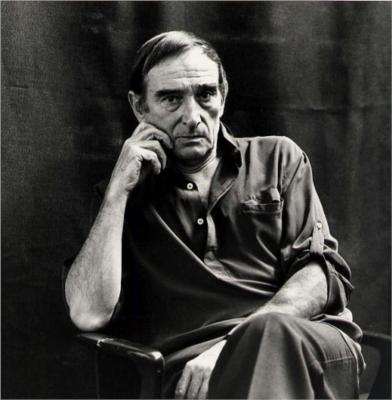
Hagen-born German[3] Informel painter whose impasto surfaces incorporated lead, asphalt and straw, anticipating Anselm Kiefer's material investigations by two decades.
Where to see Emil Schumacher
Ranked by works you can see in person.
-
8 works
Sprengel Museum
Hanover, Germany
-
 7 works
Victoria and Albert Museum
London, United Kingdom

-
5 works
Westphalian State Museum of Art and Cultural History
Münster, Germany
-
5 works
Neue Nationalgalerie
Berlin, Germany
-
3 works
Städel Museum
Frankfurt, Germany
-
2 works
Staatliche Kunsthalle Karlsruhe
Karlsruhe, Germany
-
2 works
Niedersächsische Sparkassenstiftung
Hanover, Germany
Also here (1)
-
1 works
Buffalo AKG Art Museum
Buffalo, United States
-
1 works
Hungarian National Gallery
Budapest, Hungary
Also here (6)
Bertalan SzekelyVilmos Aba-NovakEndre BalintAladar Korosfoi-KrieschEgry JózsefAugust von Pettenkofen -
1 works
Museum Ludwig
Cologne, Germany


View all 19 museums
-
1 works
Cleveland Museum of Art
Cleveland, United States
-
1 works
John and Mable Ringling Museum of Art
Sarasota, United States
-
1 works
Harvard Art Museums
Cambridge, United States
-
1 works
RISD Museum
Providence, United States
-
1 works
Metropolitan Museum of Art
New York City, United States
-
1 works
National Museum of Art, Architecture and Design
Oslo, Norway
-
1 works
Yale University Art Gallery
New Haven, United States
-
0 works
National Gallery of Art
Washington D.C., United States
-
0 works
Vanderbilt Museum of Art
Nashville, United States


Frequently Asked Questions
Where can I see Emil Schumacher's work?
You can find Emil Schumacher's work in several European museums. In Germany, these include the Brücke Museum and Nationalgalerie in Berlin; the Kunsthalle and Sammlung Böttcherstrasse in Bremen; the Ludwig Museum and Wallraf-Richartz Museum in Cologne; the Folkwang Museum in Essen; the Gesellschaft Kruppsche Gemäldesammlung in Essen; the Kunsthalle in Hamburg; the Niedersächsisches Landesmuseum in Hanover; the Städtische Kunsthalle in Mannheim; the Bayerische Staatsgemäldesammlungen in Munich; the Stiftung Ada und Emil Nolde in Seebüll; and the Von der Heydt Museum in Wuppertal. His art can also be found in private collections across Europe and the United States, such as the Colección von der Goltz in Düsseldorf; Günther Grassmann in Frankfurt am Main; the Colección Haubrich in Cologne; the Colección Hegewisch in Hamburg; Bernhard and Cola Heiden, formerly of Berlin; the Colección Kathe Henkell, in Frankfurt am Main; and the Colección E.W. Kornfeld, in Bern.What should I know about Emil Schumacher's prints?
Emil Schumacher (1912[3]-1999[3]) was a German[3] painter and printmaker associated with Art Informel, a European tendency parallel to American Abstract Expressionism[3]. Printing has a long history. In Europe, as paper became available in the late 1300s, woodcuts served as book illustrations, religious icons, playing cards, and souvenirs. Handmade prints were the main method for image reproduction until photography. Printmaking gradually became viewed as a major art form in the later 1800s. Artists started signing prints to distinguish original graphics from reproductions. They also began to limit edition sizes and use high-quality papers. The German Expressionists revitalised printmaking in the early 20th century. The group *Brücke* printed and published their own work to promote their ideas. During the inflation period after the First World War, prints became a more affordable art form. Some Expressionists, like Kirchner, preferred to print their own works. Others accepted commissions from professional publishers.Why are Emil Schumacher's works important today?
Emil Schumacher (1912[3]-1999[3]) is important because his work reflects philosophical currents from the turn of the century. These currents, often termed "neo-Romantic", explored themes such as "spiritual motivation", "reality and vision", and the "hidden face of things". Philosophical neo-Romanticism rediscovered thinkers like Kierkegaard, whose "Angst theory" resonated with the modern age. Nietzsche's emphasis on the spiritual realm and the creative force of the spirit also influenced artists. This period saw a turn towards the "spiritual", rejecting the materialistic natural science of the time. Artists explored the "depths" of experience, seeking true knowledge through intuition rather than empirical observation. They aimed to express the essence of objects, rather than merely reproducing their appearance. This artistic trend, linked to Phenomenology, involved creating an artistic world, rather than copying the existing one. The goal was to illuminate essential features, moving beyond simple reproduction. Expressionism, as a movement, aimed to present the essence of an object in pure form, without including its appearance. This pursuit of essences explains the character of Expressionist art, where the rules of reality are suspended.What techniques or materials did Emil Schumacher use?
Emil Schumacher's artistic practice involved a range of materials and techniques. His approach to art-making considered both the physical and conceptual aspects of his chosen media. Schumacher worked with diverse materials, including oil paint, collage elements (such as paper and rags), and possibly glass. His techniques varied, encompassing methods of application and manipulation. He was known to merge disparate elements into unified artworks, using nails, glue, and other means to combine materials. His approach was not limited to traditional painting. He explored the possibilities of collage, assembling diverse materials on cardboard or other bases. This involved careful arrangement and articulation of elements to create dense, original compositions. Schumacher's techniques reflected a desire to integrate diverse elements into a cohesive artistic statement.Who did Emil Schumacher influence?
It is difficult to isolate specific artists who were directly influenced by Emil Schumacher. However, contextualising his milieu helps to identify some artistic relationships. Schindler, an Austrian painter of atmospheric works, admired French artists, especially Théodore Rousseau and Corot. Schindler felt that Rousseau combined all good qualities, all great art, and all periods. He described Corot as the unrivalled master of linear beauty, a painter of the greatest of joys, beauty itself. Schindler's work shares traits with the French artist, such as muted shades of blue and grey dominating the colour scheme. He also used delicate brushstrokes to indicate leaves blowing in the treetops. Schindler's student, Olga Wisinger-Florian, initially followed her teacher's style, but soon moved away and developed her own approach. Monet's garden pictures and flower depictions were a recurrent challenge for Wisinger-Florian. Her garden and flower pictures echo Monet's achievements and composition, without detracting from her own distinctive style.Who influenced Emil Schumacher?
Emil Schumacher (born 1912[3]) initially studied commercial art at the School of Applied Arts in Dortmund. After the Second World War, he painted Cubist works, an early style influenced by Christian Rohlfs. A visit to Paris in 1951[3], and his acquaintance with the German[3] painter Wols, proved influential. This led Schumacher to his own abstract style, which is closely related to the Informel movement. In these abstract works, he used colour as a pure substance, building it up to create depth, sometimes to a thick, almost relief-like texture. Schumacher later explored a style between painting and relief. He introduced materials, such as lead, asphalt, sisal, and paper, hammering them into the surface.What is Emil Schumacher's most famous work?
It is difficult to name one single work as Emil Schumacher's most famous. He produced abstract paintings and sculptures throughout his career, from the late 1930s until his death in 1999[3]. Schumacher's mature style emerged in the 1950s, with his Informel paintings. These works emphasised texture and process. His art is often described as a response to the trauma of the Second World War. Schumacher himself avoided specific interpretations of his paintings, preferring viewers to find their own meaning. He was a member of the German[3] Informel group, alongside artists such as Karl Otto Götz and Gerhard Hoehme. Schumacher exhibited internationally and received many awards during his lifetime. He is known for contributions to abstract art[3] in post-war Germany.What style or movement did Emil Schumacher belong to?
Emil Schumacher is associated with Abstract Expressionism[3], a movement that shifted the centre of the art world from Paris to New York in the 1940s. It developed partly as a reaction to the Second World War. Abstract Expressionism encompasses the process of artistic creation, not just the finished product. It stresses energy and action, using established artistic techniques merely as a starting point. Some have called it "action painting" or the New York School. The movement includes gestural abstraction, relying on expressive pigment application, and chromatic abstraction, which focuses on the emotional resonance of colour. While Abstract Expressionism is linked to the New York art scene between the Second World War and the late 1950s, the term strictly applies only to the work of certain artists.
Sources
Where to See guide aggregates verified holdings of Emil Schumacher's works across the following collections.
- [1] museum Harvard Art Museums Used for: museum holdings.
- [2] museum Victoria and Albert Museum Used for: museum holdings.
- [3] wikipedia Wikipedia: Emil Schumacher Used for: biography.
- [4] book Michael Siebenbrodt, Bauhaus Used for: stylistic analysis.
- [5] book Michael Siebenbrodt, Bauhaus (1919-1933) Used for: stylistic analysis.
- [6] book guggenheim-guhe00solo Used for: biography.
- [7] book guggenheim-handboo00pegg Used for: biography.
- [8] book Husslein-Arco, Agnes, editor; Koja, Stephan, editor; Law, Rebecca (Translator), translator; McInnes, Robert (Translator), translator; Somers, Nick, translator; Monet, Claude, 1840-1926. Paintings. Selections; Österreichische Galerie Belvedere, h Used for: biography.
- [9] book Masterpieces of western art : a history of art in 900 individual studies from the Gothic to the present day Used for: biography.
Editorial overseen by Solis Prints. Sources verified 2026-08-29. Click a source for details, or hover over [N] in the page above to preview.
Editorial standardsMethodologyCorrectionsAI disclosureAbout the editorial team