

Fine Art Poster
From $29
A giclée print on 200gsm matte fine art paper, using a twelve-colour process for accurate, fade-resistant colour. Supplied unframed, delivered flat or rolled.




Archival giclée
Frames arrive ready to hang
Secure checkout
Made to order
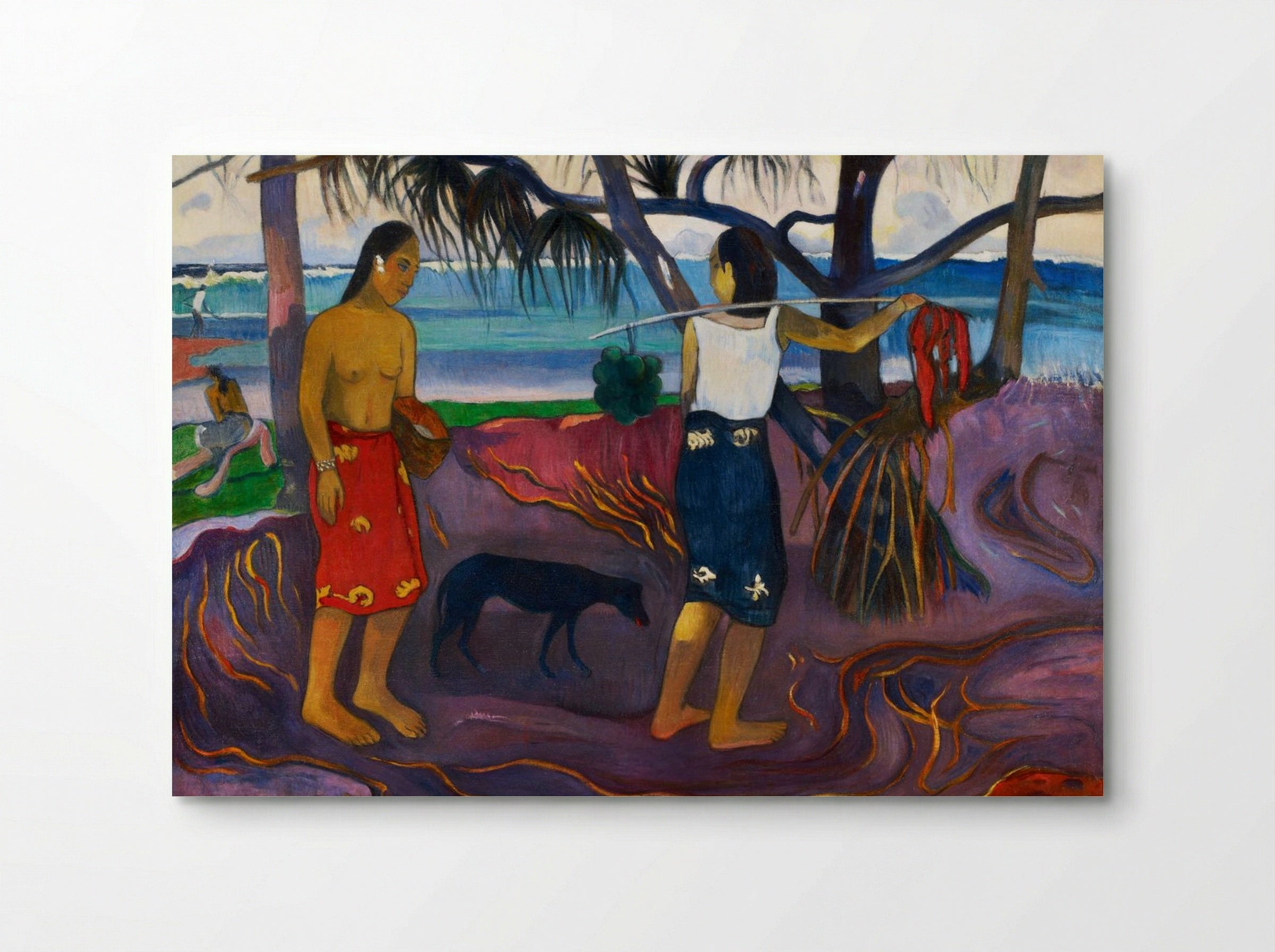
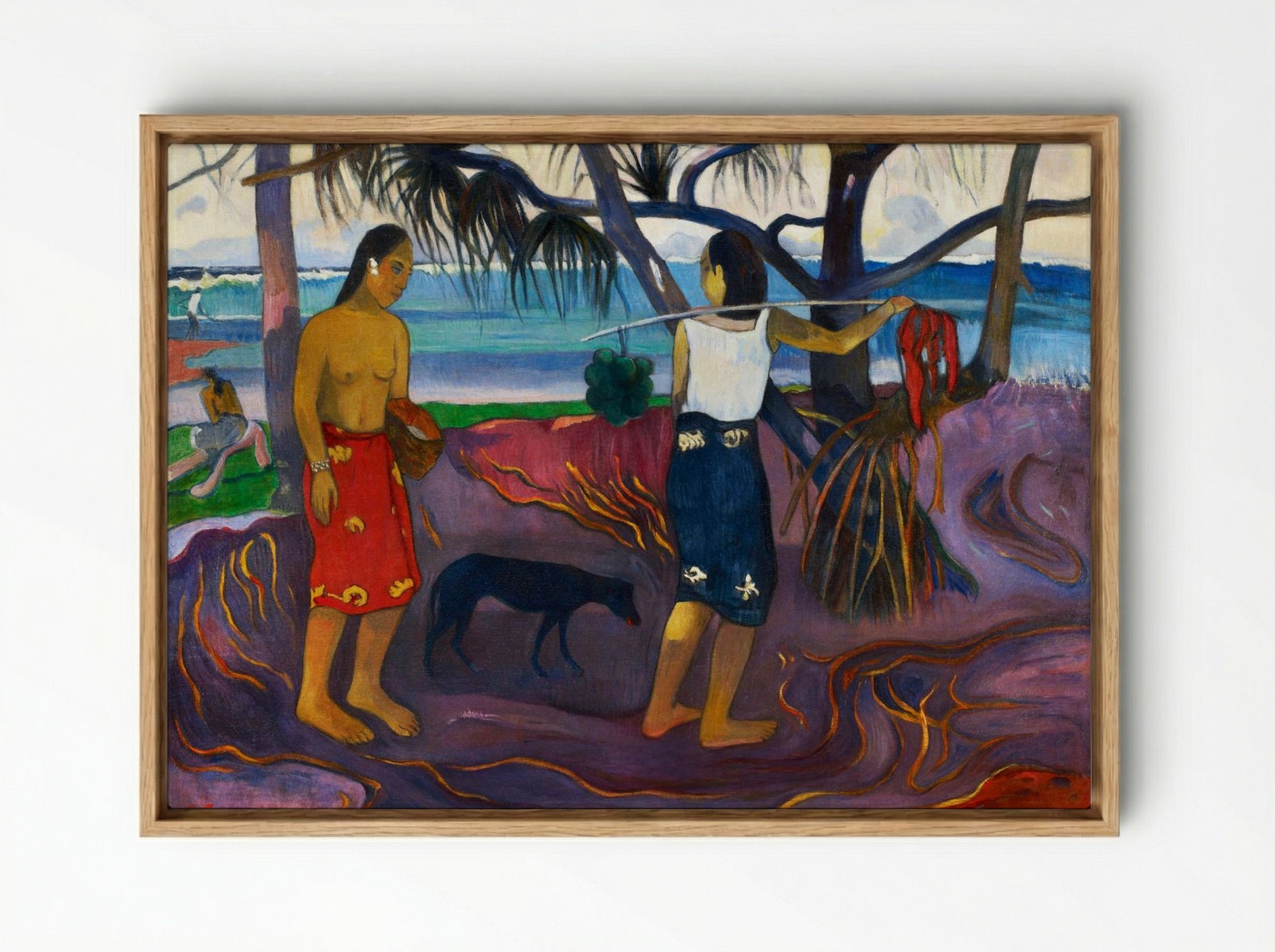
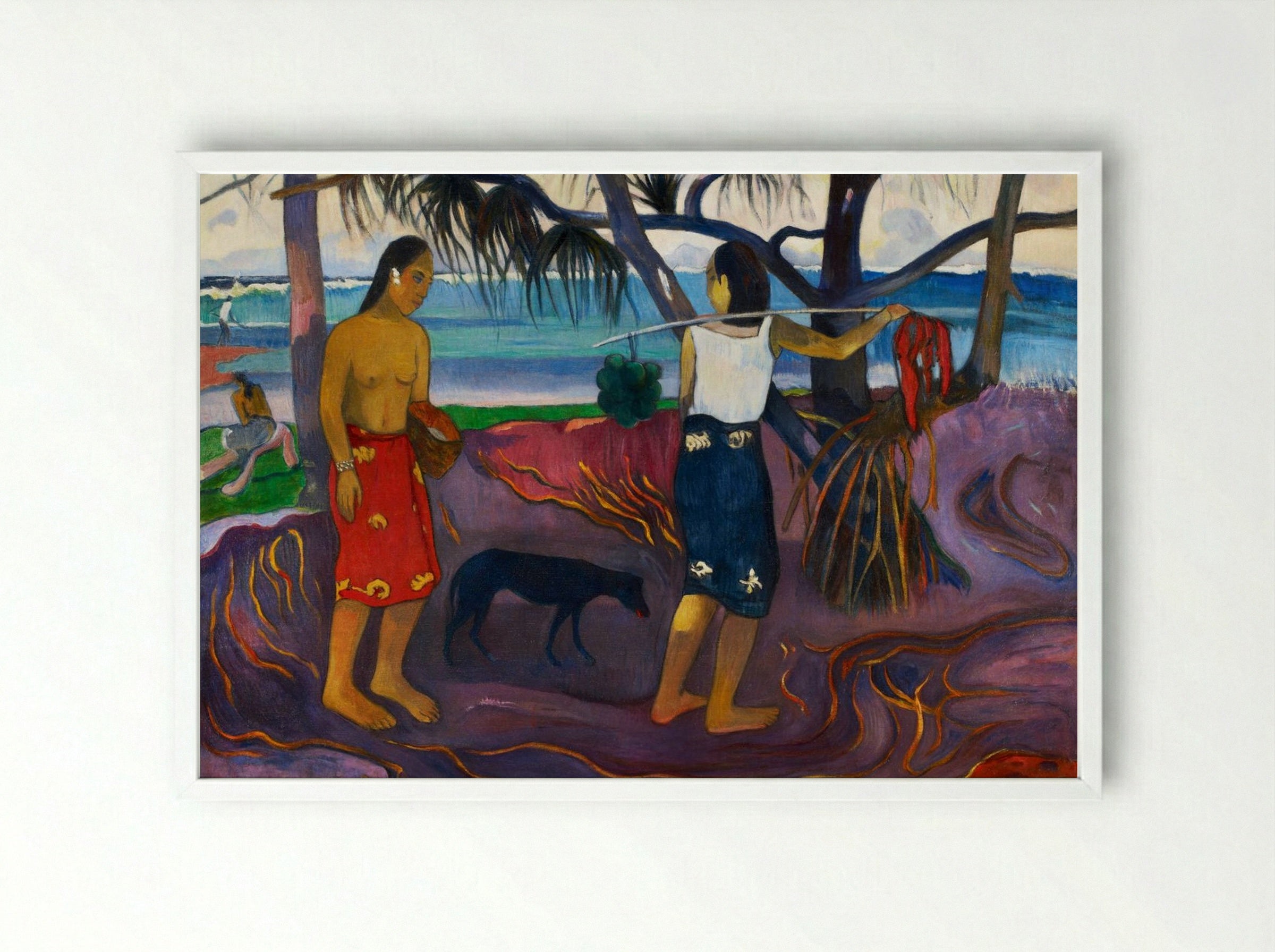
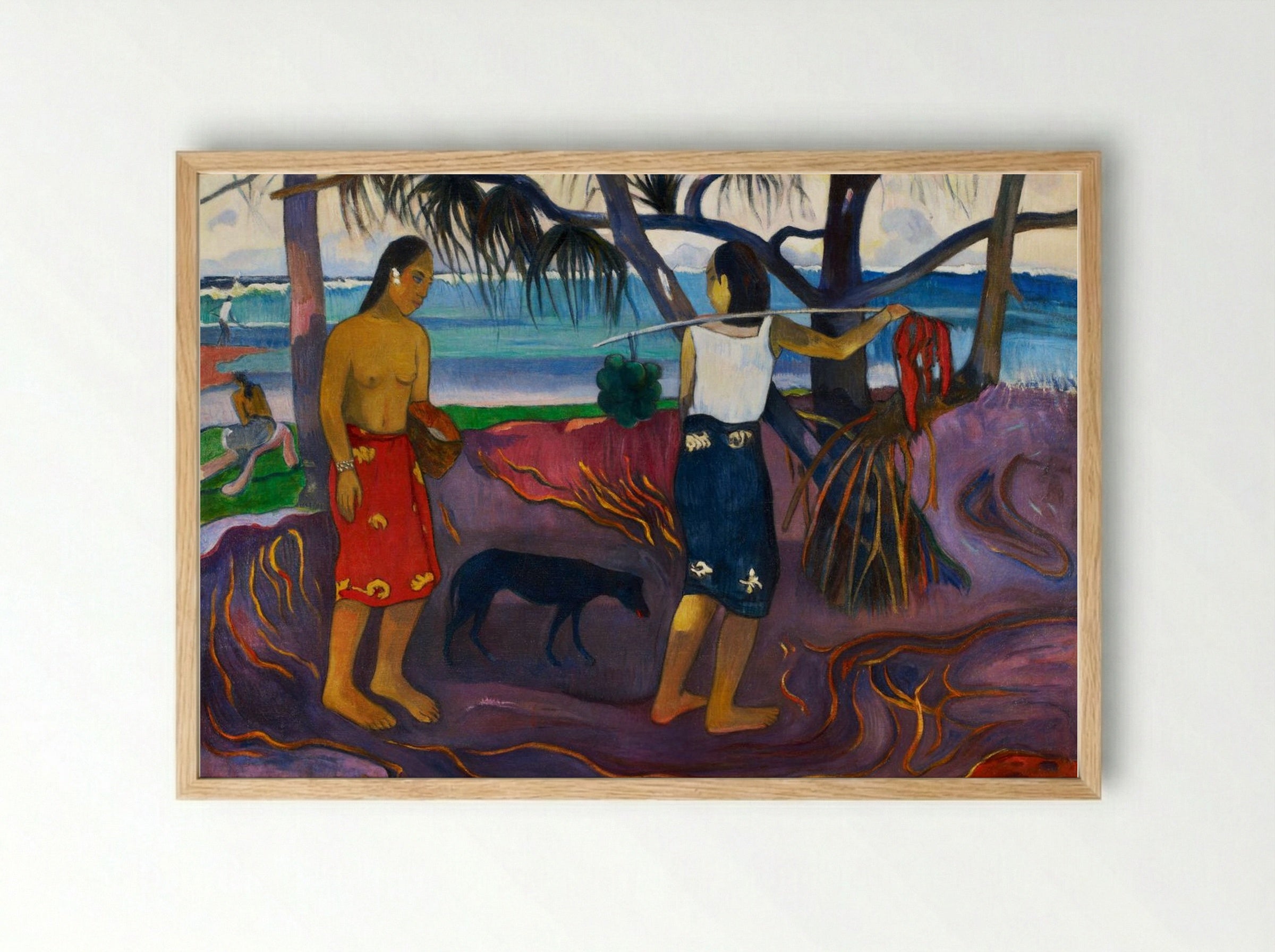
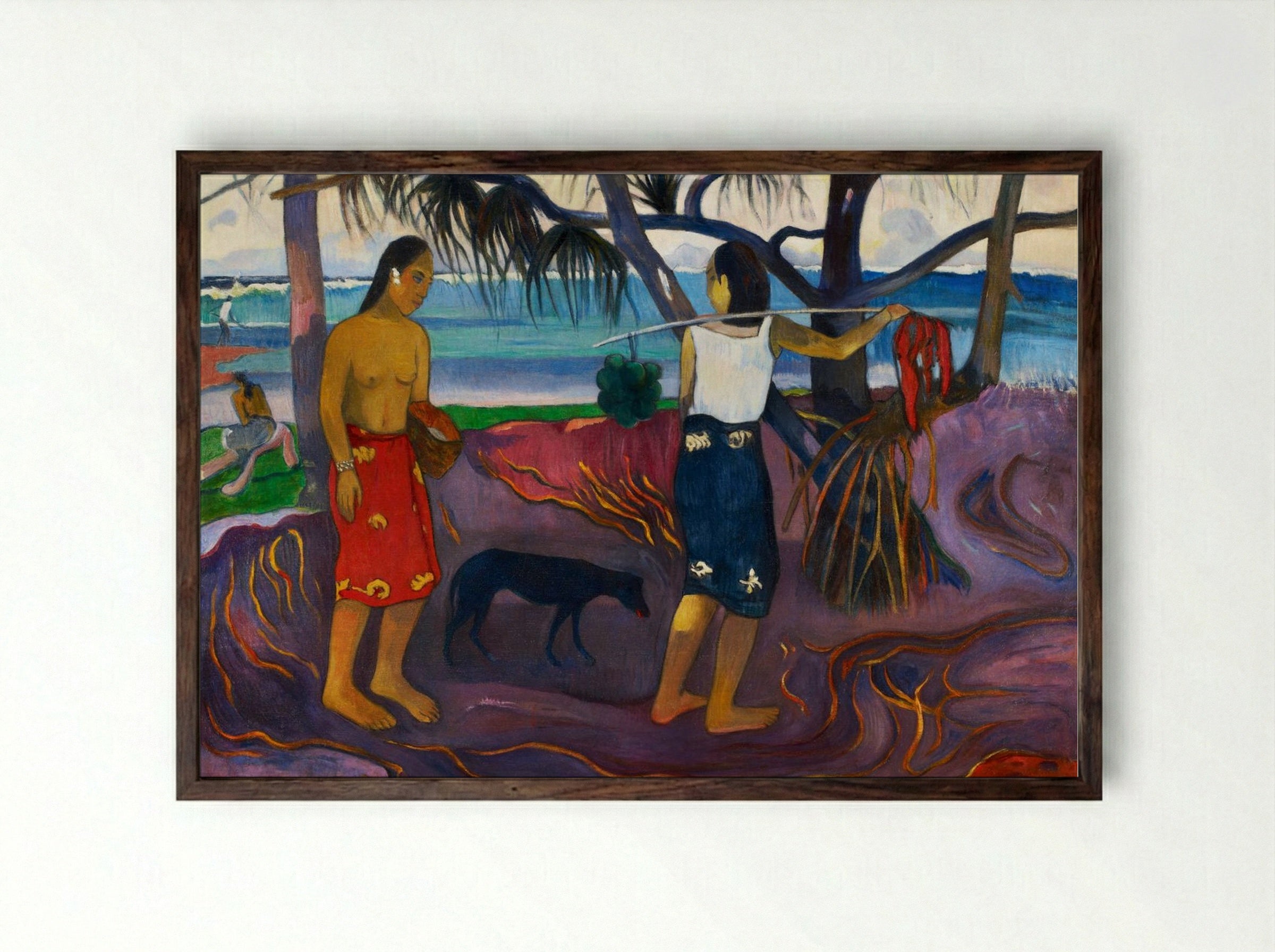
Paul Gauguin's 'I Raro Te Oviri (Under the Pandanus)' captures the vibrant colours and exotic allure of Tahiti. This Post-Impressionist masterpiece brings a touch of paradise to any space.
Paul Gauguin's 'I Raro Te Oviri (Under the Pandanus)', painted in 1891, exemplifies his Post-Impressionist style and fascination with Polynesian culture. During his time in Tahiti, Gauguin sought to capture the essence of a simpler, more authentic way of life, far removed from the industrialised West. This painting depicts two Tahitian women in a lush, tropical landscape. One woman, bare-breasted and adorned with simple jewellery, stands serenely, while the other, clothed in a white top and dark skirt, carries a branch laden with fruit. A black dog wanders between them, adding a touch of domesticity to the scene. The vibrant colours and flattened perspective are characteristic of Gauguin's style, creating a dreamlike and evocative atmosphere. The title, 'Under the Pandanus', refers to the native tree, further grounding the scene in its Tahitian context. As a fine art print, 'I Raro Te Oviri' brings a touch of exoticism and artistic flair to any interior. Its rich colours and intriguing subject matter make it a captivating focal point for a living room, study, or hallway, inviting viewers to escape into Gauguin's vision of paradise.
Because every print is made to order, we don't offer change-of-mind returns, refunds or exchanges. If your order arrives faulty, damaged or incorrect, we'll replace it free of charge — just contact us within 48 hours of delivery. See our refunds page for full details.
We ship worldwide, printing at the production hub nearest to your delivery address. Delivery times and costs vary by destination — you'll see the options available to you at checkout.
Each print is produced to order using 12-colour giclée printing on FSC-certified archival paper. Designed in Britain and printed at your nearest production hub to reduce waste and speed up delivery.
Specific Features
Every Solis piece is made to order with archival, gallery-quality materials built to last.
Care & Cleaning
To keep your artwork looking its best:
Materials & Sizing
Museum-grade giclée on FSC-certified archival matte paper, with framed and canvas options.

Artist Biography
Made to order
Every piece is printed to order. These are the five finishes, and what makes each one different.
From $29
A giclée print on 200gsm matte fine art paper, using a twelve-colour process for accurate, fade-resistant colour. Supplied unframed, delivered flat or rolled.

From $89
The same fine art print in a solid wood frame with UV-protective acrylic glaze and rigid backing. Five frame colours. Arrives ready to hang.
Why Choose Us ?
Damage-free delivery guarantee
Fast Shipping
Museum-Quality Materials
You May Also Like
We use cookies to measure our marketing and see which prints people love.We use cookies to measure our marketing.
By continuing to browse, you agree · Privacy Policy