Flags I by Jasper Johns
Flag on Orange by Jasper Johns
Historical Designs (Yatsuo no tsubaki) (18th century) by Taguchi Tomoki
Leda and the Swan by Cy Twombly
Dog by Andy Warhol
Moses and the Burning Bush by Keith Haring
Dog by Keith Haring
At the Party by Jack Vettriano
Junkyard by Jeff Koons
Niagara by Jeff Koons
Imagine You Are Driving.  1. by Julian Opie
Imagine You Can Order These (1) by Julian Opie

Contemporary

94 artists · 1970–present

Contemporary[4] art covers everything produced from about 1970 to the present day. It resists a single definition. Unlike earlier movements that shared a common technique or manifesto, contemporary practice is defined by its refusal to settle into one style. Artists draw on installation, performance, video, digital media, street art and traditional painting in equal measure. The period opened with Conceptualism and Land Art challenging the gallery system, then saw Neo-Expressionism reclaim raw emotion in the 1980s. The Young British Artists provoked tabloid outrage and auction records in the 1990s. Pop culture, identity politics, globalisation and technology run through the work as recurring threads. What holds it together is an attitude: a willingness to question what art can be, who it is for, and where it belongs. That question keeps the field restless and open-ended.

Key Ideas

  • The End of a Single Narrative

    Modernism moved in a rough line from Impressionism through Cubism to Abstraction. Contemporary art broke that sequence. By the 1970s no school could claim authority over the next direction. Pluralism replaced progression. An artist might combine photography, sculpture and text in one installation without apology. This freedom created a field where street murals and museum retrospectives coexist on equal terms.

  • Identity and the Body

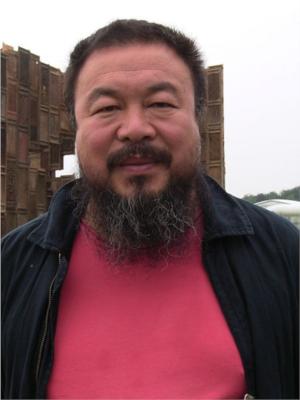
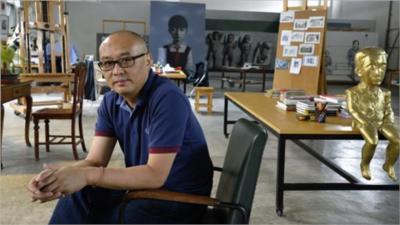
    Questions of race, gender, sexuality and class moved from the margins to the centre of artistic production. Feminist art of the 1970s opened the door. Artists such as Cindy Sherman, Kara Walker and Ai Weiwei used self-representation, historical memory and political dissent to challenge who gets seen and how. The body became a site for both personal confession and collective protest.

  • Art and the Market

    No period has been more entangled with commerce. Andy Warhol collapsed the boundary between advertising and fine art. Jeff Koons turned consumer kitsch into stainless-steel monuments. Auction prices became part of the narrative. Damien Hirst sold work directly, bypassing dealers. The tension between critical ambition and market spectacle defines much contemporary debate.

  • Digital Expansion

    The internet, social media and generative software have rewritten how art is made, distributed and consumed. Net art emerged in the 1990s. NFTs briefly dominated headlines in the 2020s. Artists use algorithms, AI and virtual reality as materials. The screen rivals the gallery wall as the primary surface for encountering new work.

Origins

Breaking with Modernism

By the late 1960s the grand narrative of modernist progress had stalled. Abstract Expressionism had calcified into orthodoxy. Pop Art mocked its seriousness. Conceptual artists declared that the idea mattered more than the object. Earthworks moved art out of galleries and into deserts. Performance replaced painting. These fractures made it impossible to identify a single successor movement, and from that impossibility contemporary art was born. The term gained currency in the 1970s as museums and critics needed a label for work that refused existing categories.

New Voices and Global Reach

The 1980s and 1990s brought previously excluded voices into the mainstream. Feminist, queer and postcolonial perspectives reshaped exhibition programmes. Biennials in Istanbul, Sao Paulo and Gwangju challenged the dominance of New York and London. The internet accelerated the trend by making images and ideas instantly portable. By the 2000s contemporary art was a genuinely global conversation, drawing on local traditions while circulating through an international network of fairs, residencies and online platforms.

The Turner Prize Generation

In Britain, the Turner Prize became a lightning rod for public argument about contemporary art. Damien Hirst's shark, Rachel Whiteread's concrete casts and Tracey Emin's bed provoked tabloid fury and record gallery attendance in equal measure. Charles Saatchi's patronage of the Young British Artists created a celebrity model for the art world. Whether or not these artists outlast the hype, their period reshaped how the British public engages with new art.

In Their Words

“Art is what you can get away with.”
Andy Warhol, The Philosophy of Andy Warhol (1975)
“I am for an art that is political-erotical-mystical, that does something other than sit on its ass in a museum.”
Claes Oldenburg, Store Days (1967)
“Art need no longer be an account of past sensations. It can become the direct organisation of more highly evolved sensations.”
Guy Debord, Report on the Construction of Situations (1957)

All Contemporary Artists

64 artists.

Recommended Reading

  • Art Since 1900

    Art Since 1900

    Hal Foster, Rosalind Krauss, Yve-Alain Bois, Benjamin Buchloh · 2004

    Comprehensive survey of modern and contemporary art organised around key dates, combining historical narrative with theoretical analysis.

  • The Shock of the New

    The Shock of the New

    Robert Hughes · 1980

    Accessible introduction to modern art from Impressionism through the late twentieth century, written with sharp critical judgement.

  • Contemporary Art: A Very Short Introduction

    Contemporary Art: A Very Short Introduction

    Julian Stallabrass · 2004

    Concise examination of how globalisation, commerce and politics shape contemporary art practice.

Frequently Asked Questions

  • What is contemporary art?
    'Contemporary[4] art' is the broad term for art produced from roughly 1970 to the present, succeeding the Modernist period that ended with Abstract Expressionism and Minimalism. It is not a single style but a condition in which many practices coexist: painting, sculpture, photography, video, performance, installation, net art and social practice. The category is defined more by its pluralism and institutional context than by any unifying formal programme.
  • When did contemporary art start?
    Different institutions and critics date the shift variously. The opening of Documenta 5, curated by Harald Szeemann in 1972, is one conventional marker. The Conceptual Art[4] exhibitions of 1969 to 1972 or the Pictures Generation exhibition of 1977 are alternatives. Most histories place the break in the late 1960s or early 1970s, when Minimalism had matured and the confidence of high Modernism began to fracture.
  • Who are the most famous contemporary artists?
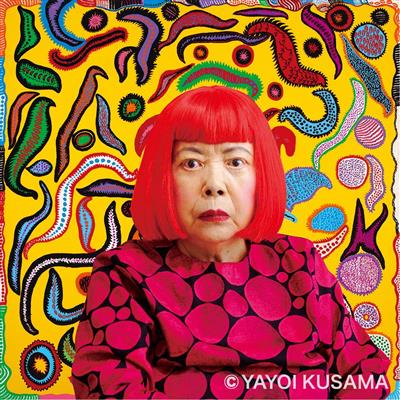
    Any such list is provisional, but widely cited figures include Gerhard Richter, David Hockney, Cy Twombly and Jasper Johns among late-Modernist holdovers; Cindy Sherman, Barbara Kruger, Jeff Koons and Damien Hirst from the 1980s generation; and Ai Weiwei, Olafur Eliasson, Kara Walker, Kerry James Marshall and Yayoi Kusama among current practitioners. The field is global and deliberately heterogeneous.
  • What defines contemporary art?
    Contemporary[4] art is distinguished not by a style but by its conditions: an international biennial system, dealer and auction markets in New York, London and Hong Kong, a critical and theoretical vocabulary drawn from continental philosophy and post-colonial studies, and a working assumption that the artist can use any medium the idea requires. Painting, once central to Modernism, is now one option among many.
  • What is the difference between modern and contemporary art?
    'Modern art' refers to work produced between about 1860 and 1970, from Manet through Abstract Expressionism and Minimalism. 'Contemporary[4] art' refers to work produced from roughly 1970 to the present. The boundary is institutional as well as chronological: MoMA in New York was founded in 1929 for the modern category, while museums such as MCA Chicago and Tate Modern serve the contemporary period.
  • Why is contemporary art important?
    Contemporary[4] art is the most widely distributed and internationally visible form of visual culture in the world today, with biennials in São Paulo, Venice, Istanbul, Dakar and Sharjah drawing millions of visitors. The field provides the primary arena in which societies negotiate questions of identity, power and history through visual form. Its critical and market infrastructure also supports a working ecosystem of tens of thousands of practising artists worldwide.
  • Where can I see contemporary art?
    Tate Modern (London), the Museum of Modern Art (New York), the Pompidou (Paris), the Guggenheim Bilbao, MOCA Los Angeles, and the Hamburger Bahnhof (Berlin) hold permanent contemporary collections. The Venice Biennale, Documenta (Kassel), Manifesta and the Whitney Biennial are the major recurring surveys. Art Basel, Frieze and FIAC are the principal annual fairs. Local galleries in every major city display rotating programmes.

Sources

Contemporary editorial draws on the following published scholarship.

  1. [1] book Hal Foster, Rosalind Krauss, Yve-Alain Bois, Benjamin Buchloh, Art Since 1900, 2004 Used for: biography, stylistic analysis.
  2. [2] book Robert Hughes, The Shock of the New, 1980 Used for: biography, stylistic analysis.
  3. [3] book Julian Stallabrass, Contemporary Art: A Very Short Introduction, 2004 Used for: biography, political views, stylistic analysis.
  4. [4] wikipedia Wikipedia: Contemporary Used for: biography.
  5. [5] book Susie Hodge, Art Used for: biography.
  6. [6] book Jesse Bryant Wilder, MA, MAT, Art History For Dummies Used for: biography.

Editorial overseen by Solis Prints. Sources verified 2026-05-30. Click a source for details, or hover over [N] in the page above to preview.

See Contemporary art in person.

Plan your visit to see Contemporary art →

Take Contemporary home.

See all Contemporary prints →
Back to Discover