



About Graham Sutherland
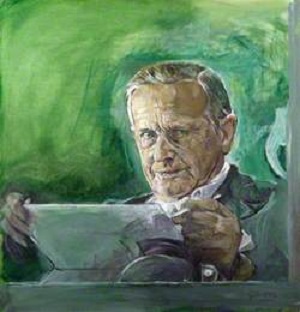
- portrait
a railway apprentice turned war artist whose portrait of Churchill was called filthy and secretly burned by Clementine
Where to see Graham Sutherland
Ranked by works you can see in person.
-
33 works
National Museum Cardiff
Cardiff, United Kingdom
-
16 works
Tate
London, United Kingdom


-
10 works
Southampton City Art Gallery
Southampton, United Kingdom
-
9 works
National Gallery
London, United Kingdom
-
 8 works
National Portrait Gallery
London, United Kingdom
-
7 works
Pallant House Gallery
Chichester, United Kingdom
-
 6 works
British Council
London, United Kingdom
-
 1 works
National Gallery of Art
Washington D.C., United States
-
4 works
Leeds Art Gallery
Leeds, United Kingdom
-
3 works
National Galleries Scotland
Edinburgh, United Kingdom


Own a piece of it
Graham Sutherland prints
Hand-finished archival prints from Graham Sutherland's body of work.


View all 36 museums
-
3 works
Dallas Museum of Art
Dallas, United States
-
3 works
The Phillips Collection
Washington D.C., United States
-
 3 works
Fitzwilliam Museum
Cambridge, United Kingdom
-
 2 works
Buffalo AKG Art Museum
Buffalo, United States
-
2 works
Government Art Collection
London, United Kingdom
-
 2 works
Glasgow Museums Resource Centre
Glasgow, United Kingdom
-
 2 works
Bristol City Museum & Art Gallery
Bristol, United Kingdom
-
2 works
Yokohama Museum of Art
Yokohama, Japan
-
 2 works
Manchester Art Gallery
Manchester, United Kingdom
-
 2 works
Norfolk Museums Collections
Norwich, United Kingdom
-
 2 works
Museum of Modern Art
New York City, United States
-
2 works
São Paulo Museum of Art
São Paulo, Brazil
-
2 works
Leicester Museum & Art Gallery
Leicester, United Kingdom
-
 2 works
National Trust
Swindon, United Kingdom
-
2 works
Christ Church
Oxford, United Kingdom
Also here (2)
-
 2 works
National Gallery of Canada
Ottawa, Canada
-
1 works
Arts Council Collection, Southbank Centre
London, United Kingdom
-
1 works
Toledo Museum of Art
Toledo, United States
-
 1 works
Ulster Museum
Belfast, United Kingdom
-
1 works
Art Gallery of New South Wales
Sydney, Australia
-
 1 works
Museo Nacional Centro de Arte Reina Sofía
Madrid, Spain
-
 1 works
Aberdeen Archives, Gallery and Museums collections
Aberdeen, United Kingdom
-
 1 works
Northampton Museum and Art Gallery
Northampton, United Kingdom
-
1 works
Birmingham Museums Trust
Birmingham, United Kingdom
-
1 works
National Gallery of Victoria
Melbourne, Australia
-
1 works
Kirklees Museums and Galleries
Huddersfield, United Kingdom


Can't travel? Bring Graham Sutherland home.
See all Graham Sutherland prints →Frequently Asked Questions
Where can I see Graham Sutherland's work?
Graham Sutherland's works can be viewed in several public collections. The National Museum of Wales in Cardiff holds a substantial collection of his pieces, including early works and those produced during his time as an official war artist. The Imperial War Museum in London also has a number of Sutherland's war paintings. These paintings document the effects of bombing on British cities and industrial sites during the Second World War. Other UK institutions holding his work include the Tate, the British Museum, and the Victoria and Albert Museum, all in London; the Whitworth Art Gallery in Manchester; and the Scottish National Gallery of Modern Art in Edinburgh. These collections include paintings, prints, and drawings. Outside the United Kingdom, Sutherland's art can be found in collections such as the Art Gallery of Ontario in Toronto, and the Museum of Modern Art in New York. These galleries offer opportunities to view a range of Sutherland's output, from his early romantic style to his later, more abstract pieces.What should I know about Graham Sutherland's prints?
Graham Sutherland was a painter, draughtsman, and printmaker. His prints, like those of many artists, have become a way to reach a wider audience due to their greater availability and comparatively lower cost. The practice of making prints dates back centuries, with early examples found in ancient Egypt and China. As paper became more accessible in Europe around the end of the 14th century, printmaking began to grow. Originally, prints were primarily functional, serving purposes such as book illustrations and religious icons. However, artists such as Dürer, Rembrandt, and Goya elevated printmaking to a high-art form. During the late 19th century, prints gained recognition as a major artistic medium. Artists started signing their prints to distinguish them from reproductions, which also confirmed the print's authenticity. Edition sizes were often limited and numbered; this allowed the artist to control the number of works on the market and prevent prints from being produced after the matrix had deteriorated. Each print in a limited edition is considered an original, created from a plate, stone, or block made specifically for that edition. The artist typically decides on the number of prints in the edition.Why are Graham Sutherland's works important today?
Graham Sutherland was a British artist known for his contributions to modernism and his unique vision. Sutherland's importance lies partly in his ability to transform ordinary subjects into powerful and evocative images. He found inspiration in the natural world, particularly the landscapes of Wales and the Pembrokeshire coast, and he translated these observations into semi-abstract forms. His wartime work as an official war artist also adds to his significance. Sutherland documented the effects of the Blitz, capturing the destruction and human cost of conflict. These works provide historical insight and emotional resonance. Sutherland's later career included significant religious commissions, most notably his design for the Christ in Glory design in Coventry Cathedral. This large-scale work demonstrates his ability to work across different media and scales. His art offers a lens through which to view the mid-20th century, its anxieties, and its artistic innovations.Who is Graham Sutherland?
Graham Sutherland was one of the leading British artists of the twentieth century. The landscape of western Wales, especially Pembrokeshire, was a revelation to him.What techniques or materials did Graham Sutherland use?
Graham Sutherland's techniques involved a range of media and approaches. Although the passages provided do not focus specifically on Sutherland, they do offer a general context for understanding artistic techniques. Artists may use varied techniques, from rapid, emotionally driven creation to slow, methodical execution. The choice of materials, such as pigments, and the support (like canvas or board) are integral to the process. Some artists favour artist-quality paints for colour saturation and stability. Brushes also play a role; hog hair brushes are preferred by some for their springy resistance and ability to apply paint broadly. The preparation of the ground, the surface on which the artwork is created, is also significant. Options include gessoed MDF, primed canvas stuck to MDF, and primed canvas. Some artists find personal satisfaction in priming and stretching their own canvases, viewing it as a preparatory ritual. Ultimately, technique involves the manual and mechanical operations that act upon raw material, shaped by artistic intention.Who did Graham Sutherland influence?
Graham Sutherland's impact on British art can be seen in the work of artists who explored abstraction and the natural world. His wartime paintings of bomb-damaged buildings and industrial sites, such as those in Swansea and Pembrokeshire, presented a new way of seeing the British countryside. Sutherland's influence is apparent in the work of artists like John Piper, whose paintings and drawings share a similar interest in the romantic and expressive qualities of architecture and nature. Both artists were commissioned to record aspects of wartime Britain, and their work shares a sense of melancholy and drama. Another artist who was affected by Sutherland is Reg Butler. Butler, like Sutherland, created sculptures that evoke organic forms. These forms suggest growth, decay, and the power of nature. Sutherland's exploration of religious themes, particularly his design for the rebuilt Coventry Cathedral, also had an impact on subsequent generations of artists working with ecclesiastical commissions. His focus on personal expression within these traditional contexts opened new avenues for artistic exploration.Who influenced Graham Sutherland?
Graham Sutherland's artistic development involved several influences. John D Graham, a Russian émigré, was an important source of knowledge regarding contemporary European art. Graham, who had met Picasso, André Breton, and others, willingly shared his insights with younger artists in America. Graham believed artists should progress through phases: apprenticeship to old masters, a search for one's path, and mature resolution. His ideas, more than his paintings, were fundamental to the development of artists such as Arshile Gorky during the 1930s. Gorky, like Graham, was initially dedicated to Cubism, specifically Picasso. Gorky systematically absorbed modern painting, moving from Cézanne to Picasso. He emulated Picasso's styles, including the Blue and Rose Periods and Synthetic Cubism. Gorky explored Synthetic Cubism, focusing on flat shapes, colour, and pigment. He simplified Cubist iconography, favouring classical motifs over everyday subjects.What is Graham Sutherland's most famous work?
It is difficult to name a single work as Graham Sutherland's most famous. He worked in a variety of media and genres, including painting, printmaking, and design. Sutherland is known for his abstract and semi-abstract depictions of nature, often focusing on the organic forms and textures of the British countryside. His designs for the new Coventry Cathedral are also notable. Sutherland created a large artwork of Christ in Glory, which was installed in the rebuilt cathedral in 1962. He also produced a number of portraits, including those of Somerset Maugham and Winston Churchill. The Churchill portrait was presented to the Houses of Parliament in 1954; however, it was later destroyed by Clementine Churchill because she disliked it.
Sources
Where to See guide aggregates verified holdings of Graham Sutherland's works across the following collections.
- [1] museum Toledo Museum of Art Used for: museum holdings.
- [2] museum Buffalo AKG Art Museum Used for: museum holdings.
- [3] museum Government Art Collection Used for: museum holdings.
- [4] museum Ulster Museum Used for: museum holdings.
- [5] museum National Galleries Scotland Used for: museum holdings.
- [6] museum Glasgow Museums Resource Centre Used for: museum holdings.
- [7] book Beard, Lee, 1973- author, Butler, Adam, author; Van Cleave, Claire, author; Fortenberry, Diane, author; Stirling, Susan, author, Beard, Lee, 1973- author, Butler, Adam, author; Van Cleave, Claire, author; Fortenberry, Diane, author; Stirling, Susan, author - The Art Book_ New Edition, Mini Format Used for: biography.
- [8] book guggenheim-handboo00pegg Used for: biography.
- [9] book Masterpieces of western art : a history of art in 900 individual studies from the Gothic to the present day Used for: biography.
Editorial overseen by Solis Prints. Sources verified 2026-08-29. Click a source for details, or hover over [N] in the page above to preview.
Editorial standardsMethodologyCorrectionsAI disclosureAbout the editorial team