



About Fernand Khnopff
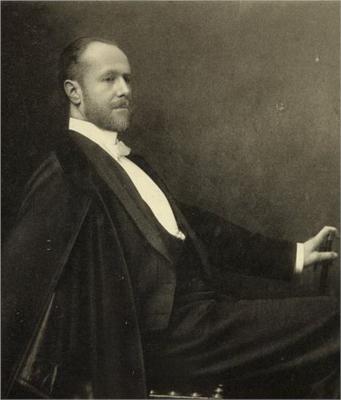
Belgian Symbolist master whose dreamy, occult-tinged paintings — many featuring his sister as a figure of impossible desire — defined fin-de-siècle mysticism.
Where to see Fernand Khnopff
Ranked by works you can see in person.
-
5 works
Museum of Fine Arts Ghent (MSK)
Ghent, Belgium
-
5 works
Royal Museums of Fine Arts of Belgium
Brussels, Belgium


-
2 works
Rijksmuseum
Amsterdam, Netherlands
-
2 works
Musée d'Orsay
Paris, France
-
1 works
Hungarian National Gallery
Budapest, Hungary
Also here (6)
Bertalan SzekelyVilmos Aba-NovakEndre BalintAladar Korosfoi-KrieschEgry JózsefAugust von Pettenkofen -
1 works
Royal Museum of Fine Arts Antwerp
Antwerp, Belgium
-
1 works
Städel Museum
Frankfurt, Germany
-
1 works
Groeningemuseum
Bruges, Belgium
-
1 works
Carnegie Museum of Art
Pittsburgh, United States
-
1 works
J. Paul Getty Museum
Los Angeles, United States


View all 17 museums
-
1 works
Kunsthistorisches Museum
Vienna, Austria
-
1 works
Metropolitan Museum of Art
New York City, United States
-
1 works
Mu.ZEE - Kunstmuseum aan Zee
Ostend, Belgium
-
1 works
King Baudouin Foundation
Brussels, Belgium
-
1 works
Belvedere
Vienna, Austria
-
0 works
National Gallery of Art
Washington D.C., United States
-
0 works
Albertina
Vienna, Austria


Frequently Asked Questions
Where can I see Fernand Khnopff's work?
Fernand Khnopff's work can be viewed in several museums across Europe and North America. In Belgium, the Brangwyn Museum in Brugge and the Clockarium Museum in Brussels hold relevant collections. France has several options, including the Musée d’Art et d’Industrie in Roubaix, the Musée de l’Ecole de Nancy, the Musée des Arts Décoratifs in Paris, and the Musée des Beaux-Arts in Nancy. In Spain, the Museo Art Nouveau y Art Deco in Salamanca and the Museu d’Art Modern (MNAC) in Barcelona may have pieces on display. The Museu Calouste Gulbenkian in Lisbon, Portugal, also has relevant holdings. In the United Kingdom, one can visit the Brighton Museum & Art Gallery, the Geffrye Museum in London, the Manchester Art Gallery, the National Museums of Scotland Royal Museum in Edinburgh, and the Victoria & Albert Museum in London. Outside Europe, museums include the Charles Hosmer Morse Museum of American Art in Winter Park, FL; the Los Angeles County Museum of Art (LACMA); the Metropolitan Museum of Art in New York; the Minneapolis Institute of Arts; the Museum of Modern Art in New York; the Royal Ontario Museum in Toronto; the Virginia Museum of Fine Arts in Richmond, VA; and the Wolfsonian at Florida International University in Miami Beach, FL.What should I know about Fernand Khnopff's prints?
Fernand Khnopff was a Belgian Symbolist painter who also produced graphic work. During the Art Nouveau period, there was a rise in public interest in prints. This led to dedicated exhibitions and coverage in the art press. Printmaking techniques include etching, which uses wax on a metal plate to transfer the artist's hand directly, and lithography, which applies the image to an inked stone. Lithography allows for a greater emphasis on tone and colour. The artistic validity of each method was debated at the time. The market for albums of artists’ prints grew during the 19th century. Collecting prints in a series created a more substantial aesthetic experience than a single image. When buying a print, it is worth noting that the edition claim is usually written as a pair of numbers on the left bottom margin of the print. The title of the print is written in the middle of the bottom margin, and the signature is on the right. These descriptions are always signed in pencil.Why are Fernand Khnopff's works important today?
Fernand Khnopff, born in Belgium in 1858[1], is significant as a leading figure in the Symbolist movement. Educated in law, he later studied at the Académie des Beaux-Arts in Brussels, where he met James Ensor. Khnopff's early works included depictions of Fosset. He was a founding member of Les XX, exhibiting with them until their disbandment. His association with Symbolist writers and the occult theories of the Rosicrucians, led him to exhibit at the Salon of the Rose-Croix, and illustrate books by Joséphin Péladan. His style is characterised by muted colours, creating a sense of nostalgia. Khnopff's portraits, such as that of Jeanne de Bauer (1890[1]) and his sister Marguerite, display a meditative quality. These portraits, along with works like *A Blue Wing* (1894) and *Silence* (1890), exemplify his unique approach to Symbolism. Khnopff's connections with the Pre-Raphaelites, particularly Burne-Jones and Rossetti, also influenced his art. After 1894, he contributed to *The Studio*. His paintings often drew inspiration from Symbolist literature, such as Christina Rossetti's poem which inspired *I Lock the Door upon Myself*.What techniques or materials did Fernand Khnopff use?
Contracts between artist and client often dictated the materials used for a painting, specifying the quality of materials, timescale and payment schedule. Painters' studios needed to have good natural light, often achieved with a north-facing room on an upper floor. Due to the slow drying time of oil paint, multiple works were often in progress simultaneously. Assistants helped with tasks ranging from cleaning to preparing paints. Although oil painting existed before the 15th century, painters such as Jan van Eyck refined the technique. Oil paint consists of pigments diluted with a binding agent (oil) and a drier to accelerate drying. The application of many layers of transparent glaze emphasises shapes and light, adding depth. Netherlandish artists typically used oak panels prepared with white preparation (animal glue and lime) to reflect light. They applied a layer of siccatif for waterproofing, followed by an accurate outline and a rough sketch of coloured areas. Final layers involved transparent glazes and varnish. Developments in technique often correlate with new materials. Oil paints allowed artists to produce smooth surfaces and illusionistic effects. The slow drying time allowed for compositional changes during the painting process.Who did Fernand Khnopff influence?
Fernand Khnopff's work had an impact on other artists, most notably Gustav Klimt. Khnopff himself drew inspiration from various sources. He was an admirer of Pre-Raphaelite painters, especially Rossetti and Burne-Jones. His portraits show the influence of Whistler's style, particularly in the use of monochromatic colour and limited space. Khnopff's early artistic education included study with Xavier Mellery and at the Académie des Beaux-Arts in Brussels, where he met James Ensor. He was a founding member of Les Vingt and exhibited at the Salon de la Rose+Croix. Khnopff also designed costumes for operas at the Théâtre de la Monnaie in Brussels. His association with Symbolist writers, such as Grégoire Le Roy and Émile Verhaeren, further shaped his artistic vision. The "painter of closed eyes" impacted the formation and spread of Art Nouveau.Who influenced Fernand Khnopff?
It is difficult to say exactly who influenced Fernand Khnopff; however, some context can be provided. Vincent van Gogh mentions some Belgian artists, such as Leys and De Groux, as important figures in art. Van Gogh suggests that studying the principles of art, especially regarding colour and perspective, is beneficial for artists and those involved in the art trade. Van Gogh also praises De Groux for his paintings of peasants, noting that De Groux was not fully appreciated in Belgium. He connects De Groux to Millet, calling him one of the best Millet-like masters. Van Gogh mentions Mellery as someone working along similar lines to De Groux, and describes seeing a picture by Mellery of a bargee's family in an illustrated paper. He argues that artists should not seek popular approval, but should instead focus on gaining the support of a few sympathetic individuals.What is Fernand Khnopff's most famous work?
Fernand Khnopff, born in Belgium in 1858[1], is known as one of the great masters of Belgian Symbolism. He was a member of Les XX, L’Essor, and Libre Esthétique. Khnopff found inspiration in Symbolist literature, such as the writings of Maurice Maeterlinck and Émile Verhaeren. Although it is difficult to identify one single "most famous" work, several paintings are particularly well known. In 1888[1], he painted *Memories* (also known as *Du lawn tennis*), depicting his sister Marguerite, whom he portrayed in other works as well. An earlier portrait of Marguerite, completed in 1887, remained with the artist throughout his life. Another notable painting is *I Lock the Door upon Myself*. The title comes from a line in a poem by Christina Georgina Rossetti. This horizontal painting uses translucent colours to depict a red-haired woman in front of a stage-like background. The scene includes a monastery garden, a locked door, red lilies, a poppy, and the blue-winged head of Hypnos. Khnopff was active in bourgeois circles in Brussels and Paris, becoming a sought-after portrait painter.What style or movement did Fernand Khnopff belong to?
Fernand Khnopff, born in Belgium in 1858[1], is associated with Symbolism. He painted his first Symbolist work in 1883[1], after being inspired by Gustave Flaubert's writings. Khnopff was a founding member of Les Vingt, exhibiting with them for a decade. His connections extended to other artistic circles. Khnopff was fascinated by the occult theories of the Rosicrucians, meeting Joséphin Péladan and illustrating frontispieces for his novels. He regularly exhibited in the Salon of the Rose-Croix. Khnopff also had links to the Pre-Raphaelites, especially Burne-Jones, and contributed to the avant-garde English review *The Studio*. Khnopff's style is marked by faded colours, which create a sense of nostalgia. He was welcomed as a guest of honour at the Austrian Secession in 1898, alongside Rodin and Puvis de Chavannes. In 1903, he decorated the music room of the Palais Stoclet, an Art Nouveau mansion.
Sources
Where to See guide aggregates verified holdings of Fernand Khnopff's works across the following collections.
- [1] wikipedia Wikipedia: Fernand Khnopff Used for: biography.
- [2] book Jean Lahor, Art Nouveau Used for: biography.
- [3] book Brodskaya Nathalia, Brodskaya Nathalia - Symbolism Used for: biography.
- [4] book Masterpieces of western art : a history of art in 900 individual studies from the Gothic to the present day Used for: biography.
Editorial overseen by Solis Prints. Sources verified 2026-08-29. Click a source for details, or hover over [N] in the page above to preview.
Editorial standardsMethodologyCorrectionsAI disclosureAbout the editorial team